Why Little Lumos?
We build thinkers. Communicators. Emotionally secure children. Because childhood shapes adulthood.
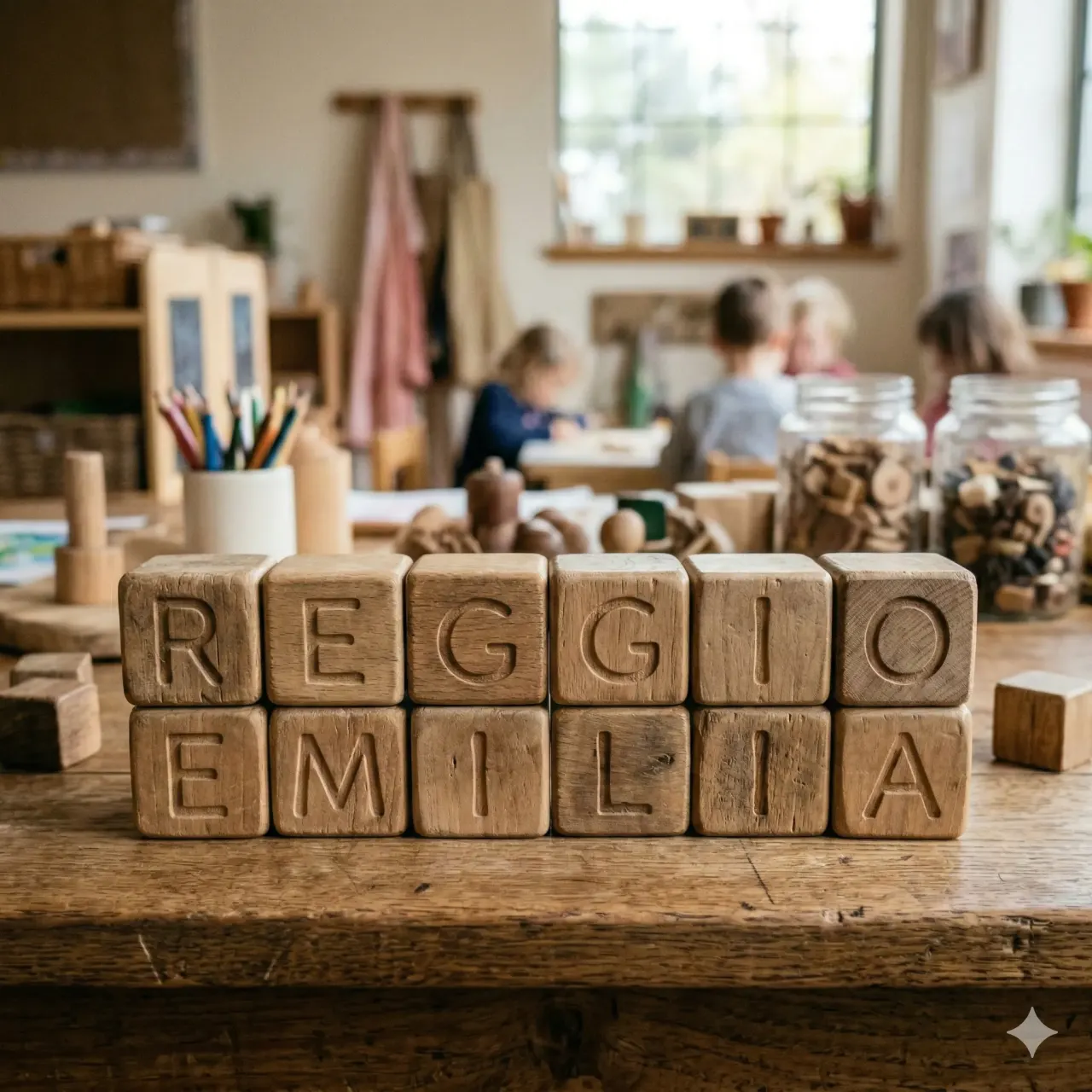
What is Reggio Emilia?
Children are capable thinkers and communicators
Learning happens through exploration, not instruction
Teachers guide — they don't control
Families are essential partners in learning
We don't ask, "Did you finish?" We ask, "What did you discover?"
Zero Screen Time
Childhood needs hands, not screens. Touching. Moving. Building. Imagining.
Screen-Based
Hands-On Learning
"Glue on fingers is better than fingerprints on screens."
Documentation Wall
"It's Not About What They Made. It's About What They Thought."

Questions
The sparks that start learning

Conversations
Real dialogue, real growth
Artwork
A hundred languages expressed

Emotions
Feelings acknowledged & honoured

Growth
Visible thinking journeys
Every Child is an Artist
"Art is not a separate subject. It is a language."
A purple tree? Wonderful. A family with five suns? Fascinating. A story that makes no sense to adults? Brilliant imagination at work.
Critical Thinking
Art requires decisions — what colour, what shape, what story to tell.
Emotional Expression
Children express feelings they can't yet put into words.
Fine Motor Skills
Painting, sculpting, and drawing strengthen tiny hands.
Confidence
Every creative act says 'I matter. My ideas matter.'
A Hundred Languages
Every child has a hundred ways to express, create, and understand the world.
Drawing
Visual storytelling
Clay & Construction
Tactile creation
Music & Rhythm
Sound exploration
Movement & Dance
Body expression
Environment as the Third Teacher
Curiosity-driven spaces
Child-sized furniture
Natural materials
Soft, warm lighting
"Sometimes the classroom becomes a jungle. We allow that."
Because childhood shapes adulthood
See how it works in our curriculum and programs, or dive deeper into the Reggio Emilia approach.
Why families choose Little Lumos
The questions parents in Kakinada ask us most often.
What makes Little Lumos different from other preschools in Kakinada?
+
Little Lumos is Kakinada's first preschool built around the Reggio Emilia approach. That means children lead the inquiry, learning is documented rather than graded, art is treated as a language rather than a craft activity, and the day is completely screen-free.
Why is Little Lumos completely screen-free?
+
Before age six, children build understanding through their hands, bodies and conversations with other people. A screen replaces all three with passive watching. Removing screens is not about restriction — it frees up the hours that real learning needs.
What does child-led learning actually look like day to day?
+
Teachers observe what children are curious about and build projects around it. If a group becomes fascinated by shadows, that becomes a weeks-long investigation involving light, drawing, measurement and storytelling — rather than moving on to the next worksheet.
Will my child be ready for formal school afterwards?
+
Yes. Children leave with strong language, confident social skills, genuine independence and the habit of asking questions. Those are the foundations formal schooling builds on, and they transfer more reliably than early rote memorisation.
Is the Reggio Emilia approach suitable for every child?
+
It suits most children well, including quiet ones, because it follows the child rather than a fixed pace. The best way to judge fit is to visit during working hours and watch how your child responds to the environment.