Healthy Lunch Box Ideas for Kids: A Week of Easy, Balanced Tiffins

Little Lumos Team
Reviewed by Dr. K. Lakshmi Lalithya, Founder & Principal
We share insights, stories, and practical tips for mindful parenting, straight from our vibrant learning community.
Before you blame fussiness, check the four duller reasons a tiffin comes home full. Plus a formula that removes the nightly decision, and what actually survives a Kakinada morning.

The box comes home at one o'clock, and it is exactly as full as it was at eight.
Before you conclude that your child is fussy, it is worth knowing that a full lunch box very often has nothing to do with the food. Preschoolers get a short lunch break, and a significant portion of it is spent talking, watching what everyone else has brought, and being generally delighted to be sitting next to a friend. Add the time it takes a small child to open a tight lid, and there may not have been much of a window left.
So before you change what you pack, run through the duller possibilities first.
Could they open it? Give your child the box at home and watch. Do not help. A container a four-year-old cannot open alone is a container that comes home full, and the child will rarely mention it.
Was there enough time? Ask the teacher how long lunch actually is and how much of it your child spends eating. The answer surprises most parents.
What had it become by then? A dosa packed hot at 7:30 and eaten at noon in Kakinada is a different object by lunchtime. So is cut apple, which browns, and anything with a sauce that has quietly soaked into the roti.
Was the portion frightening? A large quantity of anything makes a small child give up before starting. Less food often means more eaten, which is one of the more useful paradoxes of feeding children.
Only after all that is it worth asking whether they actually dislike it.
The formula, so you can stop deciding every night
A good tiffin is not a recipe problem. It is four slots:
A wholegrain, a protein, something fruit or vegetable, and one small thing that makes them smile when the lid comes off.
Chapati, a boiled egg, cucumber sticks, two dates. Curd rice, a spoon of grated carrot, banana, a piece of coconut barfi. Mini idlis with ghee, a bit of chutney, papaya, one biscuit. Once the four slots are in your head, packing becomes rotation rather than invention, and you can decide it at 7am without thinking.
The interactive builder further down this page will assemble combinations for you if you would rather not think at all, and there is a full week of Indian-friendly ideas in there too.
What actually survives until lunchtime here
This matters more in coastal Andhra than most lunch box advice acknowledges. Between the heat and the humidity, a box packed at half past seven has a long morning ahead of it.
Things that hold up well: chapati and paratha rolls, idli, upma, poha, curd rice (which is genuinely better suited to this climate than it gets credit for), roasted chana, dry sabzi, boiled egg, whole fruit, banana, dates.
Things that need more care: anything with mayonnaise, cut fruit left uncovered, milk-based sweets in April and May, sandwiches with wet fillings. If you use an insulated box or a small ice pack, most of these become fine. If you don't, pick from the first list.
One small trick worth knowing: a squeeze of lemon over cut apple or banana stops it going brown, and a brown-looking piece of fruit is rejected on sight by nearly every child alive.
The thing that surprises most parents
Do not send new foods to school.
It feels like a good opportunity. Everyone is eating, there is peer pressure, they might just try it. In practice a school lunch break is noisy, rushed and full of distractions, and a child faced with something unfamiliar in that setting will simply not eat it, and quite possibly will not eat the rest of the box either.
Send the reliable favourite to school. Do the experimenting at home.
Do it at dinner, where there is time and nobody is watching. Same principle as before: one small spoonful of the new thing beside the safe thing, no commentary, no reaction if it is refused.
And one more thing about pickup
"Did you finish your lunch?" is a very natural first question, and it turns the lunch box into a daily test with a pass and a fail.
Try "What was the best bit of today?" instead, and check the box later, quietly, without announcing the verdict. A child who knows the box is going to be inspected and graded starts to feel something about lunch that you would rather they did not feel.
A few gentle things that genuinely work
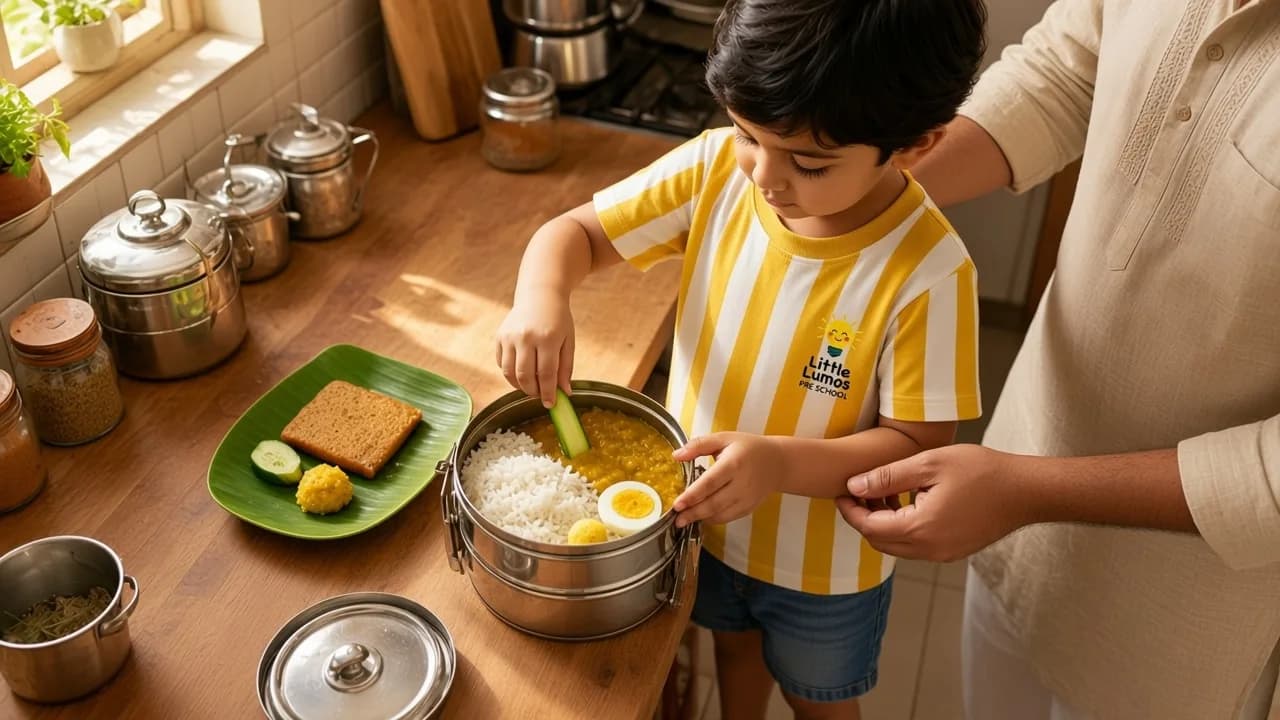
Let them pack it. Not choose it from nothing, which produces a box of biscuits, but choose between two options you are happy with. "Apple or banana? Curd rice or chapati?" A child who put it in the box is markedly more likely to take it out of the box. Doing this the night before also rescues your morning.
Cut things so they can be picked up. Small hands, a rushed break. Finger-sized pieces get eaten. A whole fruit that needs peeling often does not.
One small joy. A single date, a piece of chocolate, a sticker on the lid, a note they cannot read yet but recognise as yours. It costs nothing and it changes how the box feels when it opens.
Keep it recognisable. The elaborate new creation is more likely to come home than yesterday's favourite in a slightly different arrangement.
Safety, briefly but seriously
Whole grapes, whole nuts under four, hard boiled sweets and large chunks of raw carrot are genuine choking hazards for young children. Halve grapes lengthways, grind nuts or use nut butters, and grate or lightly steam hard vegetables. This is worth being strict about in a setting where an adult is not watching every mouthful.
If your child's school has a nut policy or another child in the class has an allergy, follow it exactly, even if it seems excessive. It never is.
What not to worry about
One box that comes home full. A week of boxes that come home full during exam-hall-level chaos, a cold, or the fortnight after a new sibling arrives. A child who wants the same thing every day for two months. Children balance their intake across days and weeks, not across single meals, and the child who ate nothing at lunch is very often the one who eats an enormous dinner.
Try this tomorrow
Pack slightly less than you normally would, cut everything into pieces small hands can pick up, and check that your child can open the box unaided. Three small changes, and the most common reason for a full box disappears.
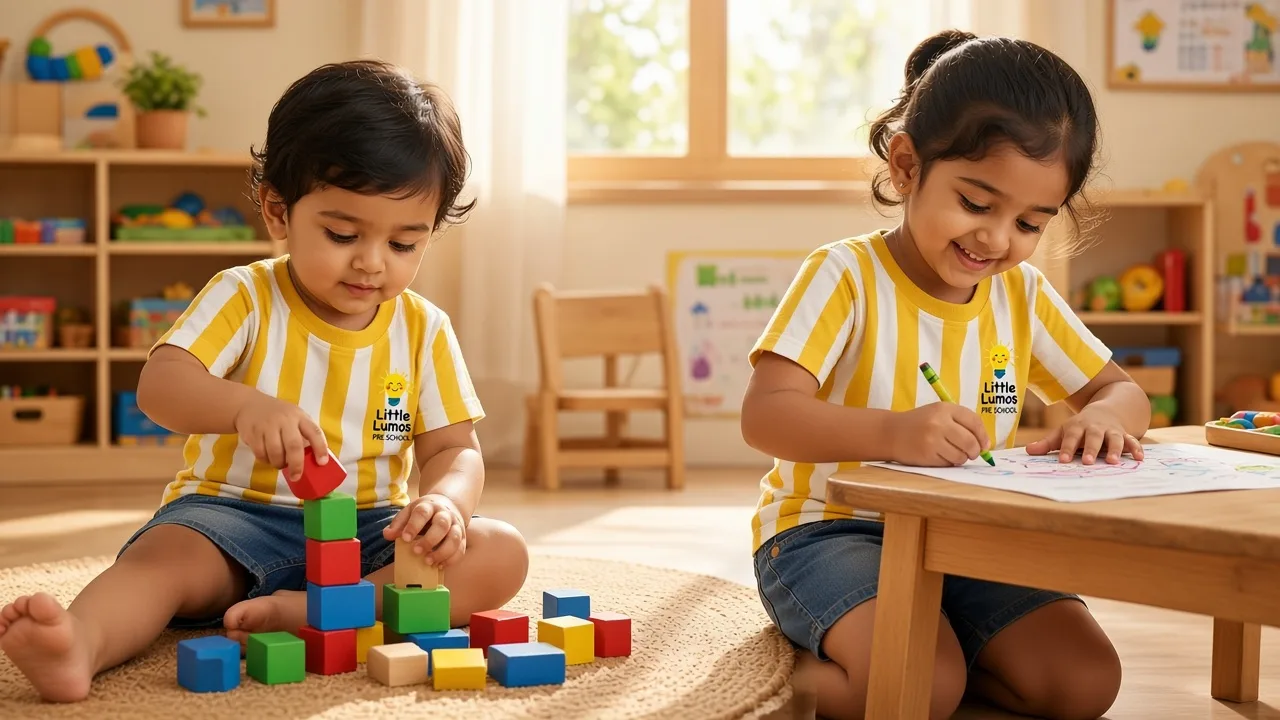
At Little Lumos in Siddharth Nagar, children eat together, unhurried, with an adult sitting at the table rather than standing over it. Nobody is told to finish, and nobody is praised for finishing. It is remarkable how much more children eat when eating has stopped being a performance. Our guide to building healthy eating habits covers the same principles at home.
Interactive tools
Build tomorrow's box
Assemble a balanced tiffin in seconds, browse a week of Indian-friendly ideas, and pick up tricks for slow and fussy eaters.
Interactive box builder
Build a Balanced Box
Pick one from each group to assemble a balanced tiffin. Mix it up day to day and you'll never run out of ideas.
Wholegrain
Steady energy for play and learning
Protein
Keeps little ones full and growing
Fruit or veg
Colour, fibre, and vitamins
Little extra
A small smile-maker
Your tiffin (0/4 groups)
Pick from the groups above to fill your box.
A week of tiffins
Six Days, Sorted
A ready-made week of simple, balanced, Indian-friendly lunch boxes. Swap freely to suit your child's tastes.
Monday
Soft veg paratha rolls + curd dip, cucumber sticks, a few grapes (halved)
Tuesday
Mini idlis with a little ghee + sambar in a flask, carrot sticks, banana
Wednesday
Curd rice with grated carrot + boiled egg or paneer, apple pieces
Thursday
Veg upma with peas + roasted chana, pomegranate, a date or two
Friday
Whole-wheat veg & cheese sandwich, cucumber, papaya pieces
Saturday
Mini dosas + coconut chutney, moong sprouts salad, mango or melon
For fussy eaters
Gentle Tricks That Actually Work
Pack small portions
A big serving overwhelms little appetites. Offer a few small things rather than one large helping, children eat better, and an emptier box feels like a win for everyone.
Why it works
The Thinking Behind the Box
A simple formula
Grain + protein + fruit or veg + one fun extra. Get the balance right and the rest is just gentle rotation.
Steady energy
Wholegrains and protein give slow-release fuel, so children stay focused and even-tempered through a busy morning.
Variety over the week
No single box has to be perfect. A colourful range across the week beats a flawless plate your child won't touch.
A happy food relationship
Calm, pressure-free meals, at home and school, build the relaxed eating habits that last a lifetime.
Calm, Joyful Mealtimes. Every Day
At Little Lumos, children eat together in a relaxed, social setting that builds a happy relationship with food. Come see our Reggio Emilia inspired classrooms in Siddharth Nagar, Kakinada.
Sources
- Dietary Guidelines for Indians, National Institute of Nutrition, ICMR
At Little Lumos in Kakinada, this is part of everyday practice. Read more about daycare in Kakinada with meals and rest time, or our full-day programs, or book a campus visit.
People Also Ask
Quick answers to the questions parents ask most.
A simple, repeatable formula works best: a wholegrain (roti, rice, idli, bread or millet), a protein (dal, egg, paneer, curd, chana or chicken), some fruit or vegetable, and one small 'fun' element your child enjoys. That balance gives steady energy for play and learning without needing elaborate recipes or expensive ingredients.