Child Development Milestones: Ages 2 to 6

Little Lumos Team
Reviewed by Dr. K. Lakshmi Lalithya, Founder & Principal
We share insights, stories, and practical tips for mindful parenting, straight from our vibrant learning community.
What a milestone actually measures, why comparison in the family group tells you almost nothing, and the one signal that should never be given time to see if it improves.

The video arrives in the family WhatsApp group at about nine in the evening. Your brother's daughter, who is four months younger than your son, reciting a rhyme in English with actions, counting to twenty, and finishing with a small bow.
Forty-two people react with hearts. You look across at your own child, who is currently lying under the dining table making engine noises, and something tightens slightly in your chest.
This is the most common way parents come to the subject of milestones, and it is nearly the least useful. So before the lists, it is worth understanding what a milestone actually is, because most of the anxiety around them comes from a misunderstanding.
What a milestone is, and what it is not
A developmental milestone is a skill that most children have acquired by a particular age. That is the entire definition. It is a description of a wide population, not a target set for your individual child.
Which means a child who has not reached one is not behind in any meaningful sense. They are simply not yet in the majority for that skill, and a great many children who are not in the majority at three are indistinguishable from everyone else at five.
Development also does not progress evenly. Children spend energy in one area at a time. The child who is putting everything into walking and climbing often goes quiet for a few months, and the talkative one frequently takes longer to get steady on their feet. A child sprinting ahead in one domain and dawdling in another is the normal pattern, not a warning sign.
The four areas worth watching
Rather than one score, it helps to think in four strands.
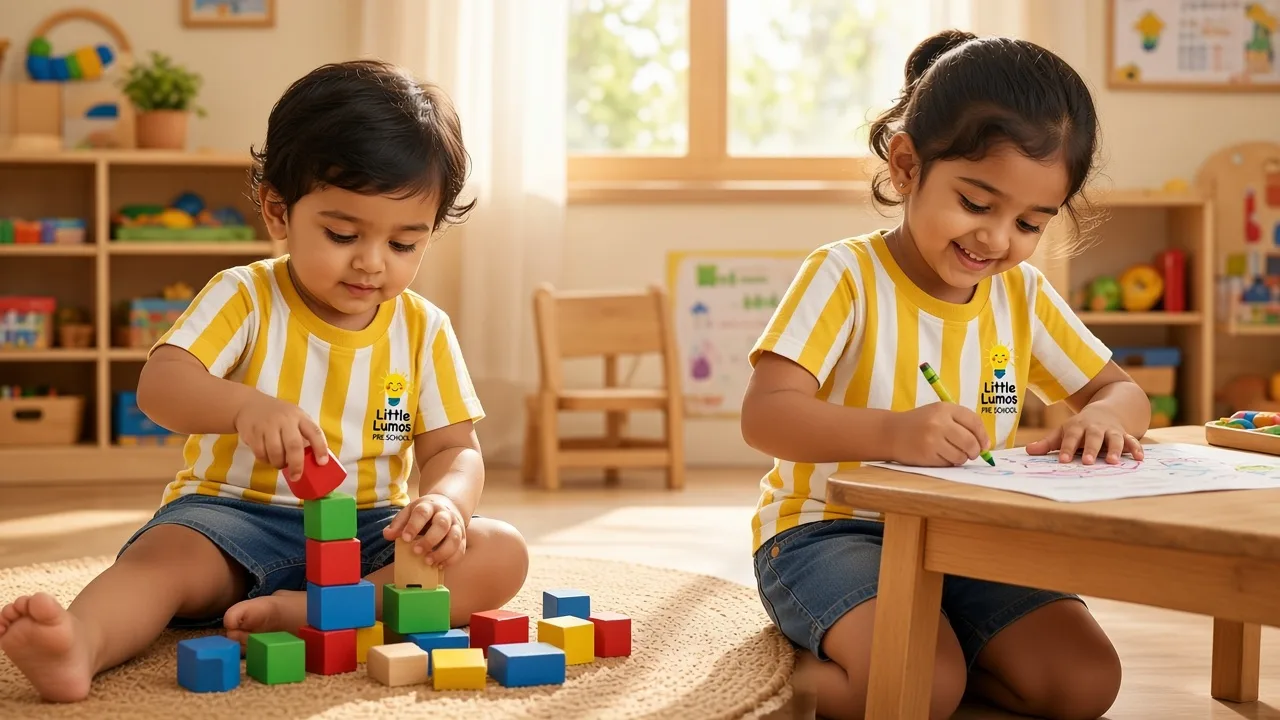
Movement, both the big kind (running, climbing, pedalling, balancing) and the small kind (holding a crayon, threading, using scissors, buttons).
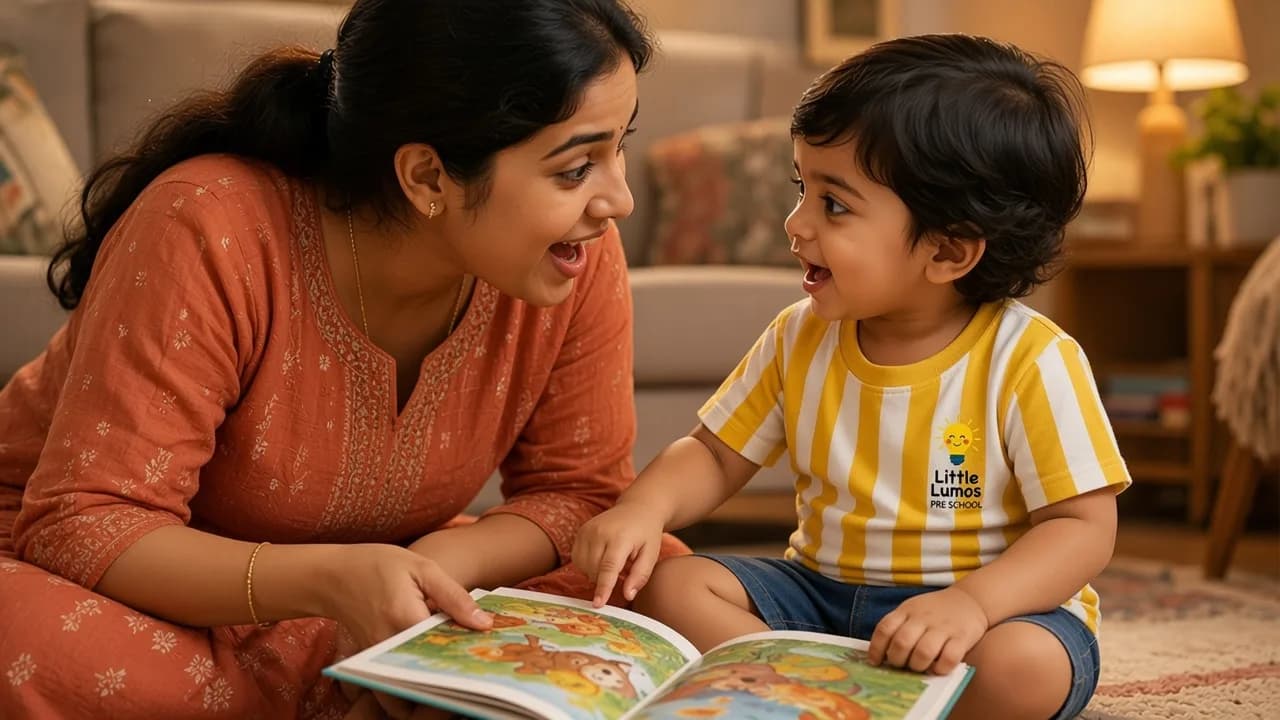
Language, which includes what your child understands as well as what they say. Understanding always runs ahead.
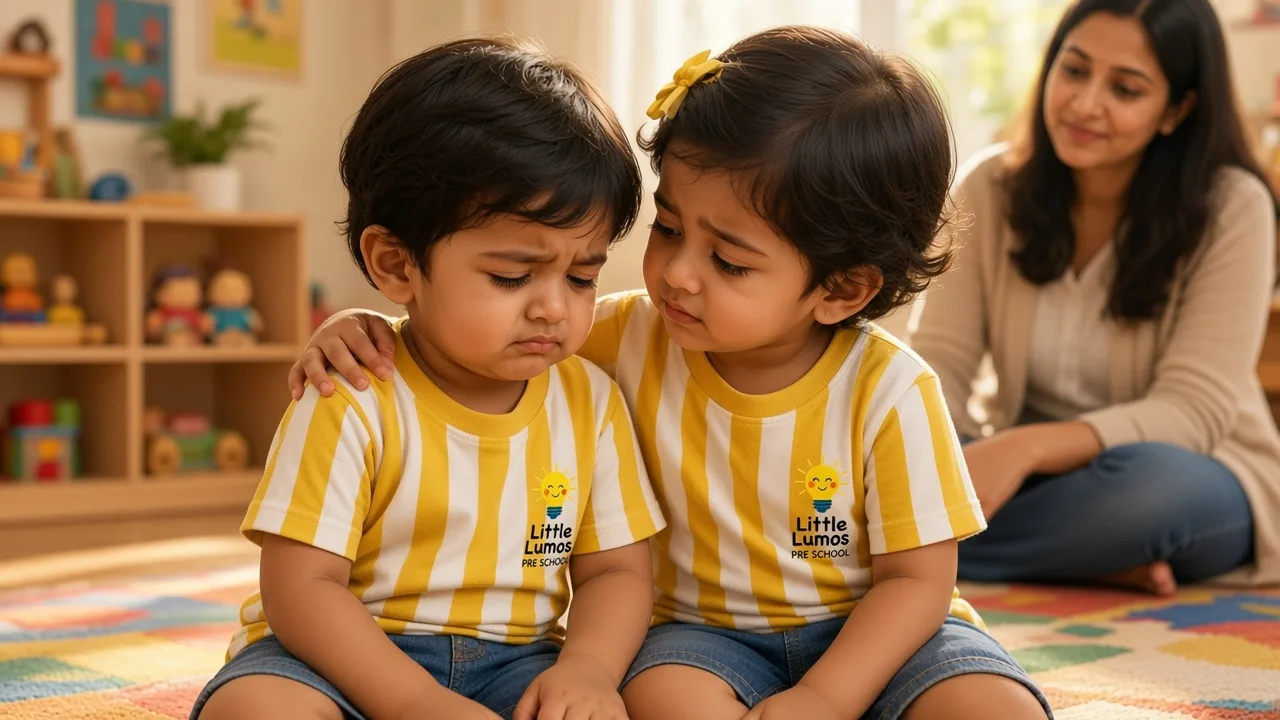
Social and emotional, which covers playing with other children, managing disappointment, noticing how someone else feels, and recovering from upset.
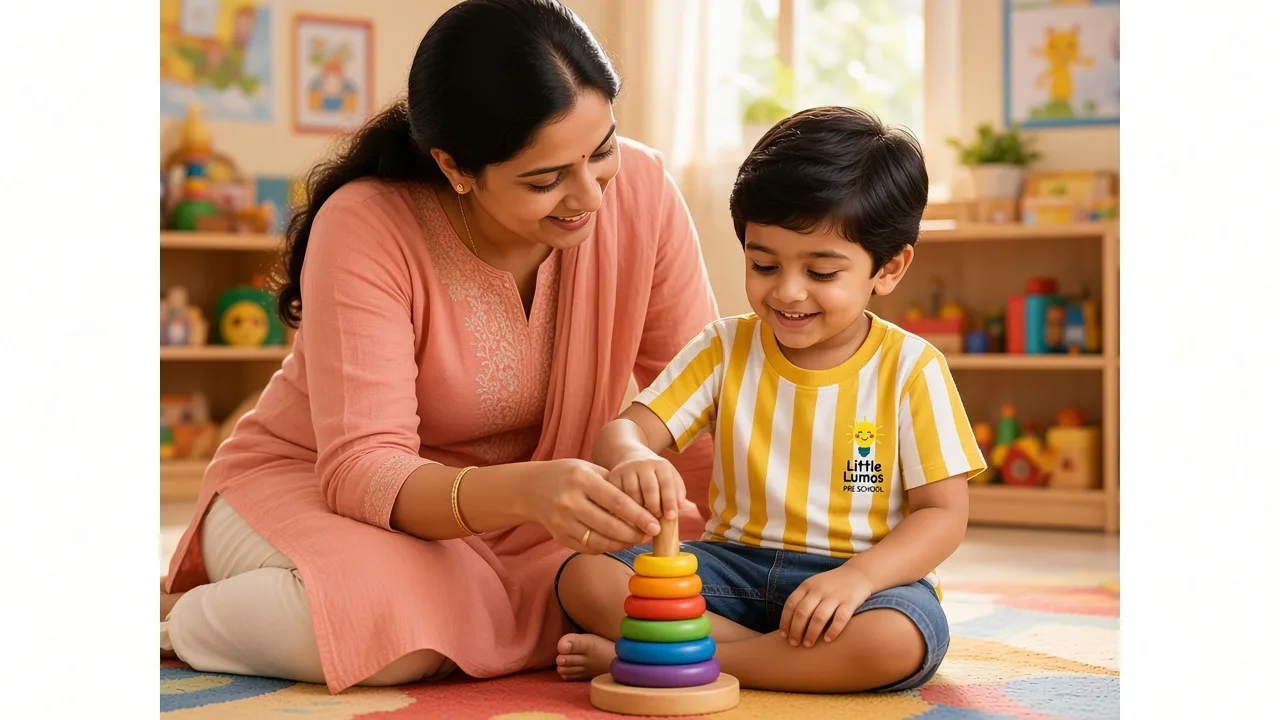
Thinking, meaning problem-solving, pretending, sorting, remembering, and asking why about forty times an hour.
The checker further down this page lets you go through these age by age. It is for your own insight, not a test, and nothing is stored anywhere.
The thing that matters more than any single milestone
Direction.
A snapshot tells you very little. The question that actually carries information is whether your child is gaining new skills over time. A child who is a bit behind on several things but visibly adding to their repertoire every month is doing fine. A child who is bang on every marker but has stopped moving forward is the one worth a closer look.
This is why the single most important thing on this entire page is not any particular age or skill. It is this: if your child loses a skill they previously had, at any age, in any area, speak to your paediatrician promptly. Words that have disappeared, eye contact that has faded, a child who used to wave and no longer does. Regression is the one signal that should never be given time to see if it improves on its own. Everything else can usually be watched. That one should not be.
Why comparison tells you almost nothing
Your nephew in that video may be eleven months older in developmental terms despite being four months younger on paper, because birth month and prematurity both matter. He may have an older sibling talking at him all day. His household may speak one language while yours speaks two, which spreads vocabulary across both. He may have been given scissors; your child may simply never have been handed a pair.
That last one accounts for a surprising amount. Children cannot demonstrate skills they have had no opportunity to practise, and "can't" is very often "hasn't yet been given the chance to".
And if your child was born early, correct for it. A baby born two months premature is, developmentally, two months younger than the calendar says, and this correction is generally applied until around age two. Plenty of unnecessary worry comes from forgetting it.
A note on rhymes and counting to fifty
Since this is where most of the WhatsApp comparison happens, it is worth saying clearly.
A child who recites numbers up to fifty is demonstrating memory. A child who can look at four biscuits, count them by touching each one, and tell you there are four is demonstrating number sense. The second is the milestone. The first is a party trick, and a lovely one, but it is not evidence of mathematical understanding and its absence is not evidence of anything at all.
The same goes for rhymes in English recited with no idea what the words mean. Impressive to watch, not the thing that is actually developing. Real learning at this age looks much less presentable: pouring water between vessels forty times, arguing about the rules of a game, taking something apart.
What actually supports development at home
None of this is complicated, and none of it requires buying anything.
Talk, constantly, in whatever language you speak best. Not a teaching voice. Ordinary running commentary. This is the single highest-value thing an adult can do for a young child, and it costs nothing.
Read together every day, even for five minutes, even the same book for the fortieth time. Especially the same book for the fortieth time.
Protect long stretches of unstructured play, and resist the urge to improve it while it is happening. Concentration grows out of exactly this.
Offer open-ended things over toys that do one thing. Boxes, cloth, vessels, water, clay, sticks. A toy that does everything leaves the child with nothing to do.
Get outside daily. Movement builds the core strength that later supports sitting, writing and attention. Our gross motor guide has ideas for small flats.
Keep screens small, particularly under five, for the reasons in our screen time guide.
Follow what they are interested in rather than drilling what they are not. A child obsessed with buses can be taught counting, colours, size, speed and half the alphabet through buses.
When to stop watching and start asking
Take the concern to your paediatrician if your child loses skills they once had. If several areas seem to be lagging together rather than one alone. If they are not responding to their name, not pointing to show you things, or not making eye contact. If, by around two, there are no two-word phrases. If they seem not to hear you consistently, in which case ask for a hearing check first, because it is the most common and most fixable cause of delay.
And if you have been quietly worried for a few months, that is enough of a reason on its own. You do not need to build a case. A paediatrician would far rather reassure ten worried parents than miss one child who needed support at three and got it at six. Early intervention is gentler and far less dramatic than most parents imagine.
Try this
Instead of comparing your child to anyone else's, write down five things they can do now that they could not do three months ago. Most parents struggle for about a minute and then can't stop. That list is the real measure, and it is the one nobody posts in the family group.
At Little Lumos in Siddharth Nagar, we document each child's growth across all four of these areas through the year, in their own words and their own work, rather than as a grade. Parents tend to find it far more informative than a mark sheet, because it shows the direction, which is the part that matters.
| Age | Language | Movement | Social and emotional |
|---|---|---|---|
| 2 to 3 years | 50+ words moving into two-word phrases | Runs, kicks a ball, climbs stairs with help | Plays alongside others; strong feelings, few words for them |
| 3 to 4 years | Short sentences, asks 'why' constantly | Pedals a tricycle, stacks and builds, uses a fork | Starts genuine turn-taking; imaginary play begins |
| 4 to 5 years | Tells a short story in order, most speech clear to strangers | Hops, catches a ball, draws recognisable shapes | Real friendships form; begins to name feelings |
| 5 to 6 years | Full sentences, understands jokes and rhymes | Skips, uses scissors well, forms letters | Understands fairness and rules; manages small setbacks |
Interactive tools
Check your own child, privately
Choose an age and tick what your child can already do. Nothing is stored or sent anywhere.
Interactive milestone checker
Check Your Child's Milestones
Choose your child's age, then tick what they can already do. This is just for your own insight, nothing is stored or sent.
Movement & motor
Language
Social & emotional
Thinking & play
Everyday support
Six Simple Ways to Support Development
Where this guidance comes from
Trusted Sources
The milestones on this page are adapted from widely used early-childhood development guidance. They are a general guide, not a diagnostic checklist. For the official, detailed checklists, see the sources below.
This article is for general information and is not a substitute for medical advice. If you have concerns about your child's development, please consult your paediatrician.
See How We Nurture Every Area of Growth
At Little Lumos we build movement, language, social skills, and thinking into everyday play, and document each child's growth for parents. Come watch a real morning in Siddharth Nagar, Kakinada.
Sources
- CDC's Developmental Milestones: Learn the Signs, Act Early, Centers for Disease Control and Prevention
- Nurturing care for early childhood development, World Health Organization
At Little Lumos in Kakinada, this is part of everyday practice. Read more about how we support emotional development, or why families choose Little Lumos, or book a campus visit.
People Also Ask
Quick answers to the questions parents ask most.
A developmental milestone is a skill most children gain around a certain age, like walking, talking in sentences, or sharing. They span movement, language, social-emotional, and thinking. Milestones are helpful guides, not rigid deadlines, and every child reaches them on their own timeline.