Your Child's Emotional Milestones: A Parent's Guide for Ages 2 to 6

Little Lumos Team
Reviewed by Dr. K. Lakshmi Lalithya, Founder & Principal
We share insights, stories, and practical tips for mindful parenting, straight from our vibrant learning community.
What does healthy emotional development look like from age 2 to 6? This warm, practical guide maps the emotional milestones for each preschool stage and shows you exactly how to support your child's feelings at home and at school in Kakinada.

We spend so much energy tracking whether children can count, recite the alphabet, or hold a pencil. But emotional development is every bit as important as academic skills — arguably more so, because a child who feels safe and understood learns everything else more easily. Here is what emotional growth looks like from age 2 to 6, and how to gently support it at each stage.
Why Emotional Development Matters
A child's ability to name feelings, calm down, share, and bounce back from disappointment is the foundation for friendships, focus, and confidence. These skills are not automatic — they grow through warm, consistent relationships and lots of patient practice. The good news is that everyday moments at home are the perfect classroom.
Emotional Milestones by Age
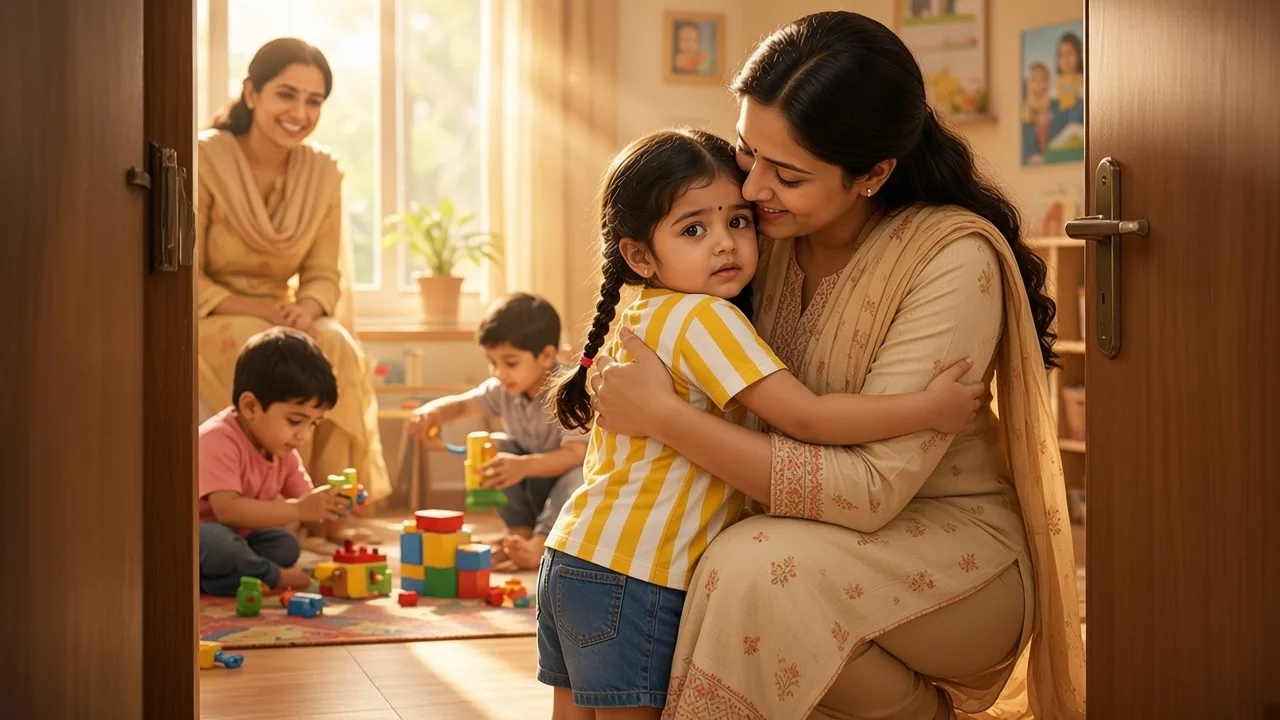
Ages 2-3 (Play Group) Big emotions with limited vocabulary. Tantrums are completely normal — your child is not manipulating you, they are overwhelmed and out of words. Help by naming emotions: "You feel frustrated because the block fell down."
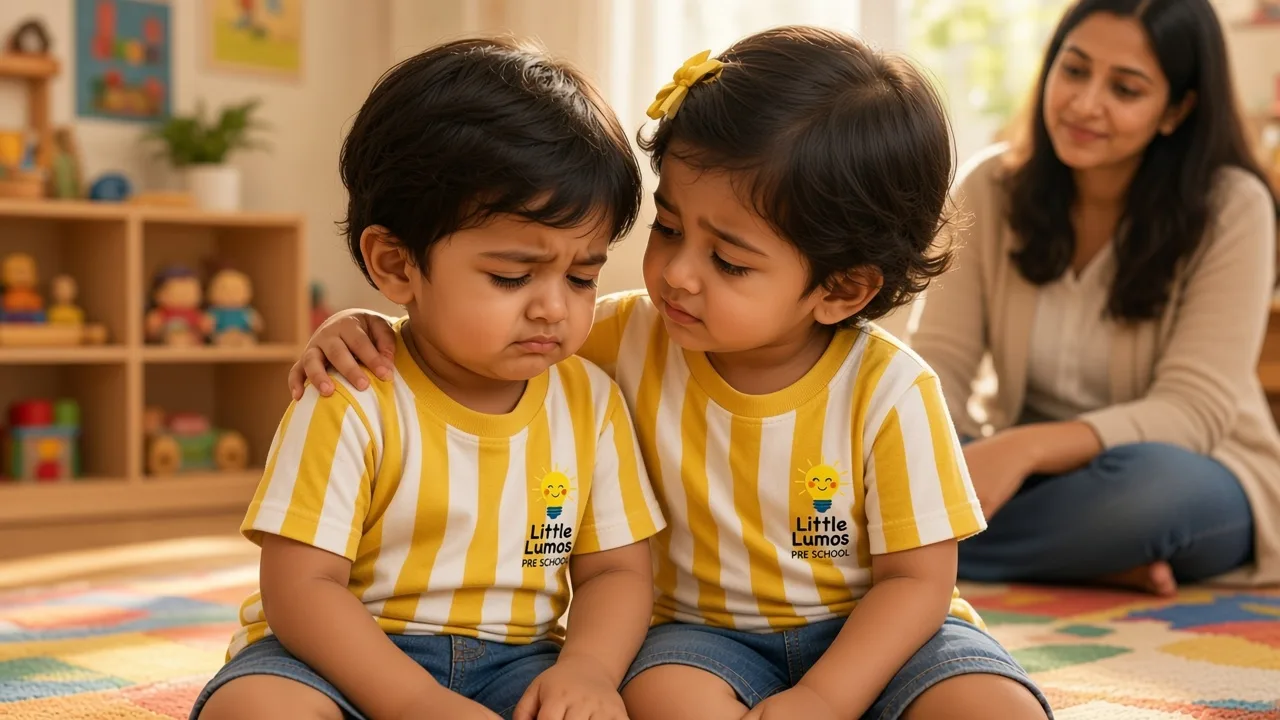
Ages 3-4 (Nursery) The beginnings of empathy. They notice when a friend is sad and start playing cooperatively rather than side by side. Encourage sharing feelings through stories and role-play.
Ages 4-5 (Lumo Junior) More complex emotions emerge — jealousy, pride, embarrassment. Children begin using words instead of actions to express feelings. Teach calming strategies: deep breaths, counting, or squeezing a stress ball.
Ages 5-6 (Lumo Senior) Growing self-regulation. They can wait their turn, handle minor disappointments, and show genuine kindness. They understand that other people have different feelings from their own.
Each of these stages maps to one of our age-appropriate preschool programs in Kakinada, so children are met exactly where they are emotionally. For a wider view across movement, language, and thinking too, see our child development milestones guide for ages 2 to 6.
How to Support Emotional Development at Home
- Validate feelings before correcting behaviour — "You're really angry. I won't let you hit."
- Model emotional expression yourself; name your own feelings out loud.
- Read books about emotions together and talk about how characters feel.
- Create a cosy "calm corner" at home for big-feeling moments.
- Avoid dismissing fears or sadness, even when they seem small to you.
When the big feelings tip into tantrums, our calm parent's playbook for tantrums and discipline gives you the exact words to use.
When to Seek Extra Support
Every child develops on their own timeline, so one "late" skill is rarely a worry. If your child consistently struggles to connect with others, loses skills they once had, or seems persistently distressed across settings, it is worth a gentle chat with your paediatrician.
If your little one is about to start school, emotional readiness matters as much as age — use our guide on whether your child is ready for preschool to prepare for a calm first day.
Remember: a child who feels understood grows beautifully.
At Little Lumos in Kakinada, this is part of everyday practice. Read more about how we support emotional development, or why families choose Little Lumos, or book a campus visit.
People Also Ask
Quick answers to the questions parents ask most.
Around age three, children begin showing empathy, playing cooperatively, and using simple words for feelings. Tantrums are still common as their language and self-control are developing.