Why Art Matters More Than Worksheets in Early Childhood

Little Lumos Team
Reviewed by Dr. K. Lakshmi Lalithya, Founder & Principal
We share insights, stories, and practical tips for mindful parenting, straight from our vibrant learning community.
Why does art matter more than worksheets for young children? Discover how painting, clay, and open-ended creativity build critical thinking, fine motor skills, confidence, and emotional intelligence — and how art sits at the heart of our Kakinada preschool.

In many preschools, success is measured by neatly completed worksheets stacked in a folder. At Little Lumos, we measure it differently — by the questions a child asks, the ideas they explore, and the confidence in their hands as they create. Here is why art is far more powerful than worksheets in the early years.
Art Is a Language, Not a Filler Activity
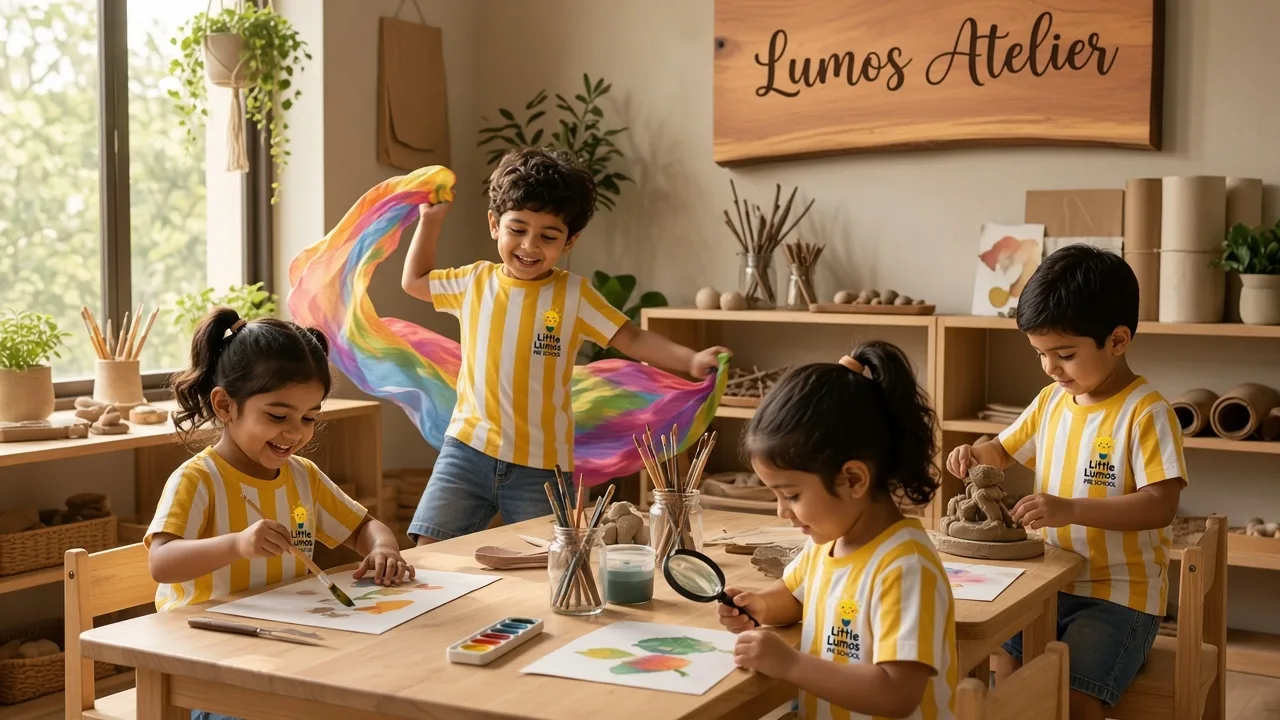
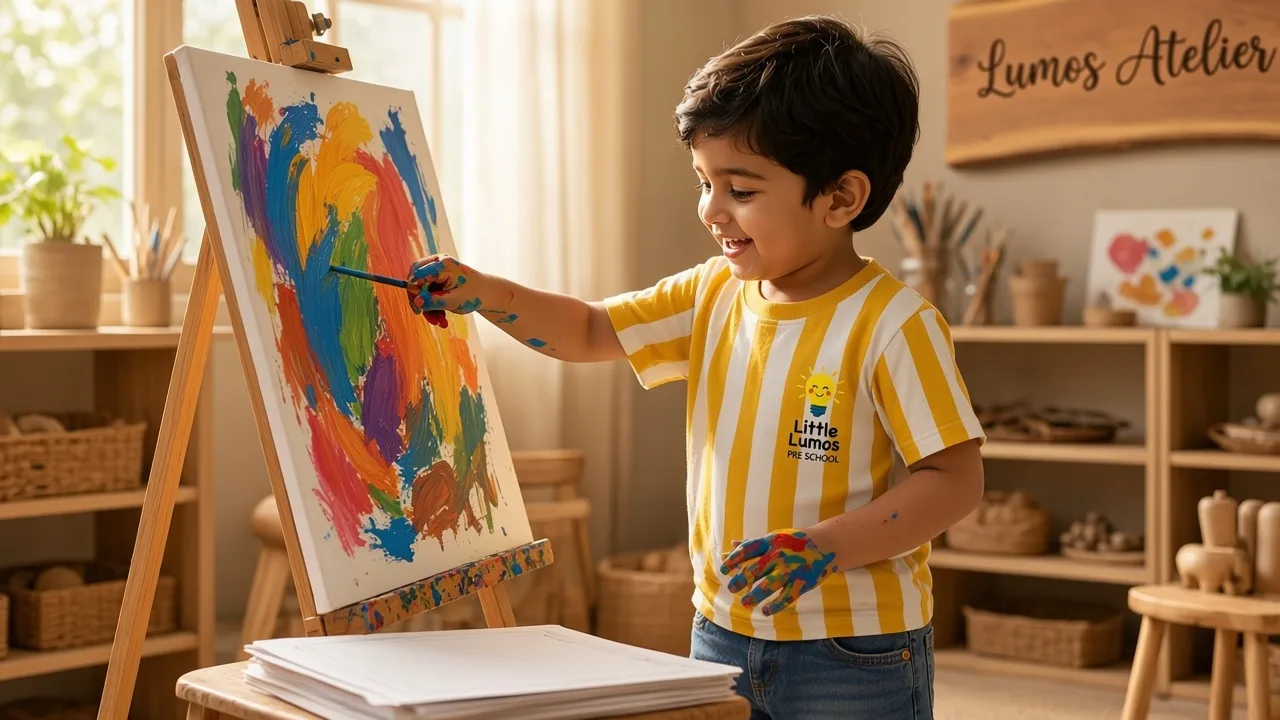
Painting, drawing, clay work, and collage are not just "fun extras" to fill time between real lessons. For a young child, art is a fundamental language of thinking. In fact, it is one of the hundred languages of children at the heart of the Reggio Emilia approach. A child who cannot yet write a sentence can absolutely express a complex idea or feeling through colour, shape, and material.
What Art Actually Teaches Young Children
- Decision-making. "Which colour should I use? Where should this go?" Every artistic choice builds executive function.
- Problem-solving. "The paper tore — how do I fix it?" Art constantly presents gentle, motivating challenges.
- Emotional expression. Children who can't yet articulate big feelings can paint them, build them, or dance them.
- Fine motor skills. Cutting, drawing, and moulding prepare hands for writing far better than tracing letters.
- Confidence. When there is no single "wrong answer," children learn to trust their own ideas.
This is exactly why the atelier (art studio) sits at the centre of our Reggio Emilia inspired curriculum rather than at the edges.
Worksheets vs. Open-Ended Art
Worksheets ask every child to produce the same result and reward staying inside the lines. Open-ended art invites a hundred different results and rewards thinking. Worksheets can have their place, but for two- to six-year-olds, the creativity, problem-solving, and joy of open-ended making build a far stronger foundation for later academic learning.
How to Nurture Your Little Artist at Home
- Don't ask "What is it?" Instead say, "Tell me about your drawing."
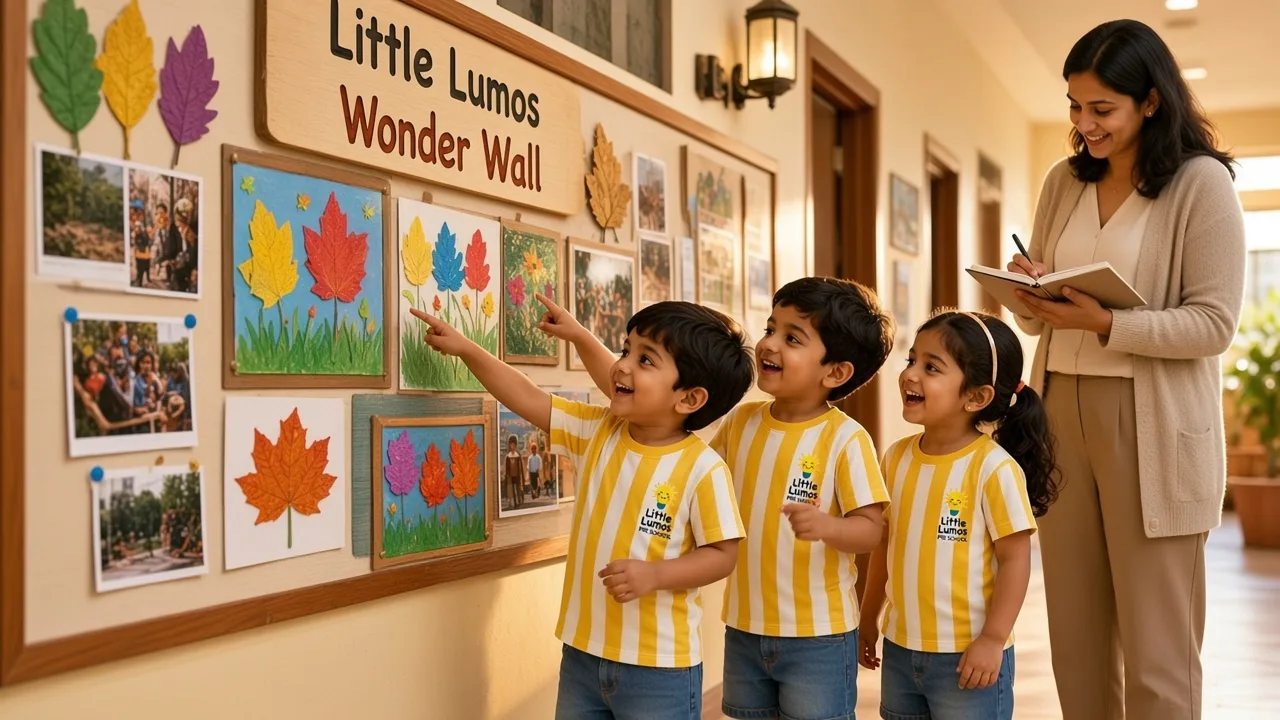
- Display art prominently at home, at your child's eye level.
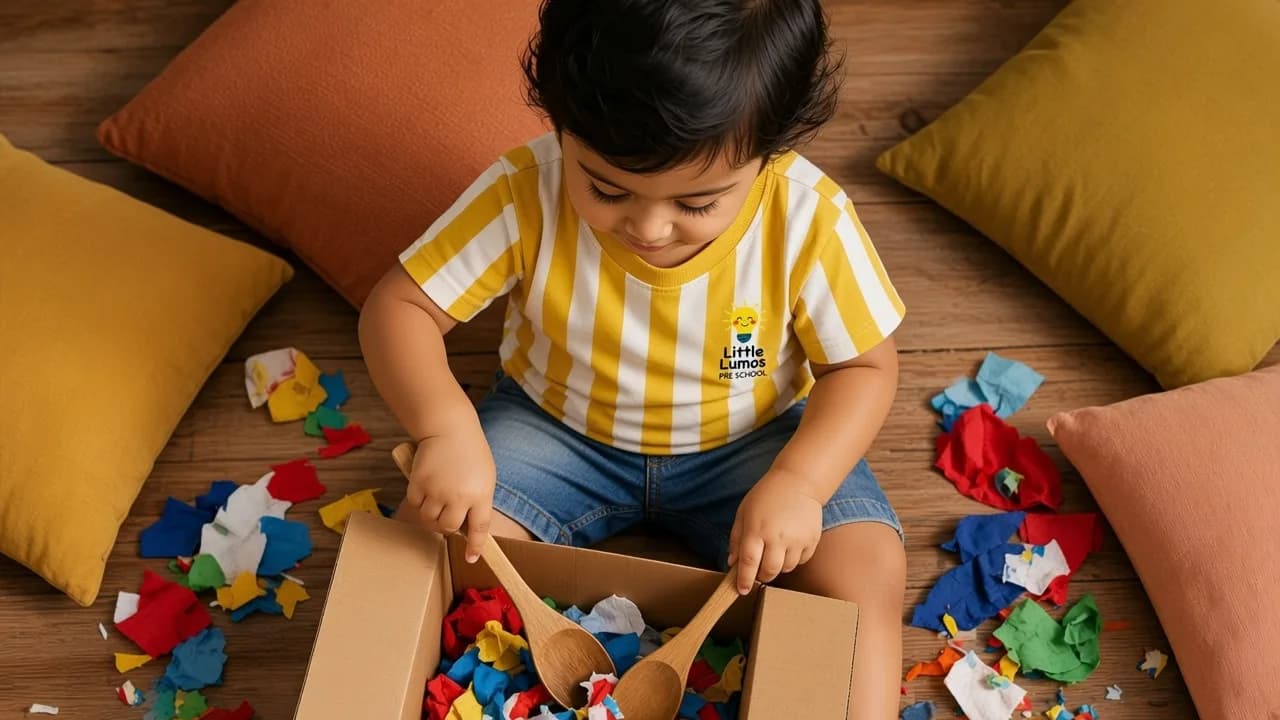
- Provide open-ended materials, not colouring books.
- Resist the urge to "fix" or "improve" their work.
- Celebrate effort and ideas, not perfection.
For more device-free, creativity-rich ideas, try these screen-free activities for toddlers at home.
A purple tree is not a mistake. It's a child seeing the world in their own extraordinary way — and protecting that vision is one of the greatest gifts of early childhood.
At Little Lumos in Kakinada, this is part of everyday practice. Read more about our hands-on early years curriculum, or preschool programs for ages 2 to 6, or book a campus visit.
People Also Ask
Quick answers to the questions parents ask most.
Art builds decision-making, problem-solving, fine motor skills, emotional expression, and confidence. For young children, creating is a way of thinking, not just a craft, which supports later reading, writing, and maths.