How to Build Healthy Eating Habits in Toddlers (Without the Battles)

Little Lumos Team
Reviewed by Dr. K. Lakshmi Lalithya, Founder & Principal
We share insights, stories, and practical tips for mindful parenting, straight from our vibrant learning community.
Mealtimes turning into a battlefield? Learn how to build healthy eating habits in toddlers and preschoolers without bribes, pressure, or stress — practical, gentle tips from the Little Lumos team in Kakinada.

Food battles are one of the most stressful parts of parenting young children. You cook with love, and a tiny human folds their arms and refuses a single bite. Take heart: picky eating is a normal phase, and you can build healthy, lifelong eating habits without bribes, pressure, or daily drama. Here is how.
Start With the Environment, Not the Plate
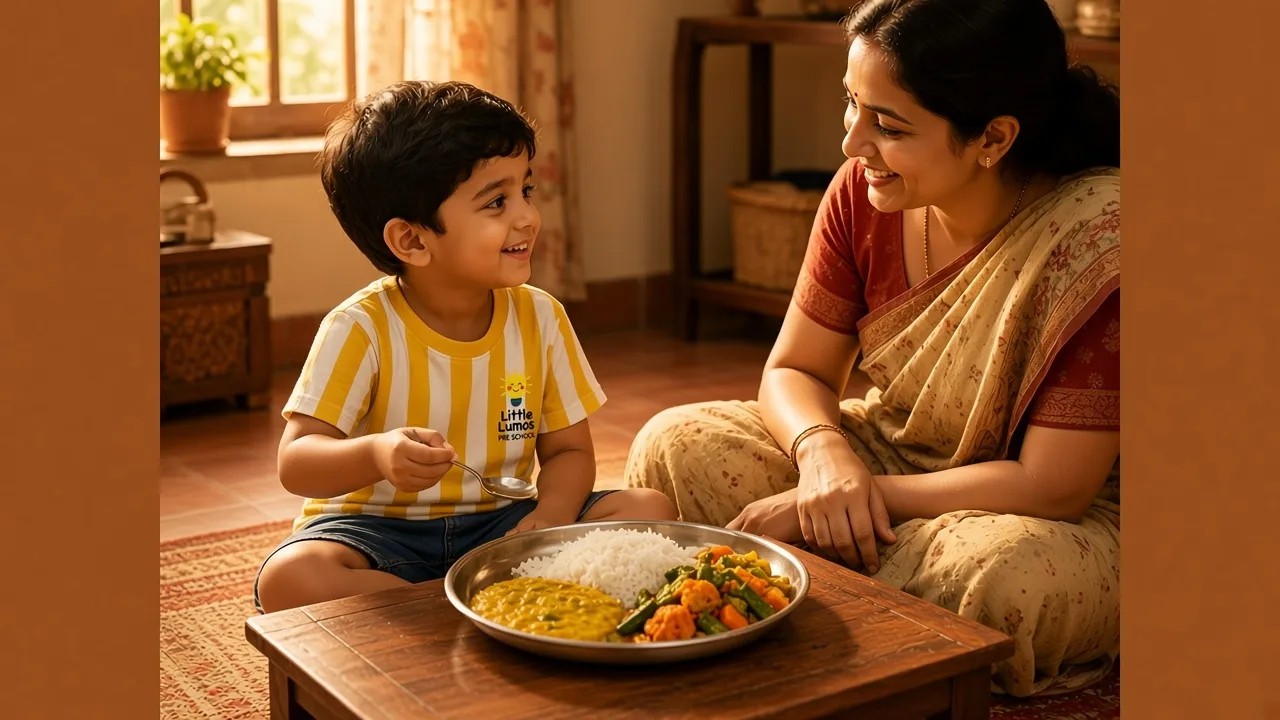
How and where children eat matters as much as what is served:
- Eat together as a family whenever possible.
- Let children see you genuinely enjoying vegetables.
- Keep healthy snacks visible and within easy reach.
- Involve children in shopping and preparing food.
The Five Golden Rules of Stress-Free Mealtimes
- You decide what; they decide how much. Offer nutritious options, then trust your child's hunger cues instead of forcing quantities.
- Exposure, not pressure. It can take 10 to 15 exposures before a child accepts a new food. Keep offering it calmly, with no expectation.
- Make food fun. Arrange vegetables into smiley faces, give foods playful names, and let them dip everything.
- Never use food as a reward or punishment. "Eat your dal to get dessert" quietly teaches children that dal is the price of a treat.
- Model, model, model. Children mirror what they see. Eat your greens happily, and eventually they will follow.
Healthy Snack Ideas for Toddlers
Reach for simple, whole foods: fruit slices, cucumber sticks, idli, boiled egg, curd, nuts (for older children), or homemade chapati rolls. Keeping snacks wholesome means meals feel less like a high-stakes negotiation.
How We Build Healthy Habits at Little Lumos
We introduce nutrition awareness through practical life activities — washing fruits, sorting vegetables by colour, and talking about how food helps our bodies grow strong. It is part of the same hands-on philosophy you will find across our Reggio Emilia inspired curriculum, and we extend healthy habits into the community through events like our free dental camp in Kakinada.
Mealtimes are also a wonderful chance for connection — pair them with these screen-free activities for toddlers so eating stays calm and device-free.
When to Seek Advice
Most picky eating is a normal phase. If your child is losing weight, eating an extremely narrow range of foods, or you have concerns about growth, check in with your paediatrician for tailored advice.
Patience is the secret ingredient. Healthy habits are built over months and years, not single meals.
Sources
- Infant and young child feeding: fact sheet, World Health Organization
- Picky Eaters: Information for Parents, American Academy of Pediatrics (HealthyChildren.org)
At Little Lumos in Kakinada, this is part of everyday practice. Read more about daycare in Kakinada with meals and rest time, or our full-day programs, or book a campus visit.
People Also Ask
Quick answers to the questions parents ask most.
Offer small amounts repeatedly without pressure, eat vegetables yourself, and make them playful and easy to dip. It can take many calm exposures before a child accepts a new vegetable, so keep offering without forcing.