10 Short Moral Stories for Kids (With a Lesson in Every One)

Little Lumos Team
Reviewed by Dr. K. Lakshmi Lalithya, Founder & Principal
We share insights, stories, and practical tips for mindful parenting, straight from our vibrant learning community.
A handpicked library of timeless moral stories from the Panchatantra, Aesop's Fables and Tenali Rama. Filter by the value you'd like to teach, read the story, and use the gentle talk-about prompt to bring each moral to life.

Long before a child can read a single word, they can fall completely under the spell of a story. And that is the quiet magic of moral stories: they slip a big lesson — be honest, be kind, never give up — inside a small, delightful tale that a child remembers for life. No lecture can do what a thirsty crow or a clever little rabbit can.
This is a handpicked library of timeless stories drawn from the Panchatantra, Aesop's Fables, and the witty tales of Tenali Rama — all loved for hundreds of years because their simple animal characters make big ideas easy for little minds to grasp.
Use the interactive library on this page to:
- Filter the stories by the value you'd like to teach — kindness, honesty, perseverance and more
- Tap any story to read a short, ready-to-share retelling
- See the clear moral at the heart of each tale
- Use the gentle "talk about it" prompt to help your child discover the lesson themselves
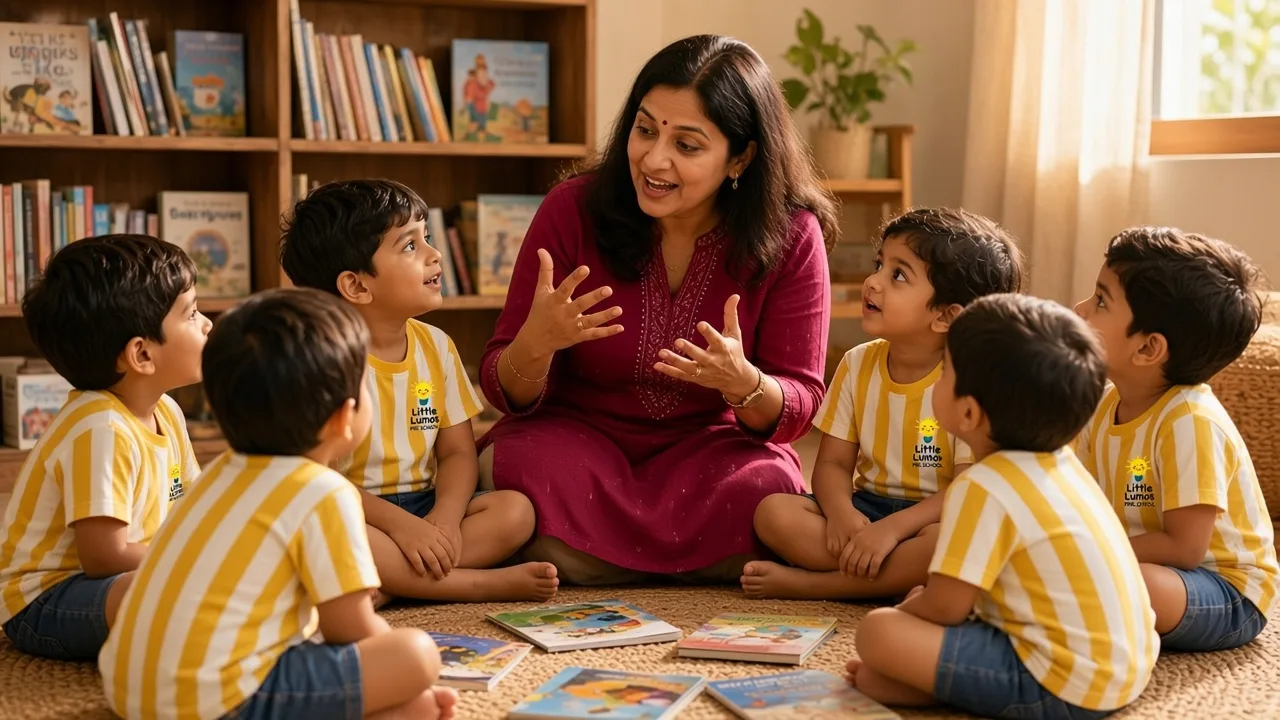
At Little Lumos, storytelling runs through every day. In our Reggio Emilia inspired classrooms, children don't just listen to stories — they act them out, paint them, retell them in their own words, and talk about the feelings inside them. Stories become a living language for thinking, empathy, and expression.
Interactive tools
Pick a value, pick a story
Filter the library by the value you would like to talk about, then use the prompt to open the conversation afterwards.
Interactive story library
Pick a Value, Choose a Story
Filter by the lesson you'd like to share, then tap a story to read it.
The Thirsty Crow
On a blazing summer afternoon, a thirsty crow flew far and wide looking for water. At last he found a pitcher, but the water lay far too low for his beak to reach. He could have given up. Instead, he looked around and spotted some pebbles. One by one, he dropped them into the pitcher. Slowly the water rose, higher and higher, until at last it reached the top. The clever crow drank his fill and flew away happy.
The moral
Where there is a will, there is a way. Patience and thinking solve what force cannot.
Talk about it
What problem did the crow have? How did he solve it without giving up?
Get the most from a story
Four Ways to Make a Story Stick
Snuggle in first
Make stories a warm, cosy ritual, on a lap, at bedtime. A child who feels close listens deeply and remembers more.
Use voices
Roar like the lion, squeak like the mouse. Drama makes the story come alive and holds little attention spans.
Ask, don't tell
Instead of stating the moral, ask 'What do you think the crow learned?' Children remember lessons they discover themselves.
Link it to life
Spot the moral in real moments, 'You shared like the kind mouse!' That's when a story becomes a value.
Where Stories Become a Way of Thinking
At Little Lumos, children don't just hear stories, they act them out, paint them, and make the morals their own. Come see our Reggio Emilia inspired storytelling in Siddharth Nagar, Kakinada.
At Little Lumos in Kakinada, this is part of everyday practice. Read more about our hands-on early years curriculum, or preschool programs for ages 2 to 6, or book a campus visit.
People Also Ask
Quick answers to the questions parents ask most.
Moral stories teach values like honesty, kindness, and perseverance in a way young children actually understand — through characters and feelings rather than lectures. They also build vocabulary, listening skills, imagination, and a love of reading, all while strengthening the bond between you and your child.