Signs Your Child is Truly Ready for Preschool (A Kakinada Parent's Guide)

Little Lumos Team
Reviewed by Dr. K. Lakshmi Lalithya, Founder & Principal
We share insights, stories, and practical tips for mindful parenting, straight from our vibrant learning community.
Age is just a number on the admission form. Use this interactive guide to spot the everyday signs of preschool readiness — emotional, social, independent, and curious — and ease the first weeks at a preschool in Kakinada.

Last month, a mother walked into Little Lumos with her three-year-old daughter. The little one took one look at our art corner, let go of her mother's hand, and marched straight towards the paint pots like she owned the place. The mother, on the other hand, stood at the door looking like she was the one being admitted. "Is she ready?" she asked us. We smiled, because honestly, the daughter had already answered that question herself.
If you are a parent in Kakinada wondering the same thing, "Is my child really ready for preschool, or just old enough?", you are not alone. Almost every parent who visits us asks this. And here is the truth: age is just a number on the admission form. Real readiness shows up in small, everyday moments at home.
So let us walk you through the signs that your little one is genuinely ready to begin their learning journey at a preschool in Kakinada.
Use the interactive tools on this page to:
- Compare playgroup, nursery, and Junior KG age ranges — as a starting point, not a rulebook
- Tick the everyday emotional, social, and independence signs you already see at home
- Follow a simple plan to ease the first few weeks
- Get clear answers on age, tears at goodbye, and how to book a visit
At Little Lumos — Kakinada's first Reggio Emilia inspired preschool — we nurture your child's natural curiosity through hands-on, child-led learning in a warm and joyful environment.
Interactive tools
Check the signs yourself
Tick off what you are already seeing at home across independence, curiosity and talking, then use the plan to ease the first week.
Quick navigation
Starting point, not a rulebook
Is Age Alone Enough to Decide Preschool Readiness?
Most parents begin with one question: what is the right age? In India, nursery admissions usually happen between 3 and 4 years, while playgroups welcome toddlers as young as 1.5 years.
But here is the thing. Two children born on the very same day can be at completely different stages of readiness. One might happily wave goodbye at the gate, while the other clings to you like a koala on a tree. Both are perfectly normal.
Here is a simple breakdown of the early learning stages and what to look for:
What to watch for: Comfort exploring away from a parent's lap
| Stage | Typical Age Range | What to Watch For |
|---|---|---|
| Playgroup / Toddler | 1.5 to 2.5 yrs | Comfort exploring away from a parent's lap |
| Nursery | 2.5 to 3.5 yrs | Basic self-help skills and curiosity about other children |
| Junior KG | 3.5 to 4.5 yrs | Follows two-step instructions and communicates needs |
If you are looking for a Kakinada nursery school for your toddler, use this table as a starting point, not a rulebook.
Confidence starts at home
Can Your Child Handle Simple Routines Independently?
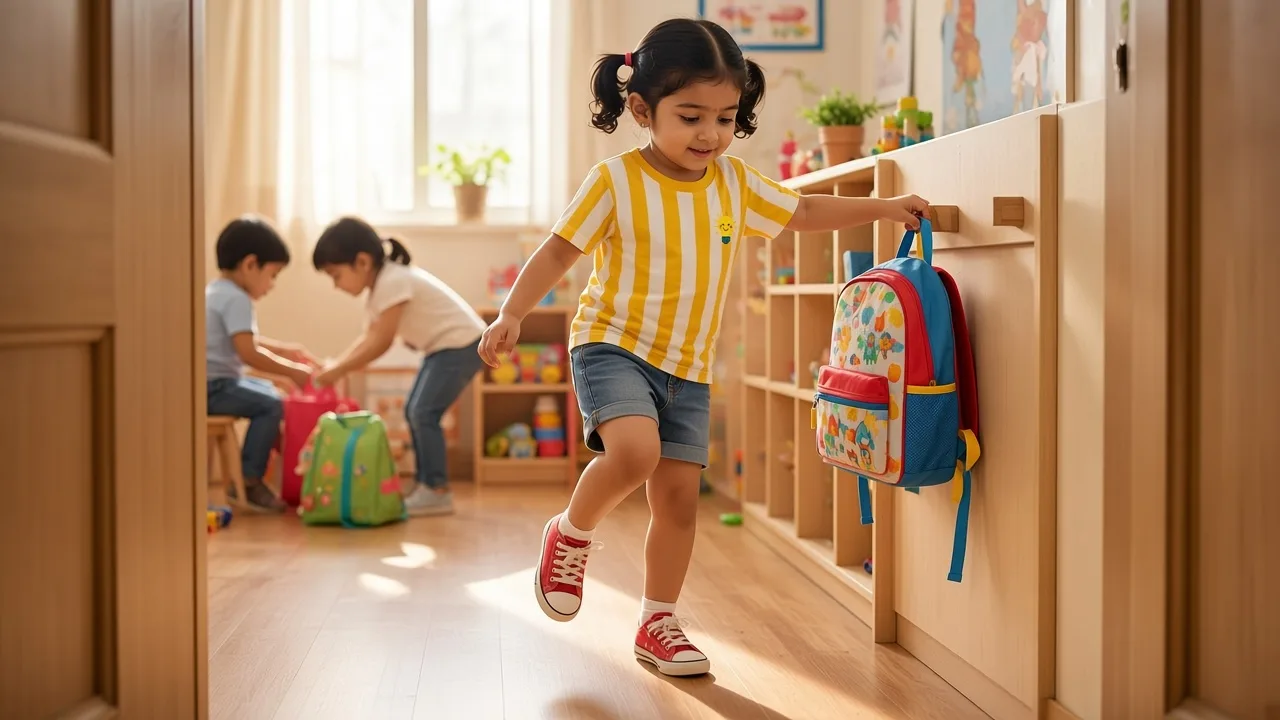
Independence at home turns into confidence in the classroom. Can your little one wash their hands, pull up their own pants, or manage their snack box with just a little help? Can they follow short instructions and move from one activity to another without a full-scale meltdown? These are wonderful signs.
In a Reggio Emilia school, children are trusted to do things on their own, and you will be surprised how much they rise to it. When a child learns to pack their own bag or open their tiffin box without help, their self-belief grows in a way no worksheet can match.
A few independence signs to look for:
Tiny question machines
Is Your Child Curious and Talking to the World?
Around this age, children turn into tiny question machines. Why is the sky blue? Why does the dog not talk? Why can't I eat chocolate for breakfast? If your child asks "why" fifty times a day, congratulations, that is not annoying, that is readiness.
Research from the CDC shows that early childhood years shape a child's later health and development, because the brain grows fastest during these years. Talking with your child, reading picture books, and singing rhymes together builds strong language and communication skills.
This is exactly why the best preschool in Kakinada should teach through stories, conversation, art, and play rather than rote learning. In our Reggio Emilia inspired classrooms, a child's question is never brushed aside. It becomes the starting point of a whole project. If your child chatters about their day, points at pictures waiting for the story, or hums a rhyme after hearing it just once, their mind is ready to learn.
A little preparation goes far
How Can Kakinada Parents Ease the Transition?
Once you spot these signs, a little preparation at home makes the first few weeks much smoother:
Give Your Child the Right Start in Kakinada
Choosing a preschool is not about finding the fanciest building or the longest brochure. It is about finding a place where your child feels seen, safe, and excited to learn. As Kakinada's first Reggio Emilia inspired preschool, Little Lumos nurtures your child's natural curiosity through hands-on, child-led learning in a warm and joyful environment.
If your little one is showing these signs of readiness, it's time to search for the best preschool in Kakinada, it might be time for their big adventure to begin. Visit Little Lumos, meet our teachers. Book your school tour today, and yes, parents are allowed to get a little emotional at the gate. We keep tissues and a bunch of hugs ready.
Book your school tour today
Come see the classrooms, meet the teachers, and let your child touch the toys before day one. Most parents say the visit answered more questions than any brochure ever could.
At Little Lumos in Kakinada, this is part of everyday practice. Read more about preschool admissions in Kakinada, or find the right program for their age, or book a campus visit.
People Also Ask
Quick answers to the questions parents ask most.
Most children join playgroup between 1.5 and 2.5 years, nursery between 2.5 and 3.5 years, and Junior KG between 3.5 and 4.5 years. But age is only a starting point. Emotional readiness, curiosity, and basic independence matter much more than the date on the birth certificate.
Before ABCs and 123s
Is Your Child Showing Emotional and Social Readiness?
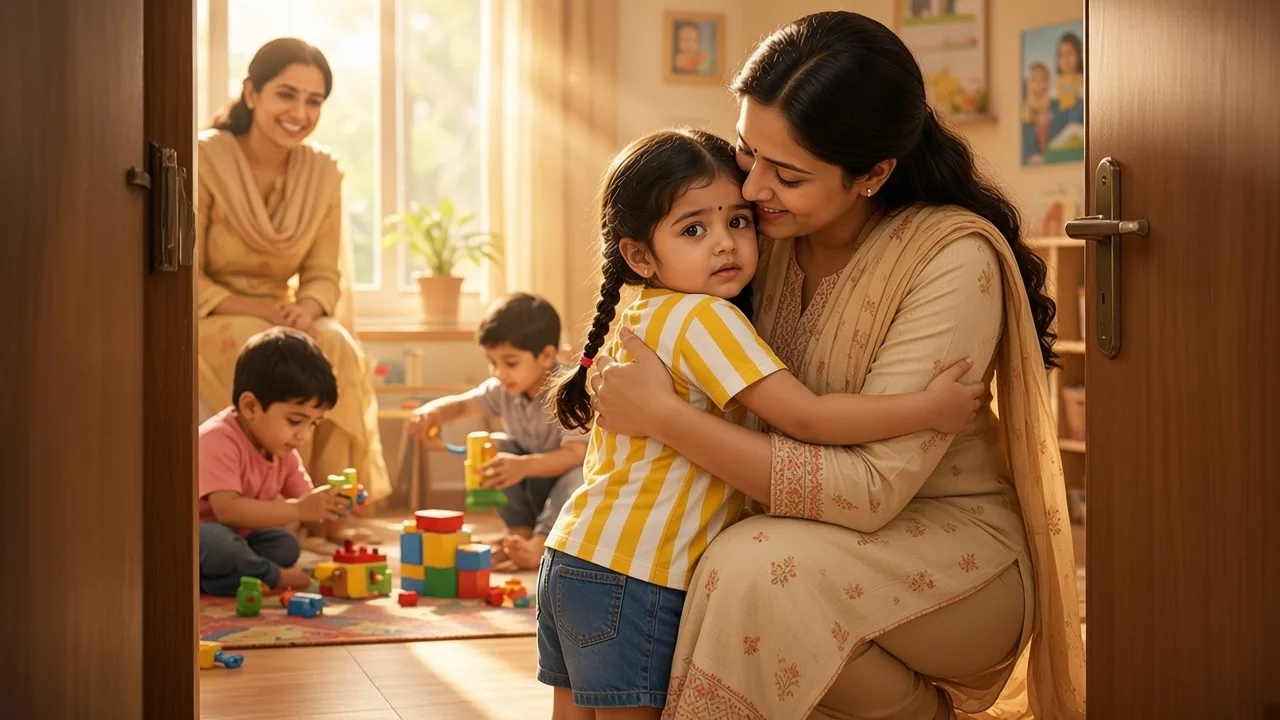
Emotional and social growth appears long before any ABCs or 123s. It is completely okay if your child cries a little when you say goodbye. What matters more is how quickly they wipe those tears and join the fun after you leave. (Fun fact: most children stop crying within minutes of the parent leaving. The parent, however, may cry in the car for a while longer. We do not judge.)
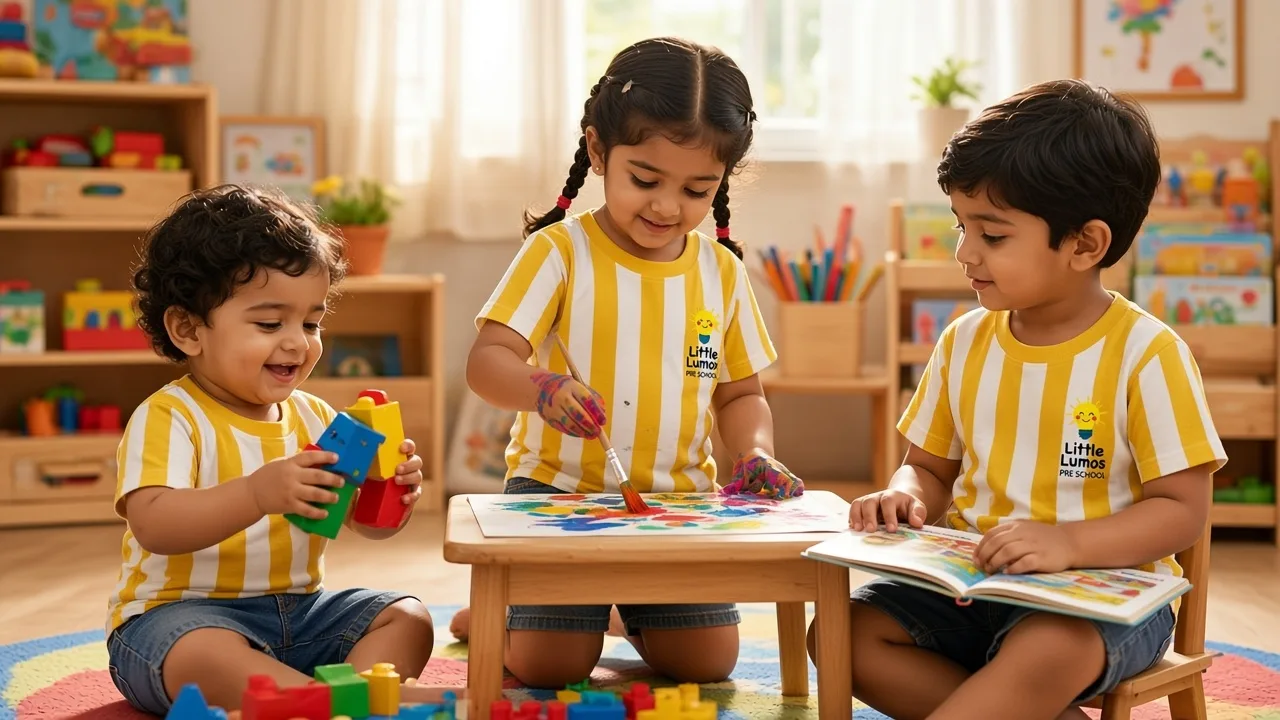
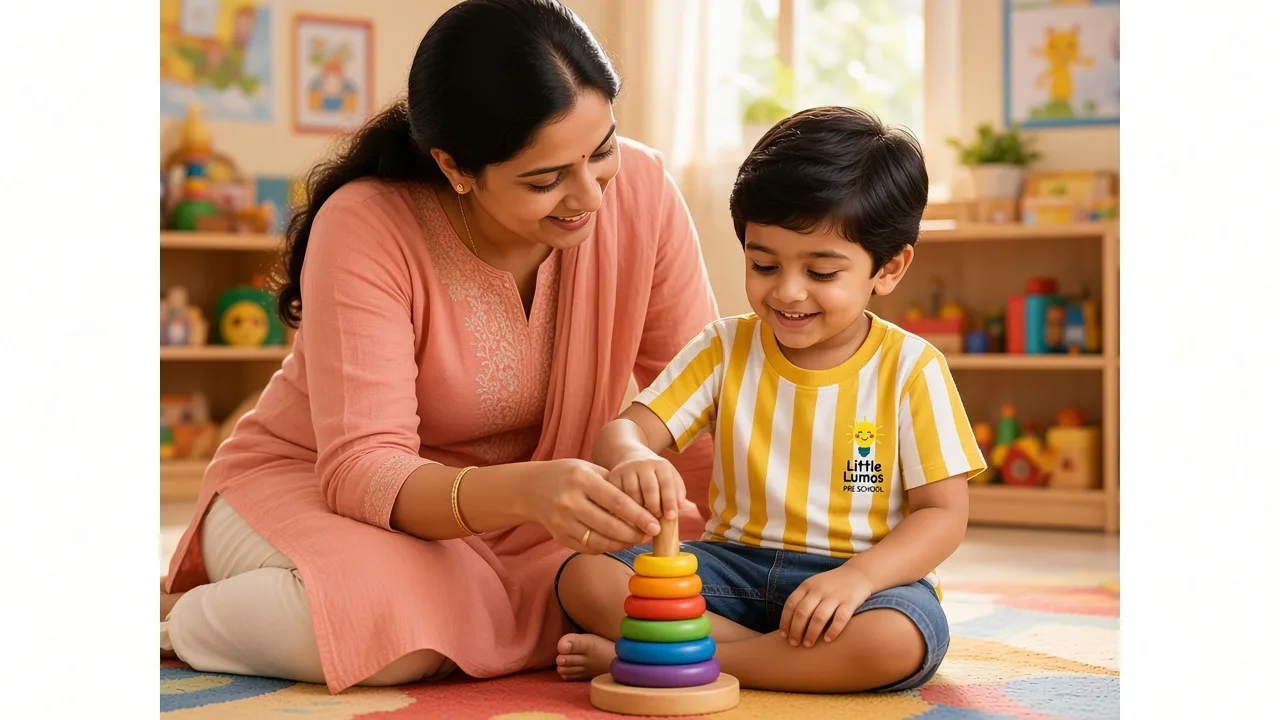
At Little Lumos, Kakinada's first Reggio Emilia inspired preschool, we believe emotional security is the foundation of all learning. The Reggio Emilia approach sees every child as capable, curious, and full of ideas. So instead of rushing children into routines, we give them a gentle settling period, warm morning welcomes, and classrooms designed to feel like a second home.
Everyday signs of emotional and social readiness include: