Why Early Intervention Matters More Than Waiting for Your Child to "Catch Up"

Little Lumos Team
Reviewed by Dr. K. Lakshmi Lalithya, Founder & Principal
We share insights, stories, and practical tips for mindful parenting, straight from our vibrant learning community.
If an aunty has ever told you to wait for the famous late-talking uncle, this guide is for you. Learn what early intervention really means, why the early years are when the brain learns fastest, and how a gentle, play-based preschool in Kakinada supports every child without pressure.

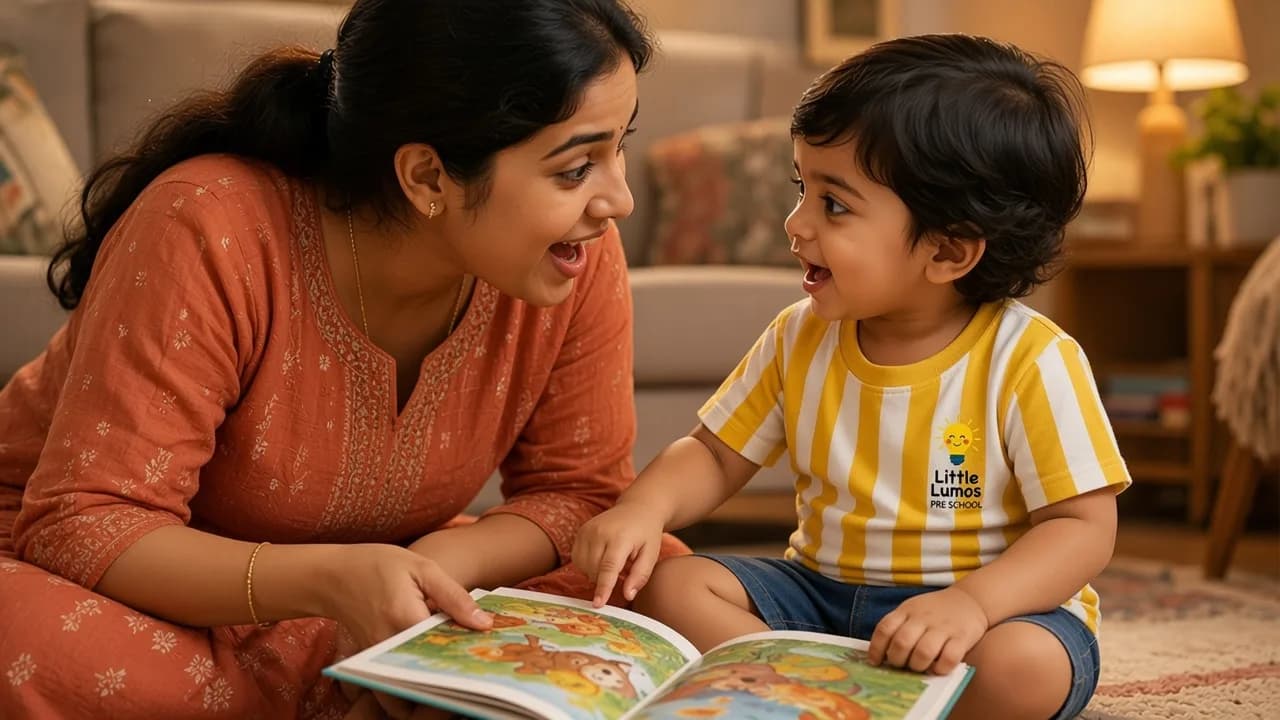
At a family function last year, a young mother from Kakinada quietly shared her worries with her cousin. "My son is two and a half, but he barely says ten words." Before she could finish, an aunty nearby jumped in with the classic line every Indian parent has heard: "Arey, don't worry! Your uncle didn't speak till he was four, and look at him now, he never stops talking!" Everyone laughed. The mother smiled too, but the worry stayed.
If you have ever been that parent, nodding politely while an aunty tells you about the famous late-talking uncle, this blog is for you. Because while these stories are said with love, science tells us something different: the early years are when a child's brain is most ready to learn, and gentle support given early works far better than waiting and hoping.
Let us break down what early intervention really means, why experts recommend it, and what you as a parent can do about it, whether your child is at home or already in a preschool in Kakinada.
Use the interactive tools on this page to:
- Understand what early intervention is — and why it is not a label
- Compare "wait and see" with gentle early support
- See what a sensory-rich, Reggio Emilia classroom actually looks like
- Pick up simple ways to track progress with your child's teachers
- Get clear answers to the questions parents ask most
At Little Lumos — Kakinada's first Reggio Emilia inspired preschool — we create a space where children explore, make glorious messes, ask endless questions, and grow at their own pace, all without an ounce of pressure.
Interactive tools
See where your child is
What early intervention actually means, the honest answer on waiting, and how progress gets tracked between home and school.
Quick navigation
Not a label. A head start.
What is Early Intervention, and Why Do Experts Recommend It?
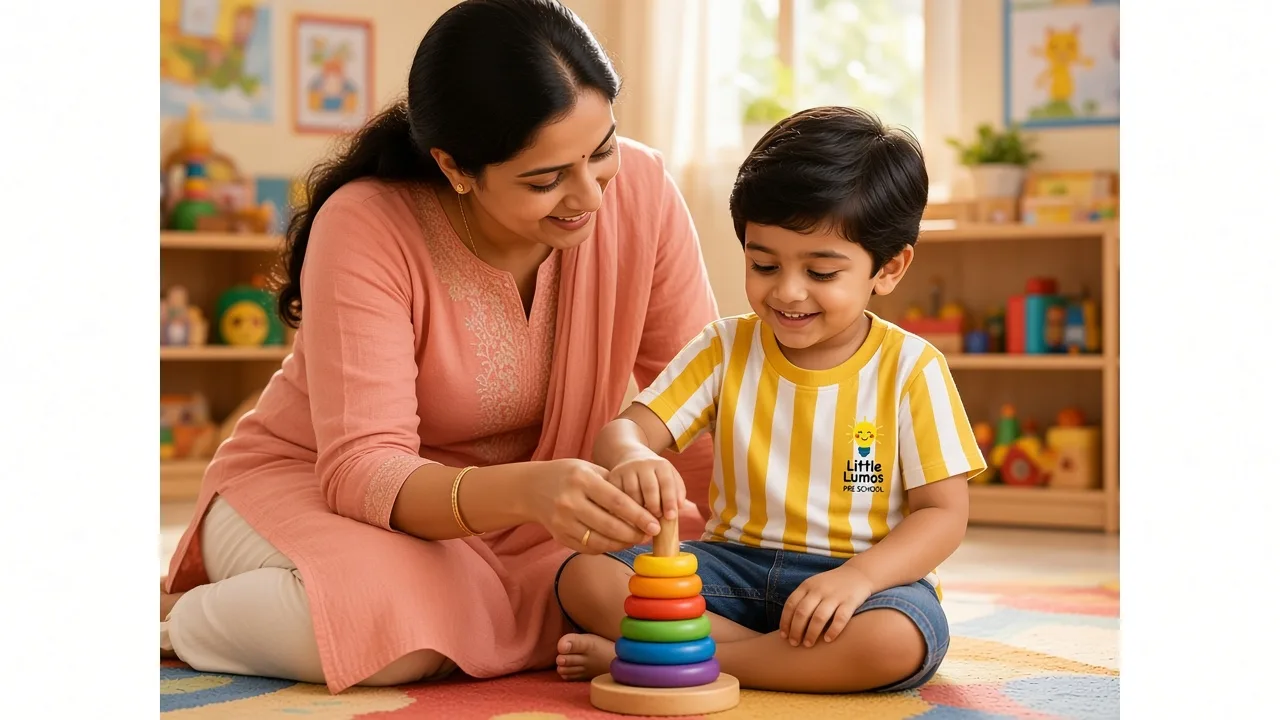
Early intervention simply means giving a child targeted, gentle support in their early years instead of waiting for problems to grow. It is not scary, and it is not a label. It can be as simple as practising speech through daily conversation, or using play-based routines to slowly build a child's attention span.
Here is the science in plain words. Researchers at Harvard University's Center on the Developing Child found that in the earliest years of life, a child's brain forms more than a million new connections every second. Yes, every second. Your toddler's brain is basically doing more construction work than the whole of Kakinada port put together.
1,000,000+
new brain connections every second in the earliest years of life. Harvard University's Center on the Developing Child.
These connections build the foundation for all future skills, like language, thinking, focus, and social behaviour. And just like a building, the foundation is laid from the bottom up. It is much easier to build it right the first time than to repair it later.
Plasticity has a window
Is the "Wait and See" Approach Harmful?
Brain growth is not spread evenly across childhood. The brain is at its most flexible in the years before formal schooling begins. Scientists call this flexibility "plasticity," which is a fancy way of saying a young brain can absorb, adjust, and rewire itself with amazing ease.
As children grow older, this flexibility slowly reduces. So what happens if we simply wait?
This does not mean you should panic if your child is a little behind on one milestone. Children genuinely do grow at different paces. The point is simple: gentle support early is always better than anxious waiting.
Curiosity does the heavy lifting
What Does the Right Learning Environment Look Like?
Here is where many parents get the wrong picture. Early intervention does NOT mean making a three-year-old sit with worksheets and flashcards until they cry. Young children do not need pressure. They need an environment that matches their stage of brain growth and lets curiosity do the heavy lifting.
This is exactly what the Reggio Emilia approach is built on. As Kakinada's first Reggio Emilia inspired preschool, Little Lumos follows a philosophy that treats every child as naturally capable and curious.
Learning Through the Senses
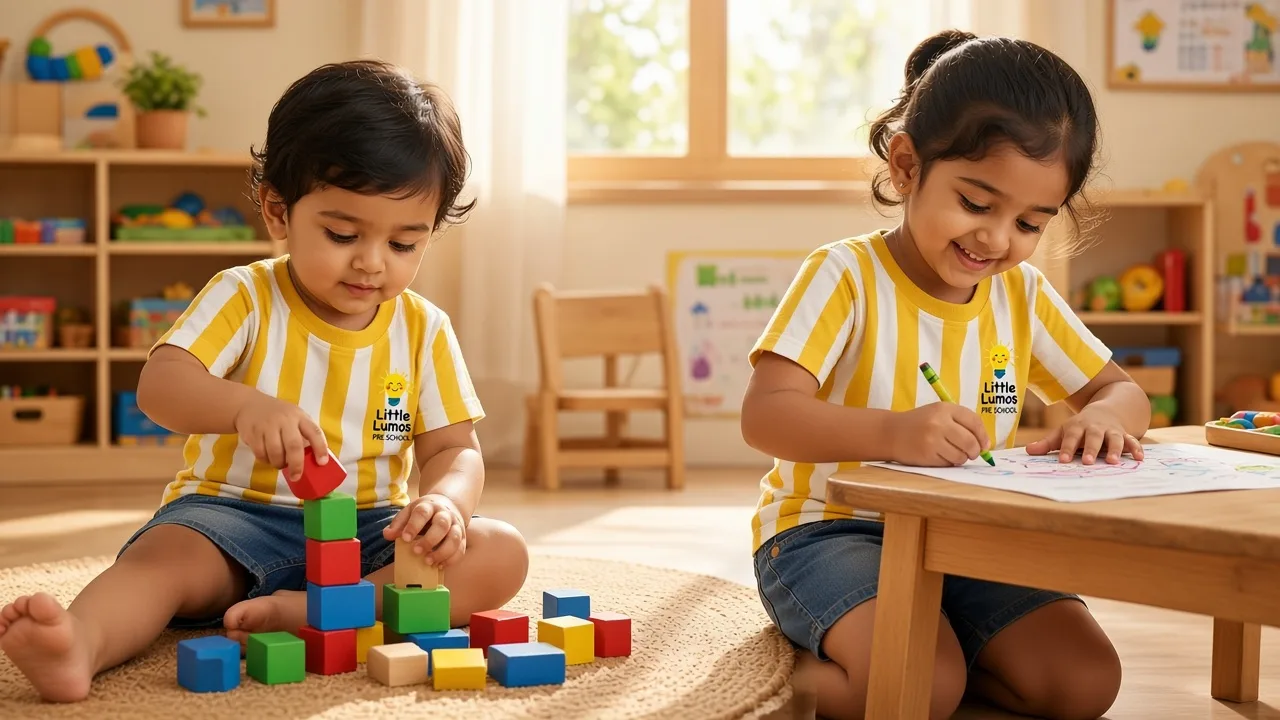
Young brains grow through sensory-rich experiences: touching, mixing, pouring, balancing, listening, and building. In a Reggio Emilia school, classrooms are filled with open-ended materials like clay, natural objects, blocks, and art supplies. When a child squishes clay into a "dosa" for twenty minutes, they are actually strengthening fine motor skills, focus, and imagination all at once. To an adult it looks like play. To the brain, it is serious work.
Trust grows first
What If Your Child Needs a Little More Time?
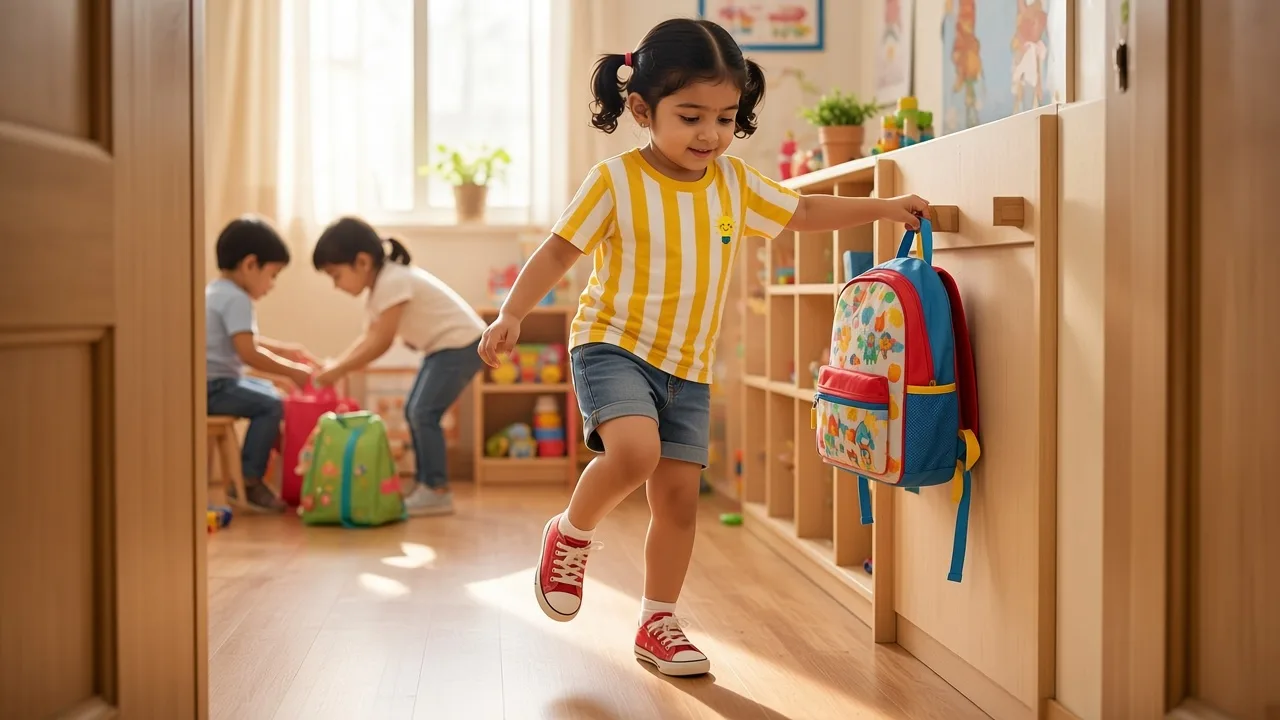
Every child settles at their own pace, and that is completely fine. Some children walk in on day one like they have been attending school for years. Others need a few weeks of warm-up. Both are normal.
A good early learning environment supports slower-to-warm children with a gentle settling-in period, one-on-one attention, small group activities, and predictable daily routines. At Little Lumos, we never rush a child into full participation. Trust grows first, learning follows naturally.
Not a race
How Can Parents and Teachers Track Progress Together?
Please remember one golden rule: your child's growth is not a race, and the neighbour's child is not the finish line.
Instead of comparing, observe patterns. Is your child communicating more than last month? Are they trying new things? Progress in early childhood looks like small, steady steps, not sudden jumps. Here is how you can partner with your child's teachers:
Give Your Child's Growing Brain What It Needs
Instead of crossing your fingers and waiting for a sudden leap, give your child an environment that works with the brain's natural timetable. The early years come only once, and they are far too precious to spend on "let's wait and see."
At Little Lumos, Kakinada's first Reggio Emilia inspired preschool, we create a space where children explore, make glorious messes, ask endless questions, and grow at their own pace, all without an ounce of pressure. If you would like to see what that looks like in real life, come visit us. Walk through our classrooms, meet our teachers, and watch curiosity at work. And if an aunty tells you to just wait it out, you will now know exactly what to say.
Come visit. Watch curiosity at work.
Walk through our classrooms, meet our teachers, and see a screen-free, child-led environment that works with the brain's natural timetable.
Sources
- Why Act Early if You're Concerned About Development?, Centers for Disease Control and Prevention
- Improving early childhood development: WHO guideline, World Health Organization
At Little Lumos in Kakinada, this is part of everyday practice. Read more about our early childhood specialists, or talk to us about your child, or book a campus visit.
People Also Ask
Quick answers to the questions parents ask most.
Not at all. Early intervention simply means supporting a child's development early, when the brain learns fastest. It applies to every child, not just those facing delays. Think of it as watering a plant regularly instead of waiting for the leaves to droop.