The Benefits of Sensory Learning in Early Childhood

Little Lumos Team
Reviewed by Dr. K. Lakshmi Lalithya, Founder & Principal
We share insights, stories, and practical tips for mindful parenting, straight from our vibrant learning community.
What is sensory learning, and why does it matter so much for young children? This guide explains the science behind sensory play, its benefits for the brain, body, and emotions, the main types, and simple ways to try it at home — from the screen-free team at Little Lumos, Kakinada.

Watch a toddler squish a handful of dough, pour water from cup to cup again and again, or sink their fingers into cool, wet sand, and you are watching something far more important than mess. You are watching a brain at work. This is sensory learning, and it is one of the most powerful — and most underrated — ways young children grow.
In a world that often rushes children toward worksheets and screens, sensory learning is a gentle reminder of how little ones are actually built to learn: through their hands, their bodies, and their senses. Here is what sensory learning really is, why it matters so much in the early years, the benefits it brings, and simple ways to bring it into your home.
What is sensory learning?
Sensory learning (often called sensory play) is any activity that engages a child's senses — touch, sight, sound, smell, taste, and the lesser-known senses of movement and balance. It includes squishing dough, exploring a tray of dried beans, splashing in water, smelling herbs, listening to different sounds, and climbing and spinning.
For a young child, the senses are the main doorway to understanding the world. Long before they can read a description of 'cold' or 'rough' or 'heavy', they learn these concepts by touching ice, stroking bark, and lifting a stone. Sensory play simply gives them rich, hands-on chances to do exactly that.
Why does sensory learning matter so much?
The early years are when the brain builds connections fastest, and it does so through experience. Every time a child explores a new texture or sound, neural pathways form and strengthen. Sensory play is, quite literally, brain-building.
It is also how children make sense of abstract ideas. Maths concepts like volume, weight, and quantity become real when a child fills and empties containers. Science begins when they notice that ice melts or that water makes sand stick together. None of this needs a screen or a worksheet — just real materials and time.
The benefits of sensory learning
The gains from regular sensory play reach across every area of a child's development:
- Brain development: builds and strengthens neural connections through rich experience.
- Fine motor skills: squeezing, pinching, pouring, and scooping build the small hand muscles needed later for writing.
- Language: new textures and experiences spark new words — slimy, gritty, smooth, freezing.
- Problem-solving and early maths and science: children experiment, predict, and discover cause and effect.
- Focus and attention: absorbing, open-ended play builds the ability to concentrate.
- Emotional regulation: sensory play is naturally calming, helping children settle big feelings.
- Creativity and confidence: with no 'right answer', children explore freely and trust their own ideas.
The main types of sensory play
A rich mix keeps every sense engaged. Most sensory activities blend several at once:
- Tactile (touch): sand, water, dough, mud, fabric, dried pasta — the most common and beloved.
- Visual (sight): light and shadow, colour mixing, bubbles, nature's patterns.
- Auditory (sound): shakers, pots and spoons, listening games, music and rhythm.
- Smell and taste: herbs, spices, fruits, safe cooking and baking together.
- Movement and balance (vestibular and proprioceptive): climbing, swinging, spinning, rolling, and carrying heavy things — vital for body awareness and calm.
Is sensory play just for toddlers?
Not at all. While it is wonderful for babies and toddlers, sensory learning benefits children right through the preschool years and beyond. Older children simply enjoy more complex versions — sorting and counting natural objects, mixing colours and potions, building and testing, or cooking real recipes. The materials grow up; the hands-on, senses-first principle stays the same.
Simple sensory activities to try at home
Sensory play does not need special kits or money. Some of the best materials are already in your kitchen:
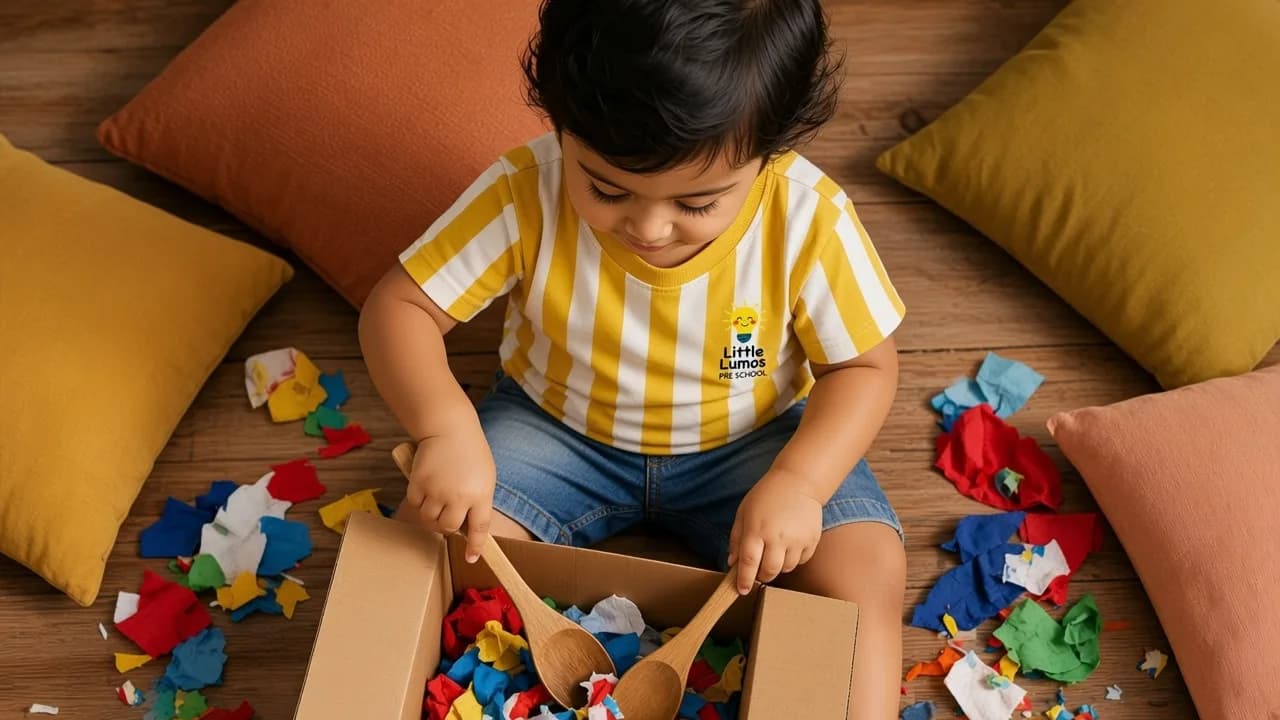
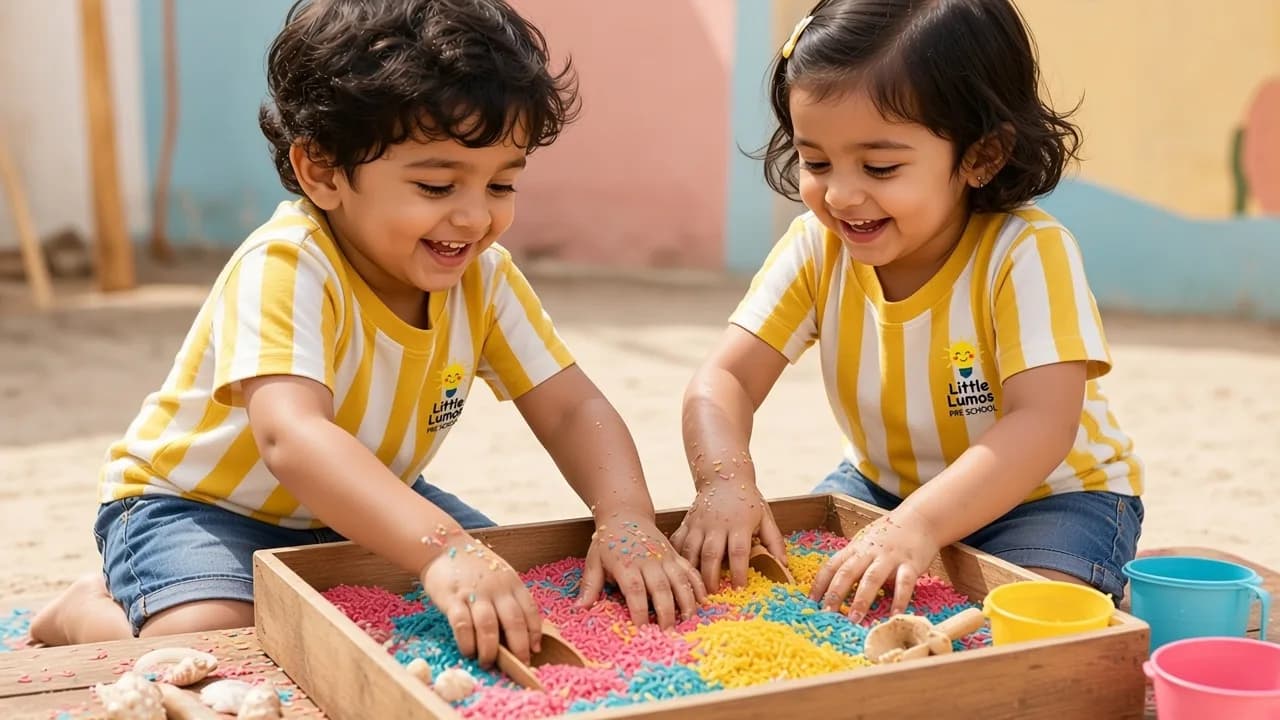
- A tray of dried rice, lentils, or pasta with cups and spoons for scooping and pouring.
- A basin of water with a few unbreakable containers, perfect for a hot Kakinada afternoon.
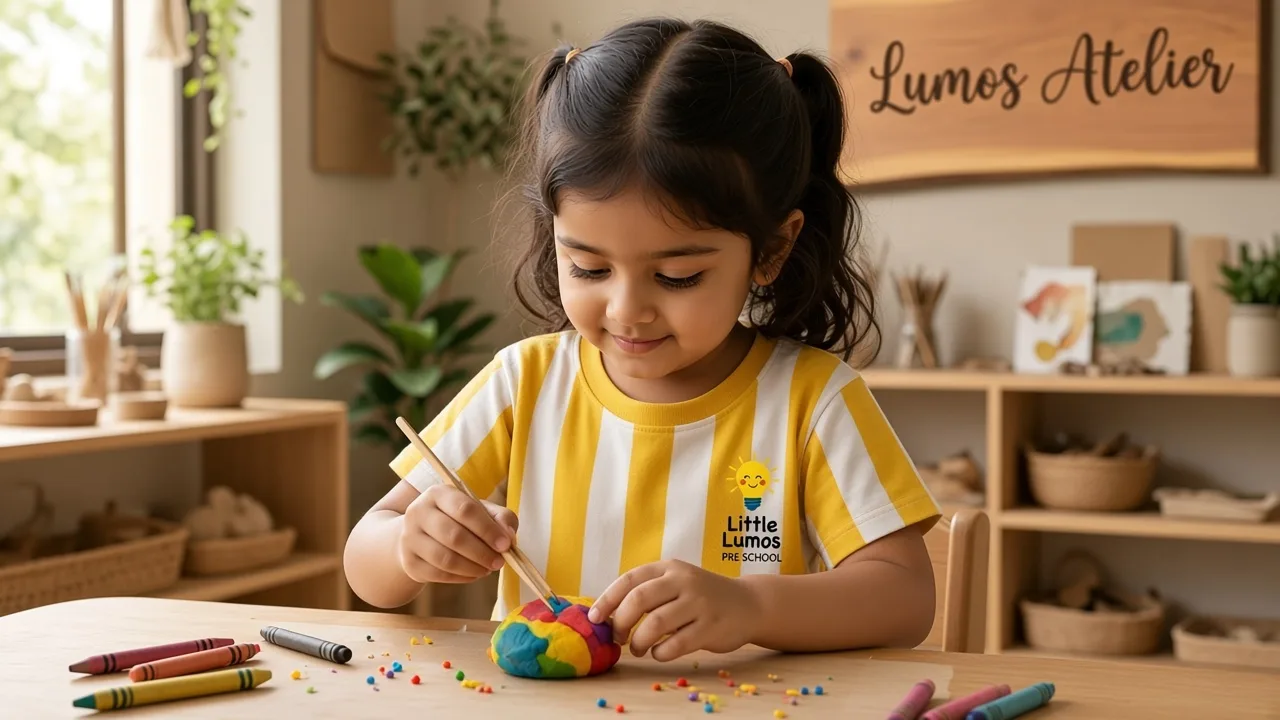
- Homemade dough for squishing, rolling, and pinching.
- A 'texture hunt' around the house or garden — soft, rough, smooth, bumpy.
- Safe cooking together: kneading, mixing, smelling spices, tasting.
- A nature tray of leaves, stones, shells, and seed pods to sort and explore.
A quick word on mess and safety: sensory play can be contained on a tray, a mat, or taken outdoors, and it always needs supervision — especially with young children and any small or edible-looking materials. The mess is temporary; the learning lasts.
How Little Lumos uses sensory learning
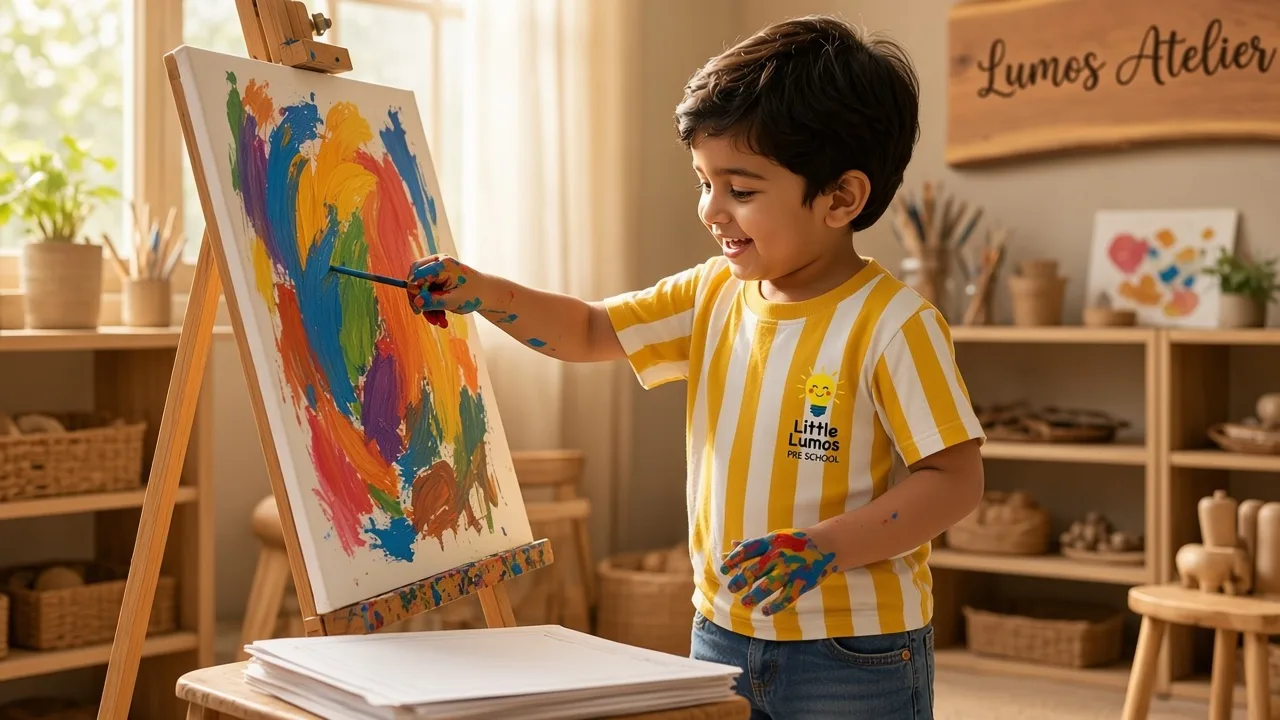
At Little Lumos — Kakinada's first Reggio Emilia inspired preschool — sensory learning is woven through every day. Our atelier, nature lab, and play-based classrooms are full of real materials: clay, water, sand, natural objects, paint, and more. We are completely screen-free, because we believe young children learn best through their hands and senses, exactly as nature intended. Through this rich, sensory-rich play, children build strong brains, capable hands, and a genuine love of discovering the world.
At Little Lumos in Kakinada, this is part of everyday practice. Read more about our hands-on early years curriculum, or preschool programs for ages 2 to 6, or book a campus visit.
People Also Ask
Quick answers to the questions parents ask most.
Sensory learning, or sensory play, is any activity that engages a child's senses — touch, sight, sound, smell, taste, and the senses of movement and balance. Squishing dough, pouring water, exploring sand, and listening to sounds are all sensory learning. For young children, the senses are the main doorway to understanding the world.