Fine Motor Skills & Writing Readiness: Strong Hands First

Little Lumos Team
Reviewed by Dr. K. Lakshmi Lalithya, Founder & Principal
We share insights, stories, and practical tips for mindful parenting, straight from our vibrant learning community.
Worried your child isn't writing yet? Handwriting is the last step of a playful journey. Use the interactive pencil-grip guide, activity picker and writing-readiness checklist to build strong little hands — no worksheets required.

Watching other children form neat letters while yours is still scribbling can spark real worry. Take a breath: handwriting is the very last step of a long, playful journey — and rushing it usually backfires. Before a pencil ever moves smoothly across a page, a child needs strong hands, a clever thumb-and-finger pinch, and lots of big, free mark-making.
Fine motor skills — the small, precise movements of the hands and fingers — are the real foundation of writing. They develop in natural stages, from a whole-fist grip to the mature, efficient hold, and they're built far better by clay, threading, and water play than by early worksheets.
This interactive guide shows you the path and how to support it. Use the tools on this page to:
- Tap through the pencil-grip stages to see what's normal at each age
- Pick a skill in the activity finder for simple, low-cost ideas that build writing hands
- Run the writing-readiness checklist to see where your child is on the journey
- Separate the stubborn myths from what really helps
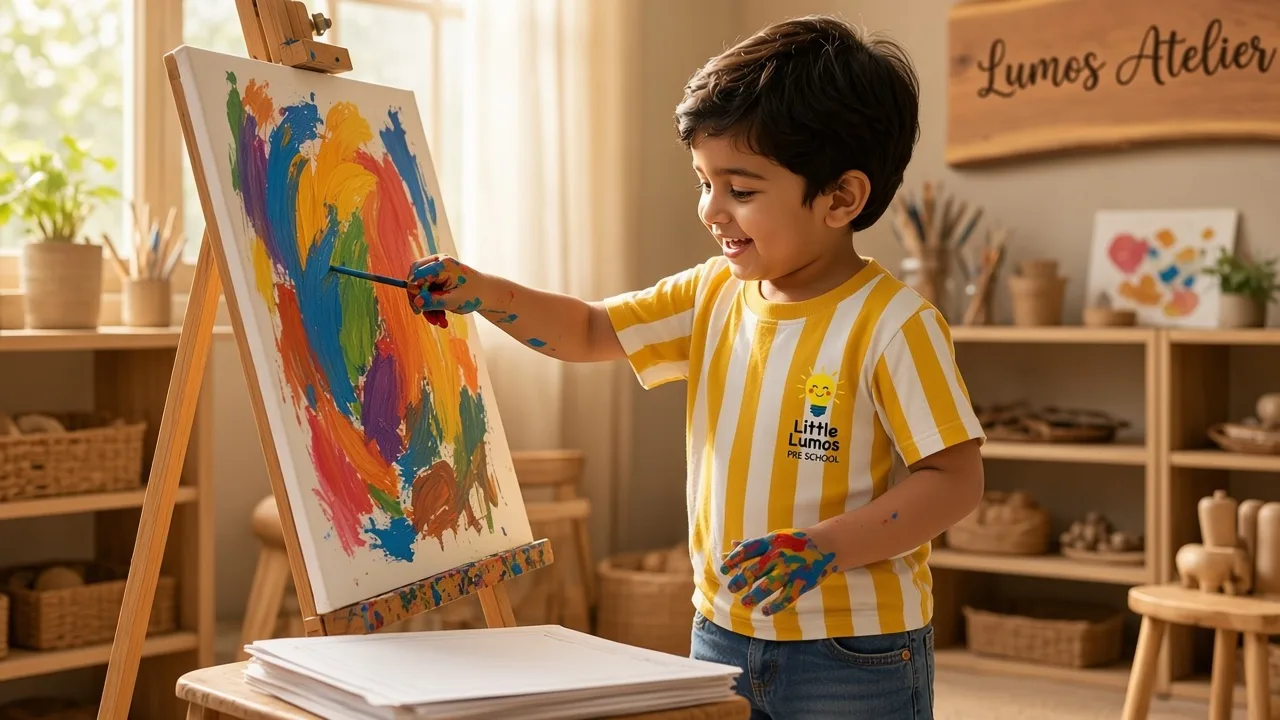
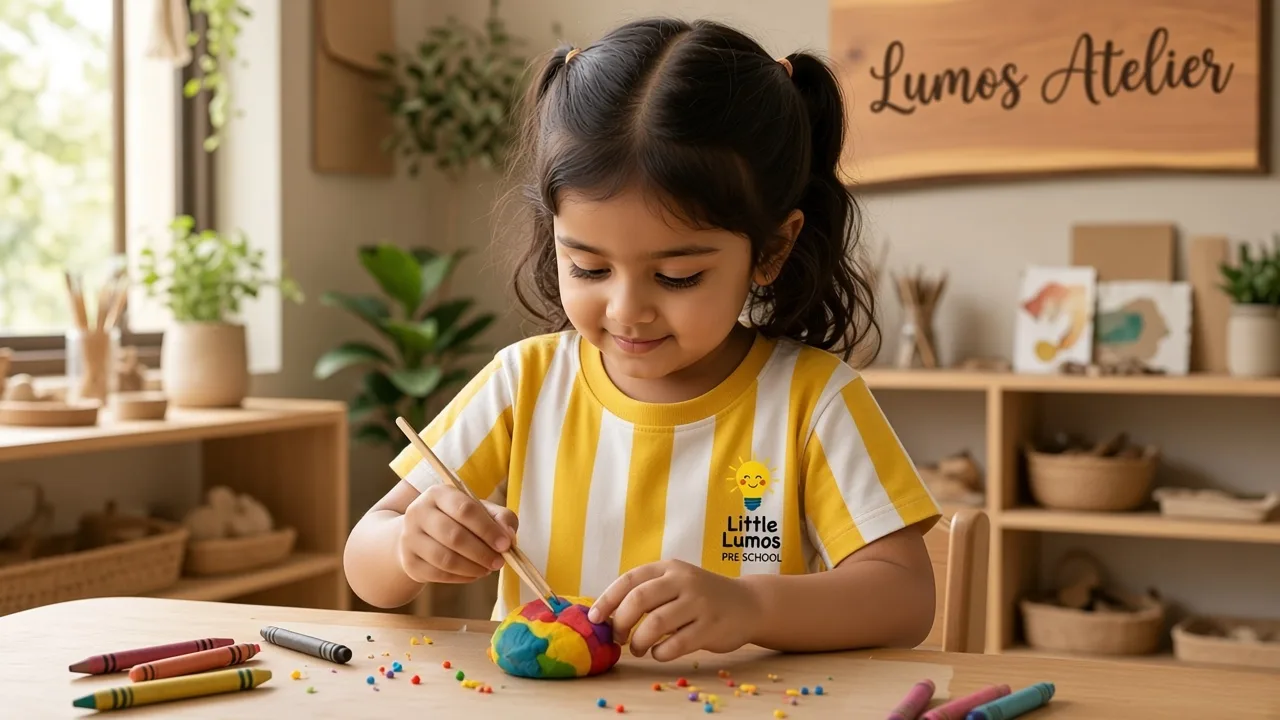
At Little Lumos, writing readiness grows through our Reggio Emilia inspired atelier and daily play — clay, painting, threading, weaving, and real tasks like buttoning and pouring. By the time formal letters arrive, the hand is strong, the grip is comfortable, and the child is genuinely ready.
Interactive tools
Check the hands before the letters
How the pencil grip develops, activities that build writing hands, and a readiness check.
Interactive grip guide
The Pencil Grip Develops in Stages
A good pencil grip can't be rushed, it matures step by step as the hand gets stronger. Tap a stage to see what it looks like and roughly when it appears.
The whole hand wraps around the crayon and the arm moves as one unit. This is exactly where it should be, big arm movements come before finger control.
What it looks like
- Holds the crayon in a closed fist
- Scribbles using the whole arm and shoulder
- Makes big back-and-forth and circular marks
- Switches hands freely, a dominant hand isn't set yet
Interactive activity picker
Activities That Build Writing Hands
Pick a skill to strengthen. Each one is everyday, low-cost and play-based, and far more effective than early worksheets.
Why it helps
Strong little hands are the engine behind a comfortable pencil grip. Squeezing builds the exact muscles writing relies on.
Interactive checklist
Is My Child Ready to Write?
Tick the signs you already see. There's no pass or fail, it's a gentle picture of where your child is on the journey.
0 of 7 signs
Tick the signs you see in your child to gauge writing readiness.
Myths vs truth
Letting Go of the Pressure
Children should start writing letters as early as possible.
Pushing a pencil too early, before the hand is strong and the grip is ready, often builds awkward grips and frustration. Strength, then control, then letters. The order matters more than the calendar.
A left-handed child should be encouraged to switch.
Never. Left-handedness is completely normal. Forcing a switch causes confusion and stress. Support a lefty with the right setup, paper angled, light from the right, and let their natural hand lead.
Messy handwriting means something is wrong.
Early handwriting is meant to be wobbly. Neatness comes with years of practice and developing hand muscles. At 4 and 5, the goal is a comfortable grip and the joy of making marks, not perfect lines.
Scissors are too dangerous to bother with at preschool age.
Child-safe scissors are one of the best fine-motor tools there is. The open-close cutting action builds exactly the hand strength and coordination that writing needs, with supervision.
Writing Readiness, Built Through Play
At Little Lumos, children strengthen their hands every day through clay, painting, threading and real tasks, so when letters arrive, they're genuinely ready. Come see our atelier in Siddharth Nagar, Kakinada.
At Little Lumos in Kakinada, this is part of everyday practice. Read more about our hands-on early years curriculum, or preschool programs for ages 2 to 6, or book a campus visit.
People Also Ask
Quick answers to the questions parents ask most.
Fine motor skills are the small, precise movements of the hands and fingers — the coordination behind holding a pencil, using scissors, doing up buttons, threading beads, and turning pages. They develop gradually from babyhood and are the foundation for writing, self-care, and many everyday tasks.