Immunity-Boosting Foods for Kids: A Simple Indian Guide

Little Lumos Team
Reviewed by Dr. K. Lakshmi Lalithya, Founder & Principal
We share insights, stories, and practical tips for mindful parenting, straight from our vibrant learning community.
Why a preschooler who catches every cold going is usually normal, what food can genuinely do for immunity (and what it can't), and how to stop mealtimes turning into a negotiation you lose.

Somewhere between the third cold of the season and a relative asking why your child looks "so weak," most parents end up searching for immunity. Four minutes later you are looking at tins of powder promising to build your child's immunity in thirty days, and carrying a new, low-grade suspicion that you have been feeding your child wrong all along.
So let's start where a paediatrician would start. A preschooler who keeps catching colds usually doesn't have a weak immune system. They have a social life.
Why your child seems to catch everything
A young immune system learns the way a young brain does, by meeting things it has never met before. There are hundreds of common cold viruses circulating at any time, and a three-year-old has been introduced to almost none of them. Every runny nose is, irritating as it is, a lesson.
Then they start preschool, where children share toys, share air, and occasionally share a biscuit that has already been in someone else's mouth. Six to eight colds in a year is squarely normal at this age, and the first year at any new school is usually the worst of it. That is not a nutrition failure. That is arithmetic.
What is worth a phone call is a different pattern: infections that are unusually severe, that drag on far longer than expected, that keep needing antibiotics, or that come alongside your child not gaining weight. That belongs with your paediatrician, not with a food article.
What food can actually do, and what it can't
This is the part the powder tins are quiet about.
Nutrition doesn't work like a shield you can thicken. It works more like a floor. If a child is genuinely short of something the immune system needs, whether that's iron, zinc, vitamin D, protein, or simply enough food, the floor sags, and infections hit harder and hang around longer. Fill that gap and things measurably improve. But once a child has enough, piling on more doesn't buy extra protection.
There is no upgrade tier.
That distinction matters a lot in Indian homes, because a child can eat plenty and still be short on iron or vitamin D. A thin dal poured over a big mound of rice. A child who fills up on milk and eats little else. A family that quite sensibly stays indoors through the hottest months and gets very little sun. None of these are bad parenting. They are ordinary, and they are exactly the sort of gap worth checking properly with a blood test rather than guessing at with a supplement.
The food groups that matter, in a kitchen you already own
You don't need a new grocery list. You need a slightly wider one, spread across the week rather than crammed into one heroic meal.
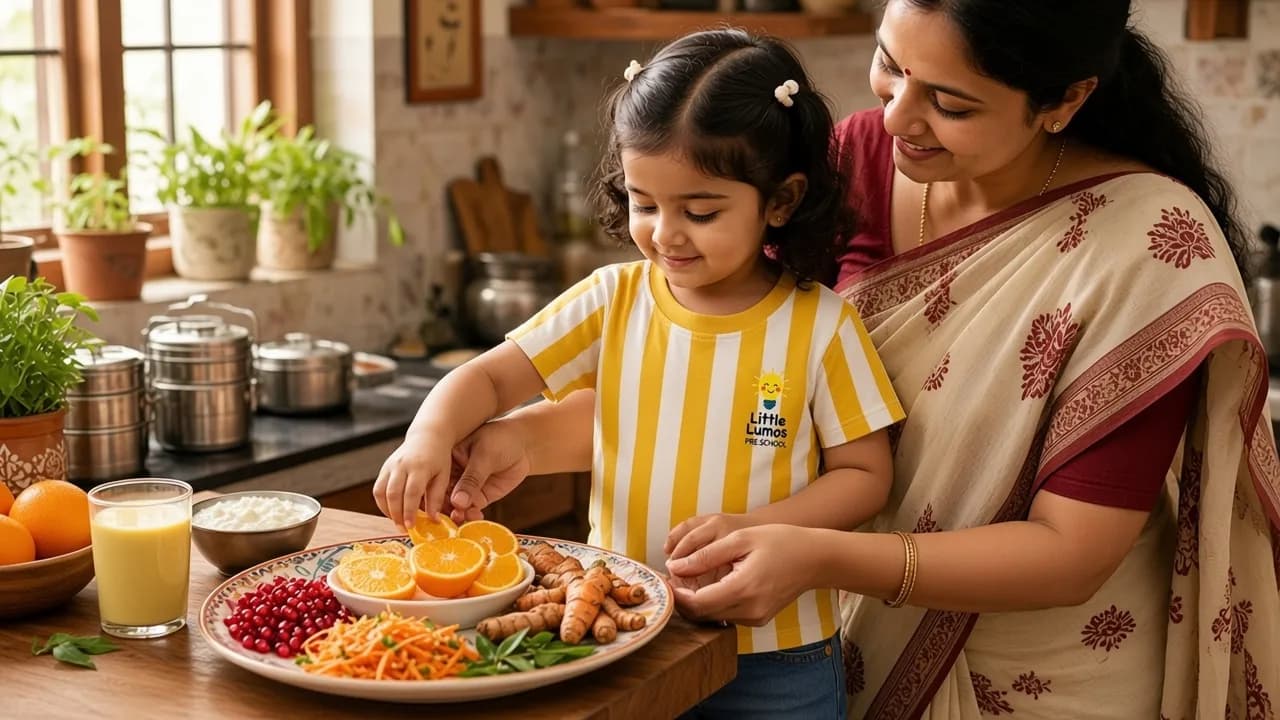
Colour and vitamin C. Amla, guava, oranges and sweet lime, tomato, capsicum, papaya. Guava is the quiet hero here: cheap, seasonal, and carrying considerably more vitamin C than an orange. One honest caveat, since it is the food most often sold as an immunity fix. Vitamin C will not stop your child catching colds. Researchers have been checking that for decades, and it doesn't.
Protein. Immune cells are built from protein and replaced constantly, so this is the group to get right. Dal absolutely counts, but a watery dal gives far less than parents assume. Thicken it. Eggs, curd, paneer, chana, rajma, chicken and fish all do the same job. A boiled egg is, unglamorously, one of the most efficient things you can hand a small child.
Iron and zinc. Ragi, greens, chana, sesame, jaggery, dates, pumpkin seeds, meat. Two small habits change how much of it actually gets absorbed. Add something sour to plant-based iron, like a squeeze of lemon over the palak or tomato in the dal. And keep tea or coffee well away from meals, because both quietly block iron absorption. If your household serves children milky tea alongside dinner, that one change is worth more than any supplement.
Fermented and gut-friendly. Curd, majjiga, idli, dosa, bananas, whole fruit and vegetables for fibre. A very large share of the body's immune activity sits along the gut wall, which is a good reason to keep that neighbourhood well fed. South Indian kitchens have been fermenting batter for centuries without ever needing the word probiotic.
Fats and everyday spices. Ghee in reasonable quantity, nuts, til, coconut, turmeric, ginger, garlic. Turmeric milk at bedtime isn't medicine and shouldn't be sold as such, but a warm, comforting ritual before sleep has its own value, and it gets a child to bed, which brings us to the thing that actually matters most.
The four things that beat every superfood
If you change nothing else on this page, change these.
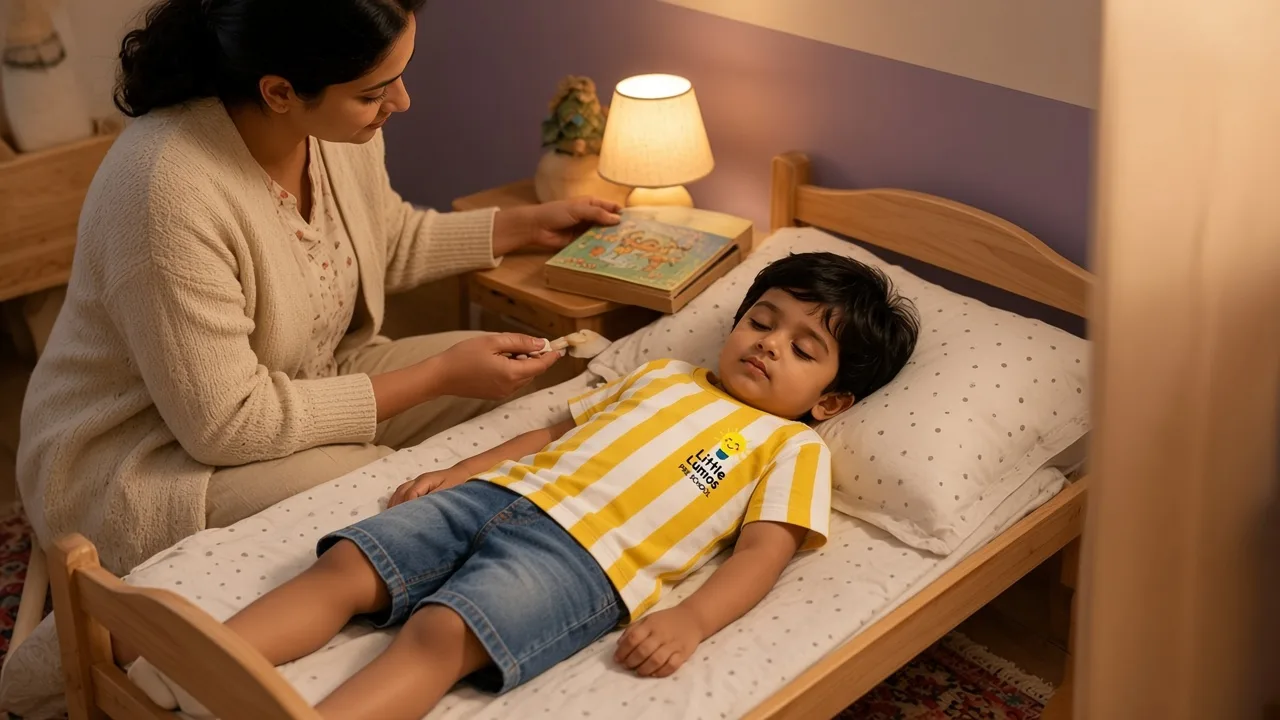
Sleep. This is the most underrated item in the entire conversation. Children who are chronically short on sleep pick up more infections and take longer to shake them off, and a tired child is also a child who eats badly, melts down at dinner and refuses vegetables they ate happily last Tuesday. If you are going to fix one thing this month, fix bedtime before you fix breakfast.
Outdoor play. Daily movement in real daylight supports appetite, sleep and mood together. In Kakinada that mostly means early morning and after five, but it counts.
Water. Small children in this heat get dehydrated faster than adults do, and a dehydrated child looks a lot like a listless, off-their-food, "low immunity" child.
Handwashing. The single most effective thing on this entire page costs almost nothing and lives next to your sink. Before eating, after school, after the toilet. It prevents more illness than any superfood ever has.
When your child negotiates like a small lawyer
Here is the scene. You have made something genuinely good. You put it down. Your child regards it with the expression of a person who has been personally insulted and announces, "I don't want."
You explain that it is healthy. They inform you it is yucky. You mention that it will make them strong. They point out that they are already strong. Somewhere in the last forty seconds the meal stopped being a meal and became a negotiation, and you are losing it.
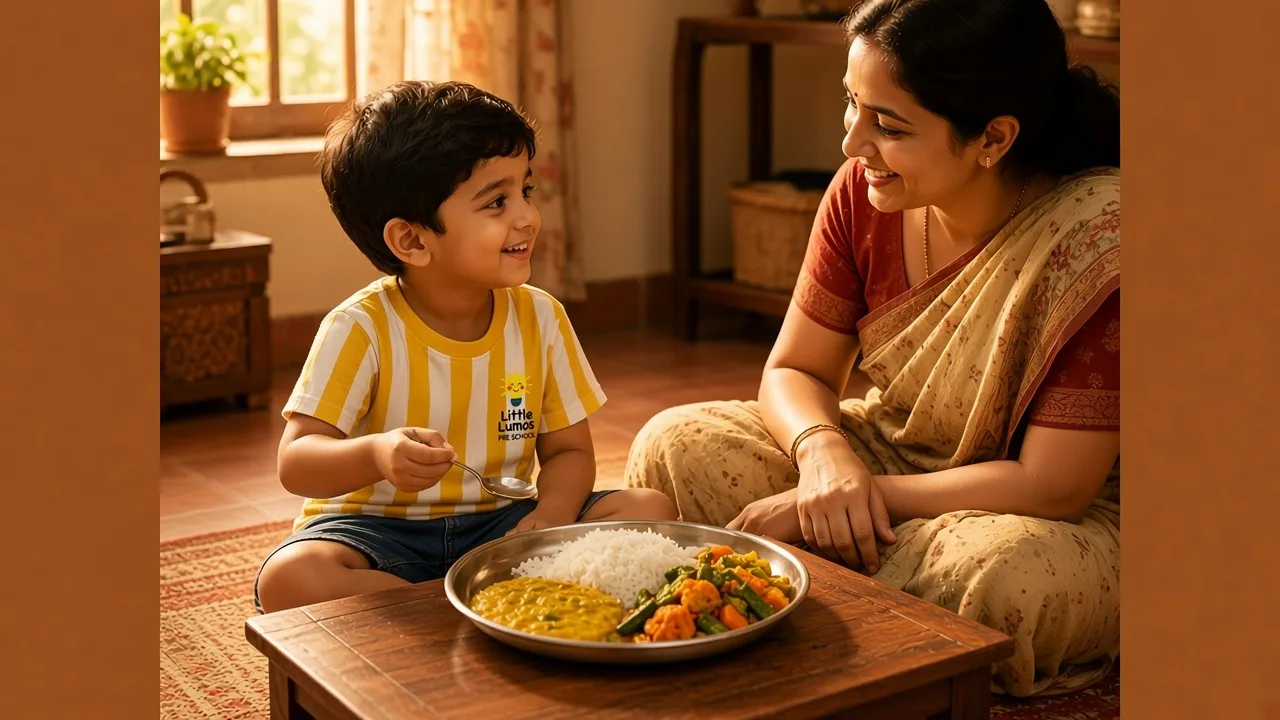
The way out is less satisfying than winning, but it works better. Split the job. You decide what is served, and when, and where. Your child decides whether they eat it and how much. That's the whole arrangement, and the moment you cross into their half, with one more bite, no dessert until, just try it for Amma, the food becomes a bargaining chip and the refusal digs in deeper.
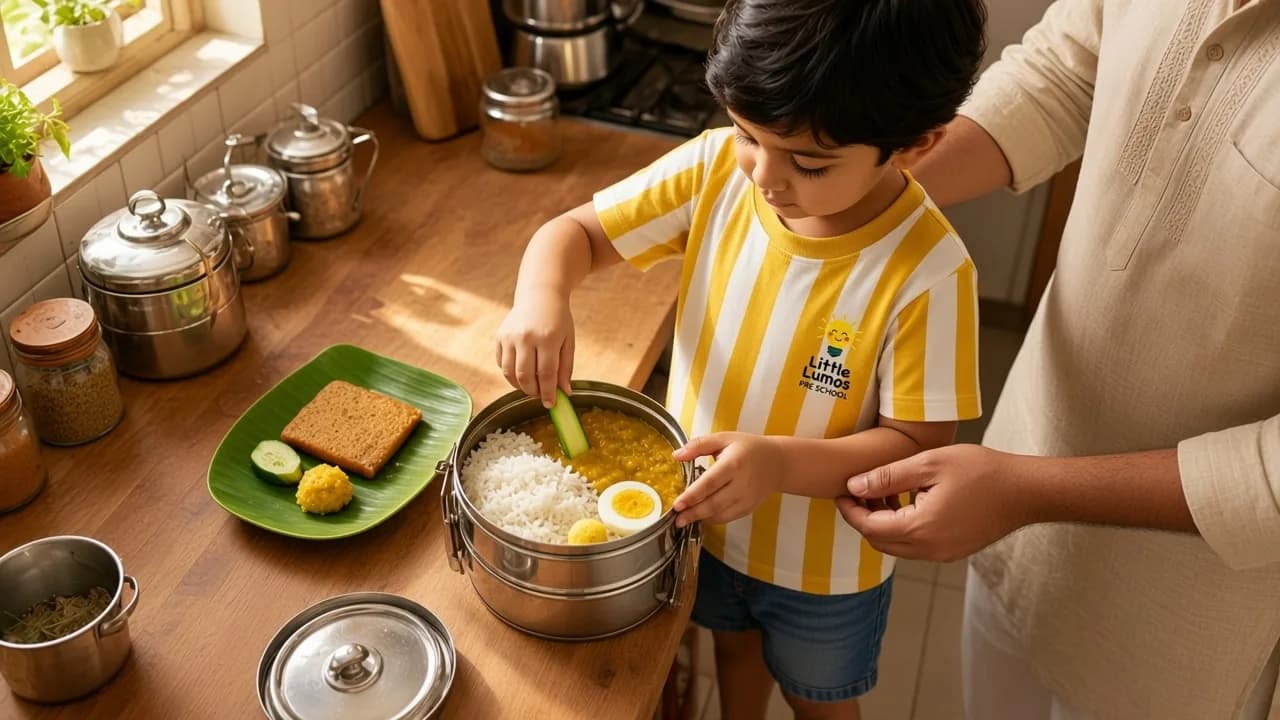
A few things that genuinely help. Serve anything new in a very small quantity, beside something safe and familiar, so the plate isn't threatening. Expect to offer it many times, ten or fifteen or more, before it's accepted, and understand that most of those offers will be refused, which is normal and not a verdict on your cooking. Let them help: a child who has washed the beans or pressed the puri is measurably more willing to eat it. And take the plate away without comment or commentary.
Try this tomorrow morning
Put one spoonful of the thing they rejected last week next to their usual breakfast. Say nothing about it at all. Clear it away without a word. That's it, that's the whole technique, and it works precisely because it removes the audience.
One more piece of reassurance, because almost nobody tells parents this. Appetite genuinely slows down somewhere between two and five. Growth slows, so hunger slows with it. The toddler who once ate everything and now lives on three foods is usually not ill and not being difficult. They are just growing more slowly than they were at one. Look at what your child eats across a week, not across a plate.
About those tins
Most children's health powders are, in honest terms, sugar with milk solids and a modest vitamin mix. They are not dangerous, and they are not magic either. If a child is genuinely deficient in something, a targeted supplement prescribed by a doctor will do far more than a scoop of anything. And if they aren't deficient, the powder is an expensive way to add sugar to milk.
Please don't start supplements on your own judgement. Some vitamins build up in the body rather than passing through, and more is not better. Ask your paediatrician what your child actually needs.
And what not to worry about
An untouched tiffin box. One bad meal, or one bad week. A child who wants the same dosa every single morning. A cold every few weeks through that first preschool winter. Cold water, incidentally, does not cause colds. Viruses do, so you can let that particular family argument go.
Good food supports your child's health genuinely and meaningfully. It does not replace vaccines, prescribed medicine or your paediatrician's judgement, and anything sold to you on that promise is selling you something.
At Little Lumos in Siddharth Nagar, mealtimes are unhurried and social, children eat together without anyone hovering over a plate, and there is a great deal of running about beforehand. It turns out that a calm table and a tired, happy child do more for eating than any amount of persuading. You can see more in our guide to building healthy eating habits, or steal a week of ideas from our healthy lunch box ideas.
Interactive tools
The food groups, at a glance
A shopping-list version of the section above. Tap a group to see what it does and the everyday Indian foods that carry it.
Interactive explorer
The Immunity-Supporting Food Groups
Tap a group to see why it helps and easy, everyday Indian foods that provide it. Variety across the week is the goal, not any single "superfood".
Vitamin C & colour
Vitamin C and the antioxidants in brightly coloured fruit and veg support the body's natural defences.
Just as important
Immunity Beyond the Plate
Food is only part of the story. These everyday habits do just as much for a child's health.
Enough sleep
The body builds its defences during deep sleep, the single most underrated immunity booster.
Active play daily
Movement and fresh air support a healthy body and better sleep.
Stay hydrated
Water and fluids help every system work well, especially in the Kakinada heat.
Handwashing habits
Simple, regular handwashing prevents more illness than any 'superfood'.
Healthy Habits Start Early
At Little Lumos, calm, unhurried mealtimes and daily active play help children build a happy, healthy relationship with food. Tour our campus in Siddharth Nagar, Kakinada, for children aged 2 to 6.
Sources
- Healthy diet: fact sheet, World Health Organization
- Dietary Guidelines for Indians, National Institute of Nutrition, ICMR
At Little Lumos in Kakinada, this is part of everyday practice. Read more about daycare in Kakinada with meals and rest time, or our full-day programs, or book a campus visit.
People Also Ask
Quick answers to the questions parents ask most.
There's no single magic food. A varied, colourful diet is what supports immunity. Include vitamin-C rich fruits (amla, guava, citrus), protein (dal, eggs, milk, paneer), gut-friendly foods (curd, buttermilk, fermented idli/dosa), iron and zinc sources (ragi, greens, jaggery, seeds) and healthy fats (ghee, nuts). Everyday Indian meals already cover most of this.