Potty Training: A Calm, Step-by-Step Guide (No Pressure, No Tears)

Little Lumos Team
Reviewed by Dr. K. Lakshmi Lalithya, Founder & Principal
We share insights, stories, and practical tips for mindful parenting, straight from our vibrant learning community.
Readiness is the whole game. How to tell, why your mother remembering you trained at one is a different thing entirely, and the constipation problem that derails more attempts than anything else.
- On the "you were trained at one" conversation
- Readiness is the whole game
- Do not start during a big change
- The method, which is short
- Accidents are part of the method, not a failure of it
- The thing that derails more potty training than anything else
- Night time is a completely different thing
- Regressions happen and they are not a step backwards
- About preschool
- Interactive tools

Few milestones come wrapped in as much advice, and as much unsolicited comparison, as this one.
A neighbour's child managed it in a weekend. A cousin swears by a three-day method she read about. Your mother is entirely certain that you were out of nappies by fourteen months, and mentions it regularly.
Meanwhile your own toddler is perfectly content in a nappy, shows no interest whatsoever in the small plastic potty you bought two months ago, and you are left wondering whether you have missed something.
On the "you were trained at one" conversation
It is worth addressing this directly, because it comes up in almost every Indian household and it causes a lot of unnecessary guilt.
Your mother is probably remembering accurately. What she is describing, though, is a different thing. Holding a baby over a drain at predictable times, reading their signals and catching the moment, is a real and effective practice used across much of the world. But it is the adult who has been trained. The adult learned the baby's rhythms and worked around them.
What we usually mean by potty training now is the child recognising the sensation themselves, holding on, getting to the toilet, and managing their own clothes. That is a different skill, requiring physical control that genuinely does not exist before about eighteen months, and often not until well past two.
So nobody is wrong in that conversation. You are simply talking about two different things, and it is worth knowing that before the argument starts.
Readiness is the whole game
A child who is ready can learn this in days. A child who is pushed before they are ready can take months and pick up a lot of anxiety along the way, which then makes the whole thing harder.
Most children show first signs somewhere between eighteen and thirty months, and many are not reliably dry in the daytime until close to three. Boys often take a little longer than girls. None of this is a problem.
Look for several of these together, not just one:
Staying dry for a couple of hours at a stretch, which shows the bladder is developing capacity. Telling you, during or after, that they have gone. Disliking a dirty nappy. Being able to pull trousers up and down. Following a simple two-step instruction. And some interest in what everyone else is doing in the bathroom.
The readiness check further down this page walks through it properly if you want a clearer answer.
Do not start during a big change
New sibling, new school, shifting house, a wedding season full of travel, an illness. Pick a settled fortnight. Starting during upheaval is the most common reason a first attempt fails, and a failed first attempt makes the second one harder.
The traditional Indian preference for starting in the hot months is, incidentally, sound. Fewer clothes, faster drying, and a child who can run about bare-bottomed for a few days learns the signal much faster.
The method, which is short
Let them watch. Children learn the toilet the way they learn everything else, by seeing it done. In most Indian homes this happens naturally, and it is genuinely useful.
Put the potty out early and say nothing. Let it become furniture for a week. Pressure at this stage is what creates resistance.
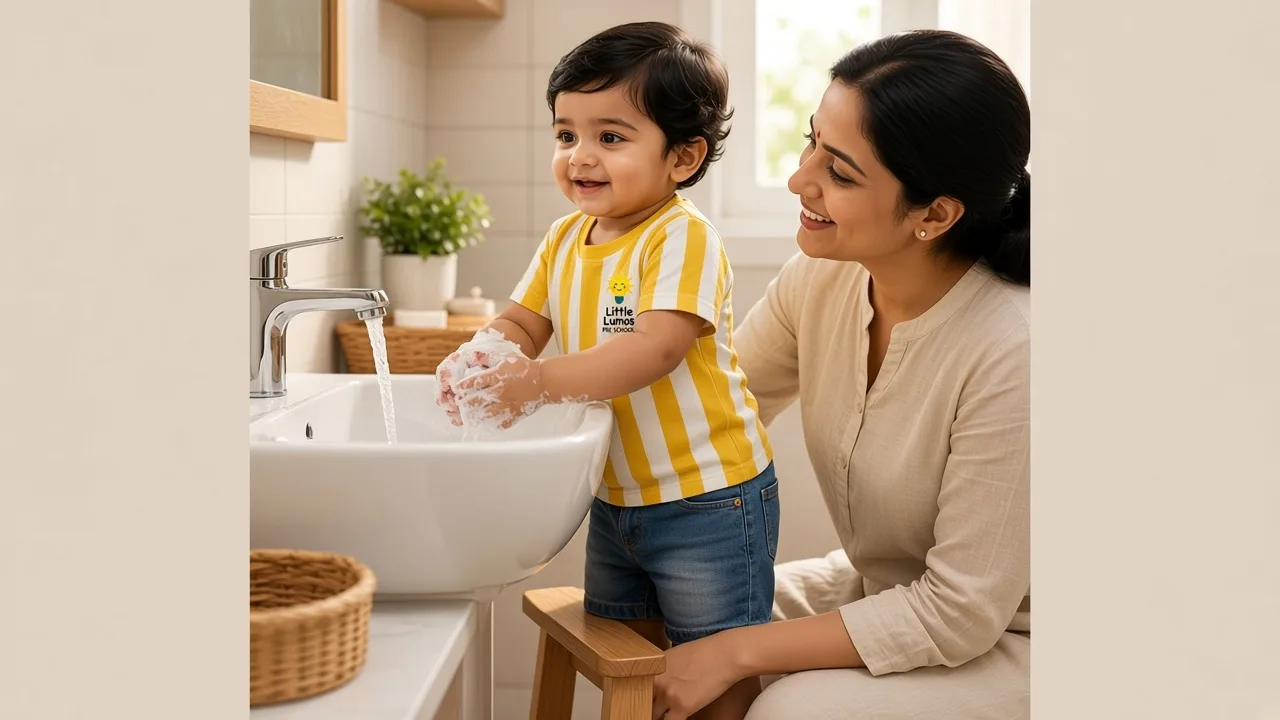
Switch to underwear during the day, not pull-ups. Pull-ups feel like nappies and remove the feedback the child needs. Wet underwear is unpleasant, and that unpleasantness is the teacher. Keep the nappy for nights, which is a separate matter entirely.
Offer, don't ask. "Let's try" works better than "do you want to go", which invites a no. Offer after waking, after meals, before leaving the house, and roughly every two hours.
Stay nearby and make it boring. No phone, no reward chart, no audience. A child sitting on a potty while four relatives watch expectantly will not go.
Be calm about the outcome, in both directions. Wild celebration puts pressure on the next attempt, and disappointment puts more. A pleasant, mild "well done" is plenty.
Accidents are part of the method, not a failure of it
There will be accidents for weeks. This is not a sign it is going wrong.
React to them with almost nothing. "Oops, wet. Let's change." No sigh, no lecture, no "I told you to go". Shame is genuinely counterproductive here, because a child who feels bad about accidents starts holding on, and holding on causes the problem in the next section.
Never compare them to a sibling or a classmate, and never discuss their accidents in front of them with other adults. Children understand more of those conversations than we assume.
The thing that derails more potty training than anything else
Constipation, and it is badly under-recognised.
The sequence goes like this. A child passes one hard, painful stool. Entirely reasonably, they decide not to do that again, and they hold on. Holding on makes the next one harder and more painful, which reinforces the holding. Within a few weeks you have a child who withholds, has accidents, hides to go, or refuses the toilet altogether, and everyone concludes that potty training has failed.
Signs worth watching: hard or pellet-like stools, going less than every couple of days, pain or crying when going, standing on tiptoe and going stiff to hold on, hiding in a corner, or soiling in the underwear between bowel movements.
If you see this, treat the constipation before continuing with training, and speak to your paediatrician about it rather than only adjusting food. Softer, more comfortable stools resolve a surprising proportion of potty training problems.
No amount of encouragement will work while going hurts.
Night time is a completely different thing
This surprises many parents, so it is worth being clear. Staying dry at night is not a skill your child can learn or be trained into. It depends on the body producing enough of a particular hormone overnight to reduce urine production, and on the bladder signal being strong enough to wake them. Both arrive on their own schedule, often a year or more after daytime dryness, and sometimes considerably later.
Bedwetting is common and normal at five, and still reasonably common at six and seven, particularly if a parent was also a late bedwetter, because it runs in families. Keep the nappy at night until it is dry most mornings. Do not restrict drinks in a way that leaves a child thirsty, do not wake them to go, and do not treat it as something they are doing.
If it is causing distress, or if a child who was dry at night starts wetting again after six months of dryness, that is worth mentioning to your paediatrician.
Regressions happen and they are not a step backwards
A new baby, a first week of school, a hospital visit, moving house. A child who was reliably dry may go back to accidents for a fortnight. This is almost always about emotional load rather than toileting.
Do not restart the whole process. Do not punish. Offer more often, stay warm and neutral, and it usually resolves on its own once the underlying change settles.
About preschool
Ask the school what they actually require rather than assuming. Many good preschools, including ours, work with families through this and do not treat an accident as an event. A child who is rushed into training purely to meet an admission date often takes longer overall than one who was allowed to be ready.
Try this
For one week, change nothing except the timing of your offers: after waking, after each meal, and before you leave the house. Say "let's try" rather than asking. Most families find their hit rate improves without any other change at all.
At Little Lumos in Siddharth Nagar, toileting is handled with the same matter-of-fact respect as anything else in a child's day. No child is hurried, nobody is made to feel bad about an accident, and we keep in close touch with parents so that the approach at school and the approach at home are the same one.
Interactive tools
Is now the right time?
Run the readiness check, follow the gentle method step by step, and use the troubleshooter when you hit a bump.
Interactive readiness check
Is Your Child Ready?
Tick every sign you've noticed. Look for a cluster appearing together, that's the green light, far more than your child's age.
0 of 8 signs
No rush, wait a little
Only a few signs so far, which is completely normal. Keep nappies relaxed, talk about the potty now and then, and check back in a few weeks. Pushing too early tends to backfire.
The gentle method
Five Calm Steps to a Confident Child
1. Prepare, gently
Buy a potty or a toddler toilet seat with a step stool, and let your child get familiar with it, sitting on it clothed, decorating it, choosing 'big kid' underwear. Read potty picture books together. Use calm, matter-of-fact words for wee, poo and private parts. The goal here is curiosity, not performance.
Troubleshooter
Hit a Bump? Pick What's Happening
Why it happens
Very common early on, your child is still learning to read their body's signals in time.
What to try
Stay relaxed and clean up without fuss. Offer more frequent, low-key potty times, and dress them for easy, quick pulls. If accidents are constant after a few weeks, it may simply be a sign to pause and try again in a few weeks.
Keep in mind
Four Ideas That Make It Easier
Follow the child, not the calendar
Readiness is the single biggest predictor of success. A ready child can learn in days; a pushed child can take months and pick up worry.
Calm beats fast
There is no prize for the earliest finish. A relaxed, shame-free approach builds confidence that lasts far beyond the potty.
Accidents are learning
Every miss is part of the process, not a failure. How you respond, kindly and matter-of-factly, is what teaches the skill.
Independence is the goal
The aim isn't just a dry child but a confident one who can manage their own body with growing pride and ownership.
A Preschool That Meets Your Child With Patience
At Little Lumos, every milestone, toileting included, is supported gently and without shame. Come see our warm, Reggio Emilia inspired classrooms in Siddharth Nagar, Kakinada.
Sources
- Toilet Training: Guidance for Parents, American Academy of Pediatrics (HealthyChildren.org)
At Little Lumos in Kakinada, this is part of everyday practice. Read more about our hands-on early years curriculum, or preschool programs for ages 2 to 6, or book a campus visit.
People Also Ask
Quick answers to the questions parents ask most.
There is no single magic age. Most children show the first signs of readiness between 18 and 30 months, and many are not fully day-trained until close to three. Boys often start a little later than girls. Readiness signs, such as staying dry for two hours, showing interest, being able to follow simple instructions and pull pants down, all matter far more than the number on the calendar.