Reggio Emilia vs Montessori vs Traditional Preschool: A Kakinada Parent's Guide

Little Lumos Team
Reviewed by Dr. K. Lakshmi Lalithya, Founder & Principal
We share insights, stories, and practical tips for mindful parenting, straight from our vibrant learning community.
Reggio Emilia, Montessori or a traditional preschool — which approach is right for your child? This honest, side-by-side comparison explains how each one teaches, what makes them different, and how to choose the best early learning environment in Kakinada.
- A Quick Word on Where These Approaches Came From
- How Learning Happens in Each Approach
- The Role of Materials and the Environment
- The Role of the Teacher
- The Place of Art, Imagination, and Play
- A Simple Side-by-Side Summary
- Which Approach Is Right for Your Child?
- Why We Chose Reggio Emilia at Little Lumos
- Come and See the Difference for Yourself
- Interactive tools

Once you start looking at preschools, you quickly discover that they do not all teach the same way. Some advertise the Montessori method. Others, like Little Lumos, are inspired by the Reggio Emilia approach. Many more follow what we might call a traditional or conventional model. The labels can be bewildering, and most parents are left wondering what the differences actually mean for their child.
This guide offers an honest, side-by-side comparison of the three. Our aim is not to claim that one is perfect and the others worthless — each has genuine strengths. Our aim is to help you understand how they differ so you can choose the environment that fits your child and your family best. We will be transparent about our own philosophy too, so you can weigh our perspective for what it is.
A Quick Word on Where These Approaches Came From
Understanding the origins helps everything else make sense.
- Montessori was developed in the early 1900s by Dr Maria Montessori, an Italian physician and the first woman to qualify as a doctor in Italy. She designed a careful system of self-correcting materials and child-led work based on her scientific observations of how children learn.
- Reggio Emilia emerged after the Second World War in the Italian city of the same name, led by educator Loris Malaguzzi and a community of parents. It is less a fixed method and more a living philosophy built around children's creativity and curiosity.
- Traditional preschool is the familiar teacher-led model most of us experienced ourselves — a set curriculum, structured lessons, and learning organised around the adult delivering knowledge to the group.
How Learning Happens in Each Approach
The deepest difference between the three is the question of who drives the learning.
In a traditional preschool, the teacher drives. The adult decides what will be taught, when, and how, and the children follow along, often as a whole group doing the same activity at the same time. In Montessori, the child drives within carefully defined boundaries. Children choose from a prepared set of specially designed materials and work independently, with the teacher guiding them toward the next material when they are ready. In Reggio Emilia, the child and teacher drive together. Learning grows out of the children's own questions and interests through open-ended projects, with the teacher acting as a co-researcher and guide rather than a director.
The Role of Materials and the Environment
Materials look very different across the three.
- Traditional: Often workbooks, flashcards, and themed craft kits where every child produces a similar result. Resources support the teacher's planned lesson.
- Montessori: Beautiful, precise, self-correcting materials, each designed to teach one specific concept. There is usually one correct way to use each material, and the child masters it through repetition.
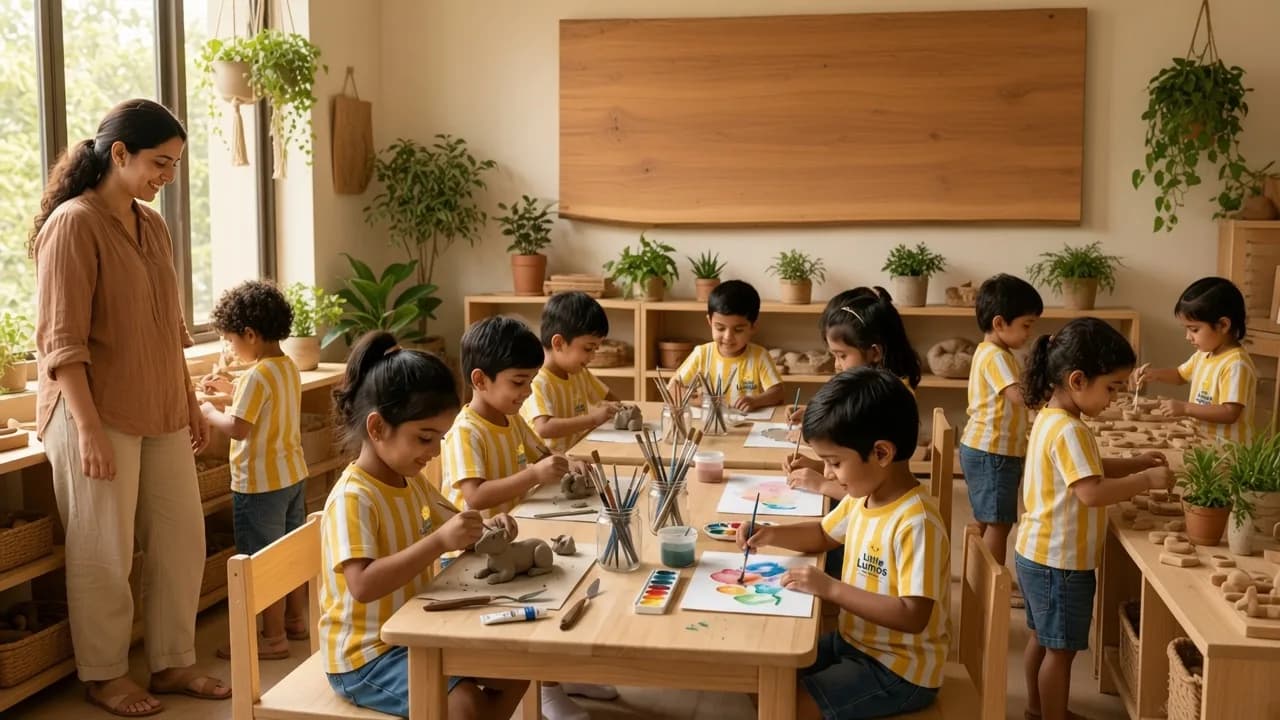
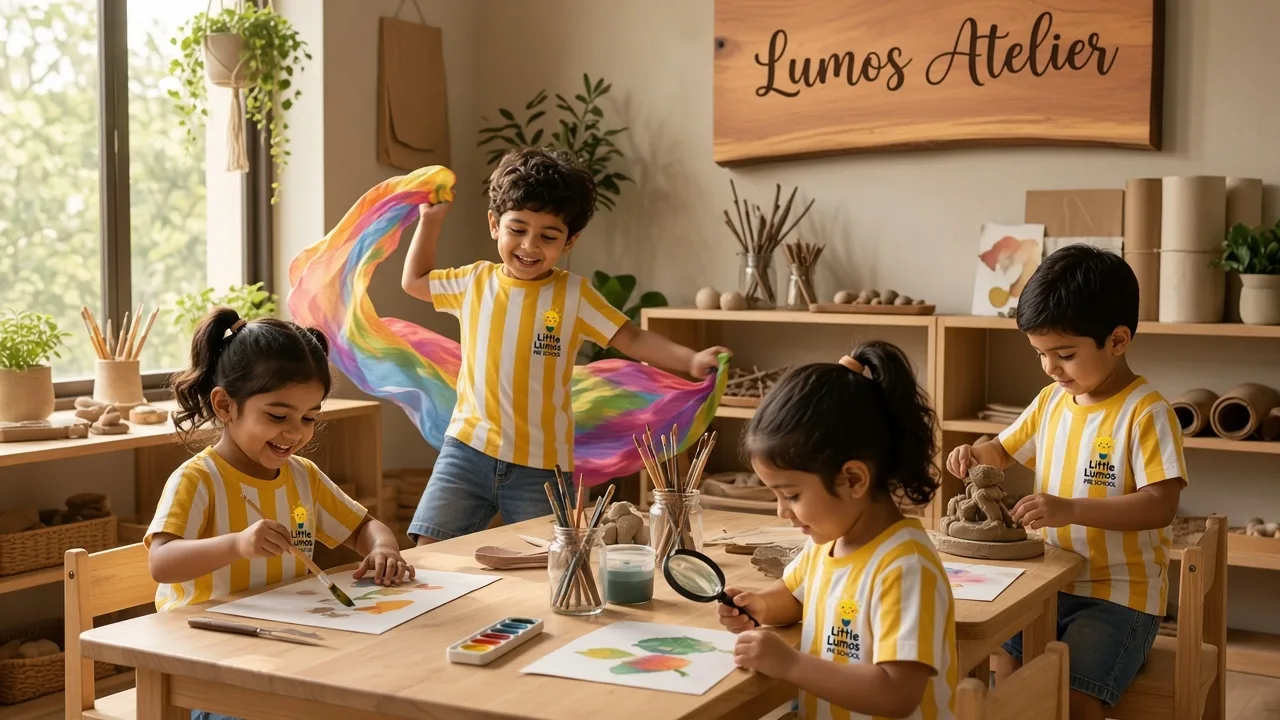
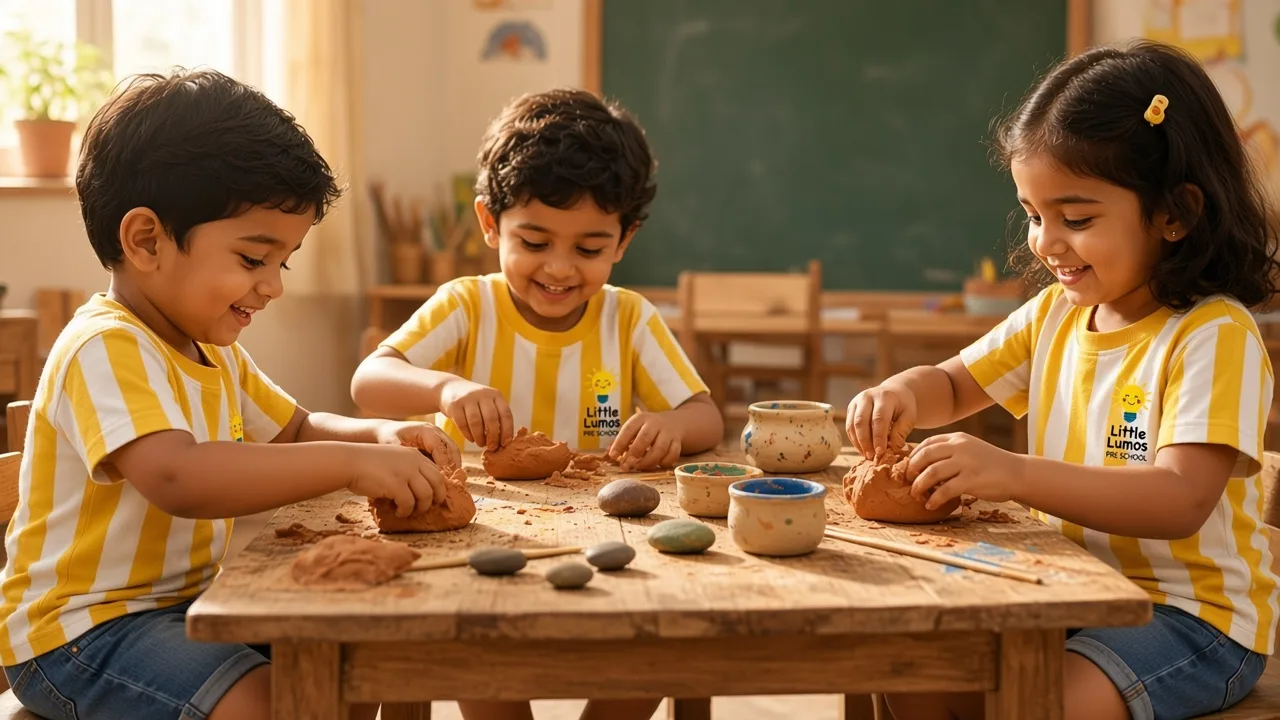
- Reggio Emilia: Open-ended, natural, and recycled materials — clay, paint, wire, light, loose parts — with no single correct outcome. The environment is treated as a third teacher, designed to provoke curiosity and wonder.
The Role of the Teacher
In a traditional classroom, the teacher is the expert at the front, delivering knowledge and managing the group. In Montessori, the teacher is a trained observer who demonstrates materials and then steps back to let the child work, intervening as little as possible. In Reggio, the teacher is a researcher and collaborator who listens closely, asks open questions, documents children's thinking, and designs new experiences in response to what the children reveal.
The Place of Art, Imagination, and Play
This is one of the clearest dividing lines, and it matters a great deal for young children.
Traditional settings usually include art and play, but often as scheduled extras or as a reward once the real academic work is done, and craft tends to be product-focused with a model to copy. Classic Montessori prioritises practical, purposeful work and real-life activities; in its purest form it places less emphasis on pretend play and fantasy, channelling children toward concrete, reality-based tasks. Reggio Emilia, by contrast, treats art, imagination, and play as central languages of learning. Pretend play, storytelling, and open-ended creating are not extras — they are how children think.
A Simple Side-by-Side Summary
If you remember nothing else, remember this.
- Traditional preschool: Teacher-led, structured, group-based, focused on preparing children for formal academics through direct instruction.
- Montessori: Child-led within structure, independent work with specific self-correcting materials, focused on concentration, order, and practical independence.
- Reggio Emilia: Collaborative and curiosity-led, project-based, focused on creativity, expression, relationships, and the hundred languages of children.
Which Approach Is Right for Your Child?
There is no universally correct answer, only the right fit for your child and your values. A few honest guidelines can help.
A traditional setting may suit families who feel most comfortable with familiar structure and clear, measurable academic milestones from an early age. Montessori can be wonderful for children who thrive on independence, order, and repetition, and for parents drawn to its calm, methodical environment. The Reggio Emilia approach tends to suit families who want their child's creativity, curiosity, and emotional confidence protected and nurtured, who value how a child learns as much as what they memorise, and who believe early childhood should overflow with wonder rather than worksheets.
It is also worth noting that readiness for primary school comes in many forms. The strongest early learning environments — whatever their label — share certain non-negotiables: they are safe, warm, and well-staffed; they respect children as capable; and they communicate openly with parents. When you tour any school, look past the label and watch the children. Are they engaged, relaxed, and busy? That tells you more than any brochure.
Why We Chose Reggio Emilia at Little Lumos
We will be honest with you about our own conviction. After years in education, we built Little Lumos around the Reggio Emilia approach because we believe it honours something precious that the early years can either protect or quietly erode: a child's natural, fierce curiosity.
We did not want children who could merely recite. We wanted children who could wonder, question, create, collaborate, and feel deeply — and who would carry those capacities into school and life. We were drawn to the idea of the environment as a teacher, to the hundred languages of children, and to a screen-free, art-rich, relationship-centred way of learning. That is the school we built here in Kakinada.
That said, we have deep respect for dedicated Montessori educators and for committed teachers in every kind of school. What matters most is not the name above the door, but whether your child is seen, safe, and free to grow.
Come and See the Difference for Yourself
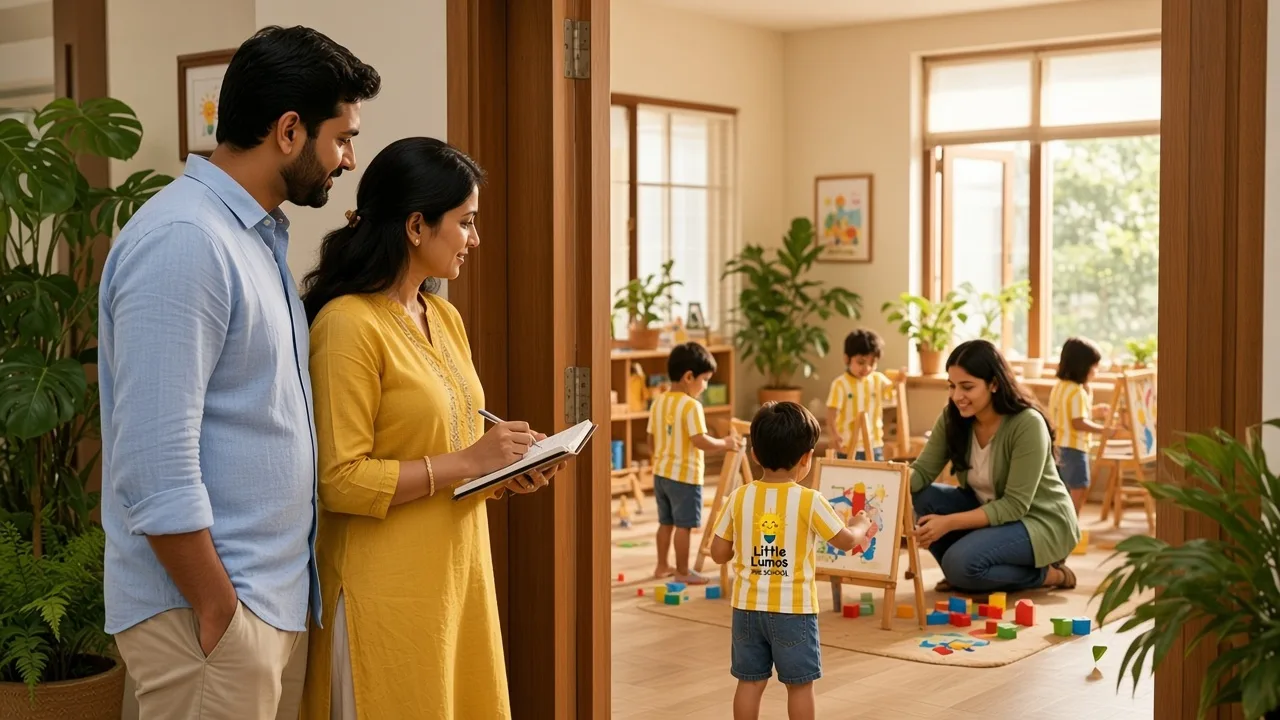
Reading about educational philosophies is useful, but nothing compares to standing in a classroom and watching learning happen. The best decision you can make is to visit a few preschools in Kakinada, watch the children closely, and notice how the place makes you feel.
Little Lumos is Kakinada's first Reggio Emilia inspired preschool, in Siddharth Nagar, welcoming children aged two to six. We warmly invite you to tour our campus, see the atelier and learning spaces, meet our educators, and ask us anything — including how we compare to other options. Whatever you ultimately choose, we want you to choose with clarity and confidence. Your child deserves nothing less.
| What differs | Reggio Emilia | Montessori | Traditional |
|---|---|---|---|
| Who sets the direction | The child's questions, shaped by teachers | The child, within a prepared sequence | The teacher and the syllabus |
| Teacher's role | Co-researcher who observes and documents | Guide who presents materials, then steps back | Instructor who leads the class |
| Materials | Open-ended, often natural or recycled | Specific, self-correcting, single-purpose | Worksheets, textbooks and printed charts |
| How learning is recorded | Photographs, quotes and displayed work | Observation notes against a materials sequence | Marks, grades and report cards |
| Group work | Central — children investigate together | Mostly individual work cycles | Whole-class instruction |
| Role of art | A language for thinking, in a dedicated atelier | One activity area among several | Usually a scheduled craft period |
| Suits children who | Are curious, social, and enjoy long projects | Like order, repetition and working alone | Respond well to clear structure and routine |
Interactive tools
Compare them side by side
Where each approach came from, how they differ in daily practice, and which tends to suit which child.
A quick history
Where the Three Approaches Came From
Understanding the origins helps everything else make sense. Use the switcher below to explore each one.
Interactive comparison
Compare Each Approach, Side by Side
Pick an approach to see how it teaches across every dimension that matters.
Now viewing
Reggio Emilia
Emerged after the Second World War in the Italian city of the same name, led by educator Loris Malaguzzi and a community of parents. It is less a fixed method and more a living philosophy built around children's creativity and curiosity.
Who drives learning?
The child and teacher drive together. Learning grows out of the children's own questions and interests through open-ended projects, with the teacher acting as a co-researcher and guide.
Materials & environment
Open-ended, natural, and recycled materials, clay, paint, wire, light, loose parts, with no single correct outcome. The environment is treated as a third teacher, designed to provoke curiosity.
Role of the teacher
A researcher and collaborator who listens closely, asks open questions, documents children's thinking, and designs new experiences in response to what the children reveal.
Art, play & imagination
Art, imagination, and play are central languages of learning. Pretend play, storytelling, and open-ended creating are not extras, they are how children think.
Best suited for
Families who want their child's creativity, curiosity, and emotional confidence protected, who value how a child learns as much as what they memorise, and who believe early childhood should overflow with wonder.
In a nutshell
A Simple Side-by-Side Summary
If you remember nothing else, remember this.
Reggio Emilia
Collaborative and curiosity-led, project-based, focused on creativity, expression, relationships, and the hundred languages of children.
Montessori
Child-led within structure, independent work with specific self-correcting materials, focused on concentration, order, and practical independence.
Traditional
Teacher-led, structured, group-based, focused on preparing children for formal academics through direct instruction.
Finding your fit
Which Approach Is Right for Your Child?
There is no universally correct answer, only the right fit for your child and your values. A traditional setting may suit families most comfortable with familiar structure and clear, measurable milestones. Montessori can be wonderful for children who thrive on independence, order, and repetition. The Reggio Emilia approach tends to suit families who want their child's creativity, curiosity, and emotional confidence protected and nurtured.
Our honest conviction
Why We Chose Reggio Emilia at Little Lumos
We will be honest with you about our own conviction. After years in education, we built Little Lumos around the Reggio Emilia approach because we believe it honours something precious that the early years can either protect or quietly erode: a child's natural, fierce curiosity. We did not want children who could merely recite. We wanted children who could wonder, question, create, collaborate, and feel deeply, and who would carry those capacities into school and life.
That said, we have deep respect for dedicated Montessori educators and for committed teachers in every kind of school. What matters most is not the name above the door, but whether your child is seen, safe, and free to grow.
Come and See the Difference for Yourself
Reading about educational philosophies is useful, but nothing compares to standing in a classroom and watching learning happen. Tour our campus in Siddharth Nagar, see the atelier and learning spaces, meet our educators, and ask us anything, including how we compare to other options. We welcome children aged 2 to 6.
At Little Lumos in Kakinada, this is part of everyday practice. Read more about our Reggio Emilia preschool in Kakinada, or see the environment for yourself, or book a campus visit.
People Also Ask
Quick answers to the questions parents ask most.
Montessori uses carefully designed, self-correcting materials and a fairly structured sequence that children work through largely on their own. Reggio Emilia is more open-ended and project-based, with learning emerging from children's interests and collaboration, and a strong emphasis on art, documentation and the environment.