Social Skills for Kids: Helping Little Ones Share, Take Turns & Make Friends

Little Lumos Team
Reviewed by Dr. K. Lakshmi Lalithya, Founder & Principal
We share insights, stories, and practical tips for mindful parenting, straight from our vibrant learning community.
Why forcing a two-year-old to share teaches the wrong lesson, what turn-taking does instead, and how to handle the park, the shy child and the forced apology.
- Sharing is not a moral skill. It is a cognitive one, and it isn't built yet.
- Turn-taking works where sharing doesn't
- What social development actually looks like, roughly
- The shy child is not a problem to be solved
- Hitting, grabbing and biting
- On the forced apology
- If your child is the only one at home
- Small things that help more than lessons
- When to raise it with someone
- Interactive tools

The park, around half past five. Your two-year-old is holding a ball. Another child, roughly the same size, walks over and takes hold of it. There is a pause, a shriek, and then your child has both hands on the ball and the other child is on the ground crying.
Every adult in a fifteen-metre radius now looks at you.
The pressure in that moment is to produce sharing immediately. Take the ball, hand it over, say "share, share". And it is worth knowing that if you do, you will have solved the social problem of the adults present and taught your child something you probably did not intend.
Sharing is not a moral skill. It is a cognitive one, and it isn't built yet.
To genuinely share, a child has to hold several things in mind at once: that the other person wants the thing, that their wanting is as real as their own, that giving it up now does not mean losing it forever, and that the discomfort of waiting is survivable.
That is a lot of machinery. Most of it is not in place at two, and only partly in place at three.
So when a two-year-old refuses to share, they are not being selfish in any sense an adult would recognise. They are being two. And when we remove the object from their hands and give it to someone who cried louder, the lesson they take is not generosity. It is that a bigger person can take your things whenever they decide it is fair.
Turn-taking works where sharing doesn't
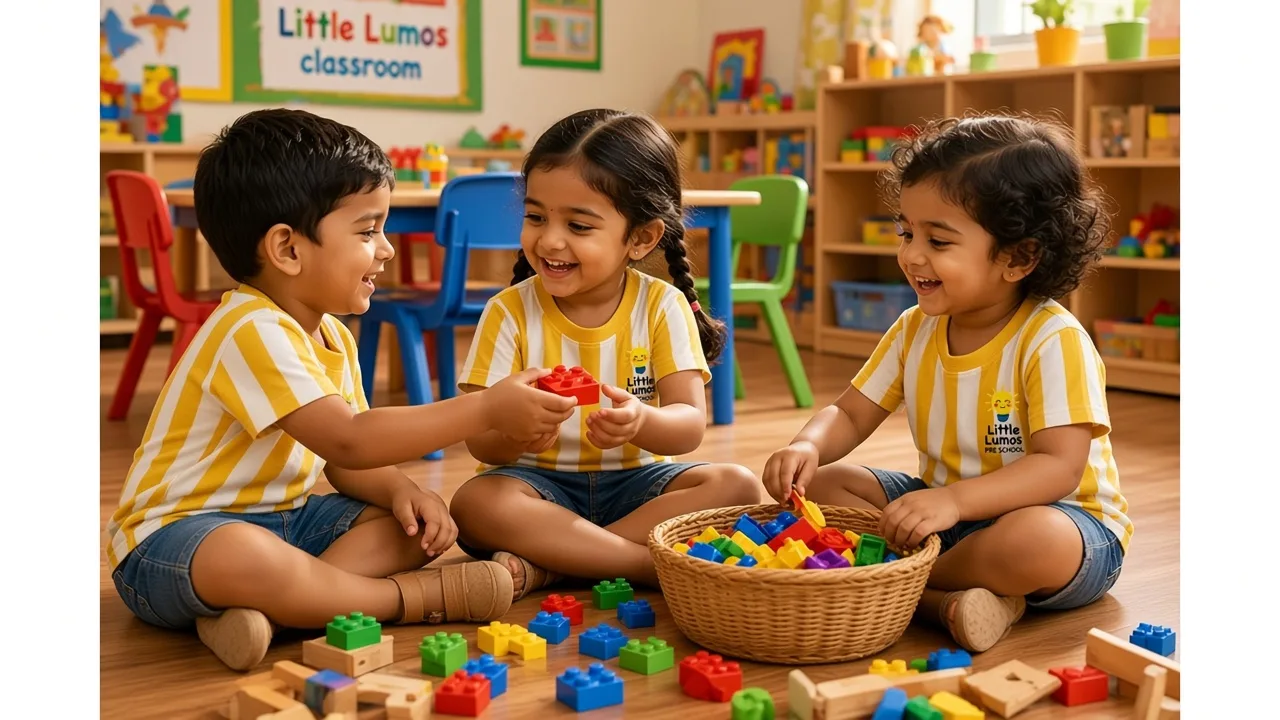
The useful version at this age is not "share it" but "when you're finished, it's her turn."
This keeps the child's possession intact, which is the part they actually care about, and introduces the idea of a queue, which they can understand. Say it out loud, narrate it, and then protect it. "He's still using it. Your turn is next, I'll tell you when." The waiting child will not enjoy this.
They will survive it, and surviving it is the skill.
A timer helps enormously with two children and one desirable object, because the timer becomes the authority rather than you.
What social development actually looks like, roughly
One to two. Children play near each other rather than with each other. This is called parallel play and it is completely normal. Two toddlers side by side, each absorbed in their own thing, are having a social experience even though it looks like two solo ones.
Two to three. Brief flickers of playing together, with a lot of adult help. Turn-taking is possible and hard. Big feelings are constant.
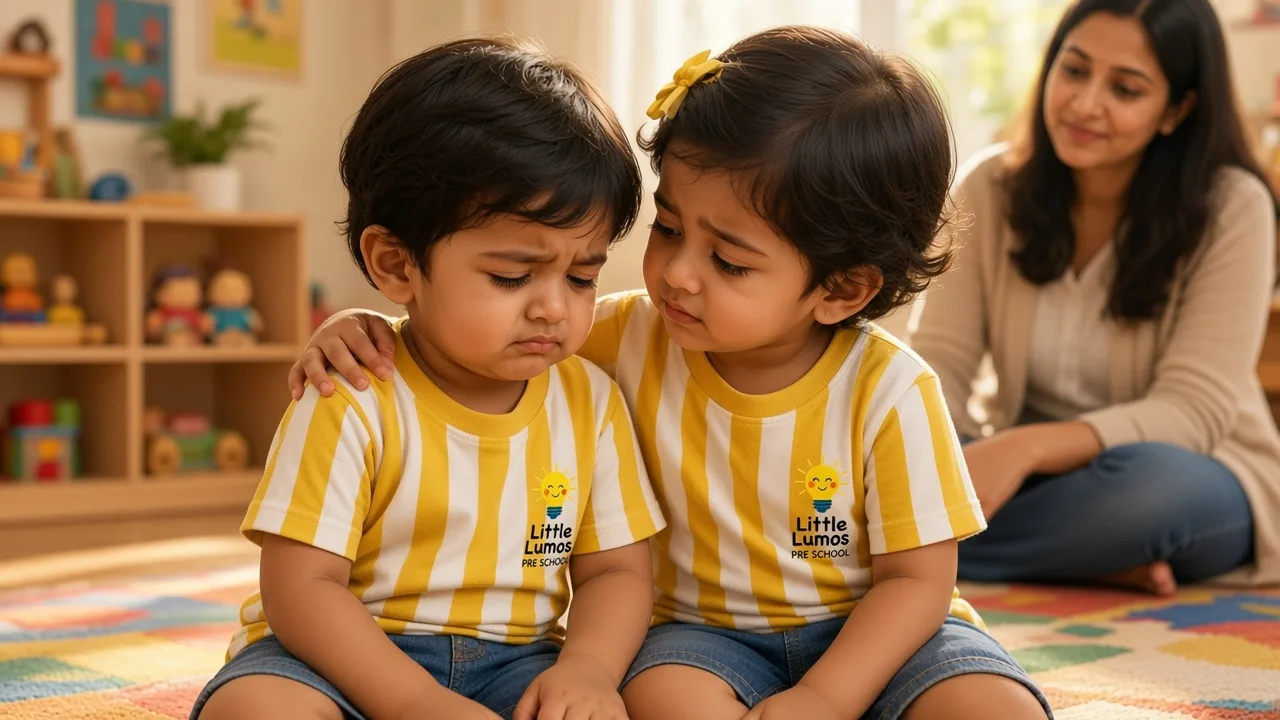
Three to four. Real cooperative play begins. Friendships appear, though they change weekly. Genuine empathy starts to show up: noticing that someone is sad and doing something about it.
Four to six. Games with rules, arguments about rules, negotiating, compromise, and the beginnings of apologising because they mean it rather than because they were told to.
Every child moves through this at their own pace, and a child who is a year behind their cousin socially at three is very often indistinguishable at six.
The shy child is not a problem to be solved
Some children walk into a birthday party and vanish into it. Others stand at the edge holding a parent's leg for twenty minutes, watching very carefully, and then join in.
The second child is not failing. They are a slow-to-warm temperament, which is an ordinary, lifelong way of being, and the watching they do at the edge is real social work. They are reading the room.
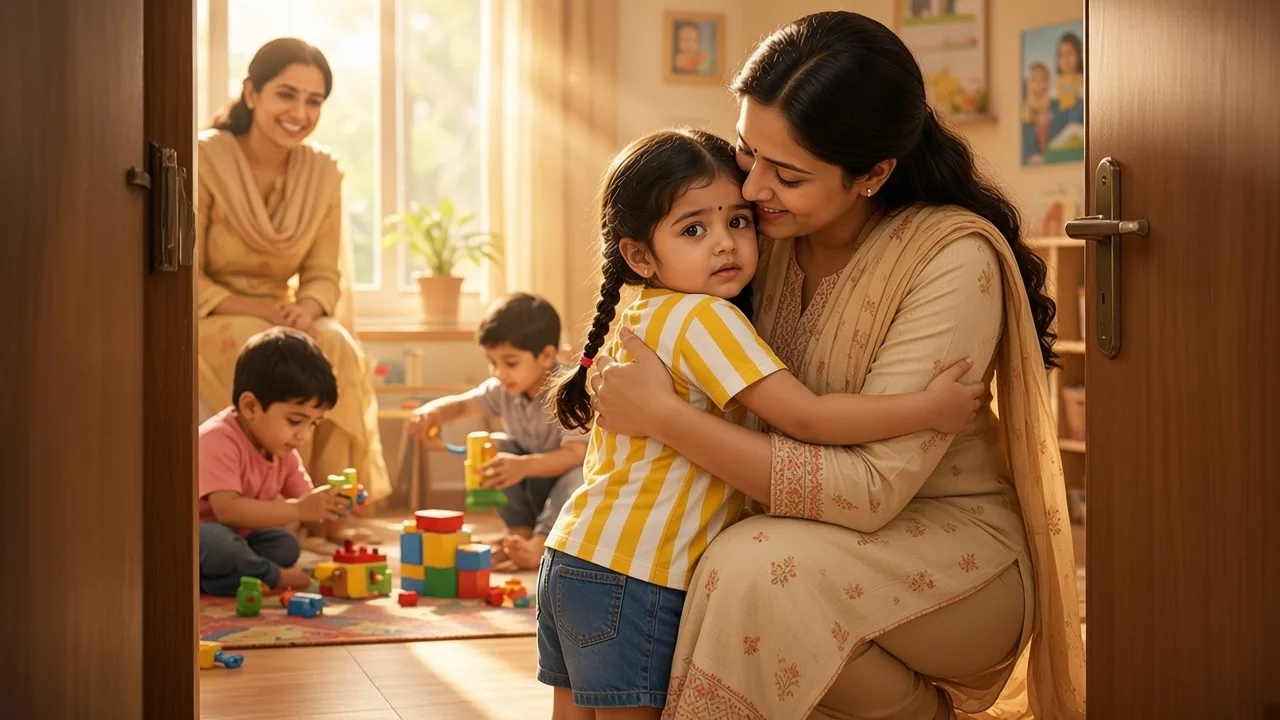
Two things help. Arrive early, when the group is still small, because joining four children is far easier than joining fourteen. And stay physically nearby without pushing, so they can launch when they are ready.
Two things do not help. Pushing them in ("go and play, don't be shy") and, more damagingly, labelling them out loud in front of them. "She's very shy" said to a relative, within earshot, twenty times across a childhood, becomes a fact the child believes about themselves. Say "she takes a little while to warm up" instead, which is both truer and temporary.
Hitting, grabbing and biting
At two, this is almost always a communication problem. The child wanted something, had no words fast enough, and their body acted. At four, it is more often about anger or frustration that has outrun their control.
Either way, the response is the same shape. Stop it physically and calmly. Say the limit briefly: "I won't let you hit. Hitting hurts." Then attend to the child who was hurt, in front of the one who did it, which is more instructive than any lecture. Afterwards, once everyone is calm, help them find the words they needed: "You wanted the car. You can say, my turn next."
Long explanations in the moment do nothing. The child is not available for them.
On the forced apology
"Say sorry." Child mutters sorry while looking at the floor. Adults are satisfied.
This teaches a word. It does not teach repair, and children work out very quickly that the word is a toll to be paid rather than something that means anything.
Help them do something instead. Fetch the ice pack. Help rebuild the tower. Check if the other child is alright. Real apologies grow out of noticing the effect you had on someone, and that noticing develops around four or five, considerably later than most adults expect.
If your child is the only one at home
This is increasingly common in Indian cities, and worth being deliberate about. An only child in a nuclear family may have plenty of adult attention and very few hours of unsupervised negotiation with someone their own size.
Adults are extremely accommodating. Other four-year-olds are not, and that friction is exactly where the learning lives. Two children for an hour beats eight children for an afternoon, which is usually just noise. Regular, small, repeated meetings with the same one or two children do far more than occasional large gatherings.
Small things that help more than lessons
Name feelings out loud, all day, including your own. "You look frustrated." "I'm feeling annoyed, I need a minute." A child who has words for feelings has an alternative to using their hands.
Model the phrases you want returned to you. Please, thank you, sorry, your turn, are you alright. Children absorb far more from what they hear adults do than from what adults tell them to do.
Read stories about friendship and falling out, and talk about the characters rather than about your child. It is much easier to think about someone else's mistake.
And play board games, even simple ones. Turn-taking, waiting, and losing without falling apart are all packed into a game of snakes and ladders.
When to raise it with someone
Most social wobbles are development, not a problem. It is worth speaking to your paediatrician if your child shows very little interest in other people at all, does not respond to their name, does not point at things to show you, does not use gestures or words to connect, or if they lose social skills they previously had. Early support at this age is gentle and play-based, and it works best early.
Try this this week
The next time your child refuses to share, do not intervene to make them. Narrate instead: "He's using it now. You can have a turn when he's finished. Waiting is hard, isn't it." Then sit with them through the waiting. You will feel exposed in front of the other parents. Your child is learning something more durable than a handover.
At Little Lumos in Siddharth Nagar, children work in small groups on shared projects, which means they negotiate, disagree, lose arguments and repair things with each other every single day. Social skill is not taught here as a separate subject. It is the by-product of children having something real to do together.
Interactive tools
Look up your child's stage
Social milestones by age, calm words for the moments that go wrong, and simple ways to build confidence through play.
Set expectations
Social Milestones by Age
Tap an age band to see what social behaviour typically looks like, a rough map, since every child grows at their own pace.
At 2–3 years, you might see
- Starts brief cooperative play
- Takes turns with lots of help
- Big feelings and meltdowns are common
- Begins to notice how others feel
What do I say when…
The Tricky Moments, Solved
Pick a common social wobble to see what's really going on, and calm words you can use.
Won't share
What's really going on
Sharing is a genuinely advanced skill that clicks slowly, most under-3s simply can't yet, and even 4s find it hard. Forcing it rarely teaches it.
Try saying
"It's Meera's turn now, and you'll get it next. Let's set a timer together." Model turn-taking rather than demanding instant sharing.
Grow it gently
Build Social Skills Through Play
Where Friendships Blossom
At Little Lumos, small, nurturing groups and rich, collaborative play help children learn to share, listen and care for one another every day. Tour our campus in Siddharth Nagar, Kakinada, for children aged 2 to 6.
At Little Lumos in Kakinada, this is part of everyday practice. Read more about how we support emotional development, or why families choose Little Lumos, or book a campus visit.
People Also Ask
Quick answers to the questions parents ask most.
Social skills are the abilities young children use to get along with others: sharing, taking turns, listening, reading feelings, showing empathy, making friends and solving small conflicts. They develop gradually through play and everyday interaction, and they're just as important as early academics for a child's happiness and later success.