Early Signs of Autism in Toddlers: A Calm Guide for Parents

Little Lumos Team
Reviewed by Dr. K. Lakshmi Lalithya, Founder & Principal
We share insights, stories, and practical tips for mindful parenting, straight from our vibrant learning community.
If a quiet worry brought you here, take a breath. This gentle, informational guide explains some early signs associated with autism across communication, social interaction and behaviour — with a calm, step-by-step plan for what to do next. Not a diagnostic tool; always consult a professional.

If a quiet worry about your child's development has brought you here, take a breath — you are being a caring, attentive parent, and that matters more than you know. This guide gently explains some of the early signs associated with autism, what they might mean, and the calm, practical steps you can take next.
One thing first, and it's important: this article is for information and reassurance only. It is not a diagnostic tool. Every child develops differently, and many of the signs below also appear in children who are developing typically, or have other explanations such as a hearing issue or a simple speech delay. Only a qualified professional can assess or diagnose autism. If you have concerns, please speak to your paediatrician.
Use the interactive tools on this page to:
- Explore early signs across communication, social interaction, and behaviour and play
- Follow a calm, step-by-step plan if you have concerns
- See a balanced, strengths-based view of autism
- Get clear answers to the questions parents ask most
Early signs, by area of development
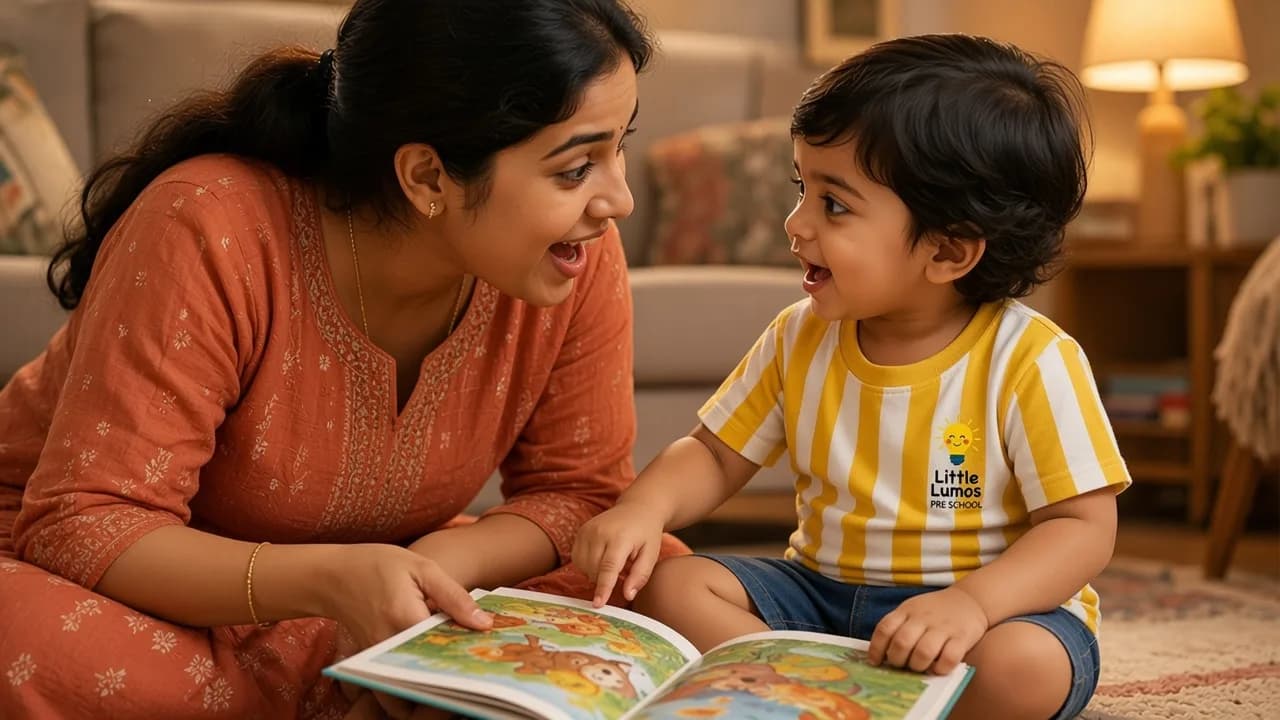
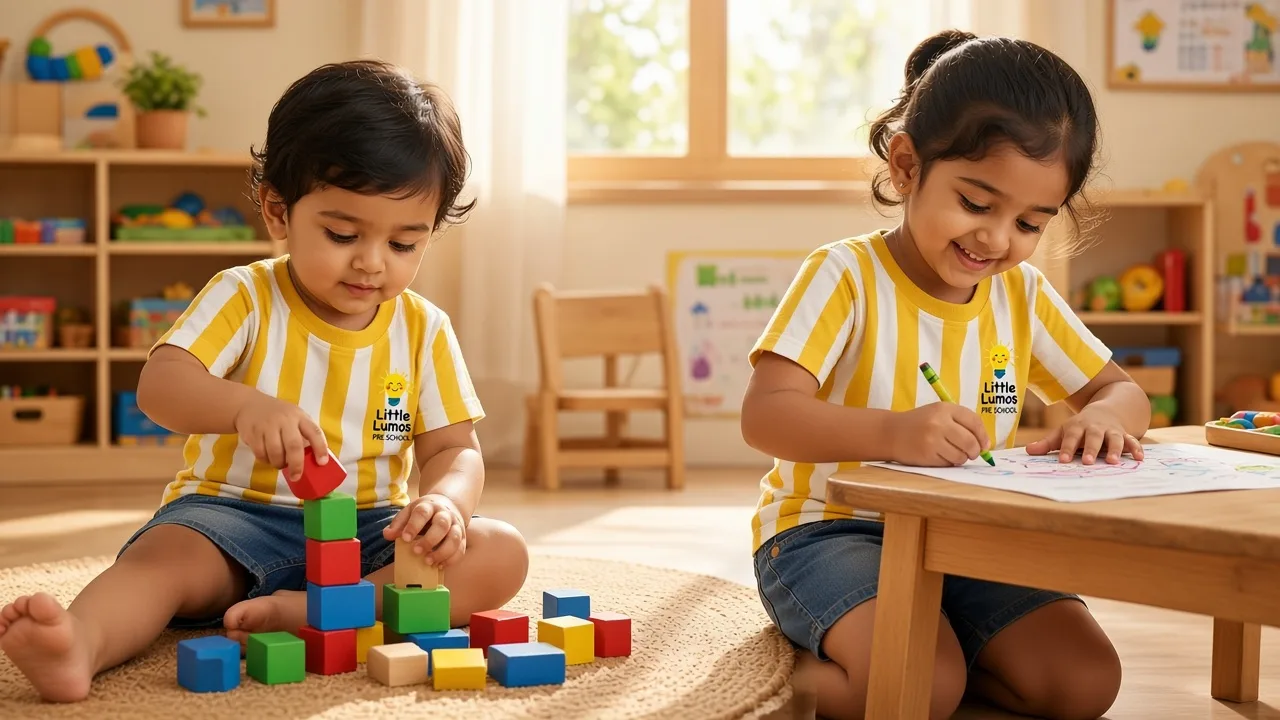
Signs tend to cluster in three areas. In communication, you might notice little or no babbling, few words by the expected age, not responding to their name by around 12 months, limited eye contact, little pointing to share interest, or the loss of words a child once had. In social interaction, there may be limited interest in other children, rarely bringing objects to show you, little back-and-forth in smiles and expressions, or a strong preference for playing alone. In behaviour and play, you might see repetitive movements such as hand-flapping or spinning, lining up toys, a strong need for sameness with big upset at small changes, very intense narrow interests, strong reactions to sounds or textures, and less pretend play than peers.
Noticing one or two of these is common and rarely significant on its own. What a professional looks at is the overall pattern, across areas, over time.
If you have concerns, what to do next
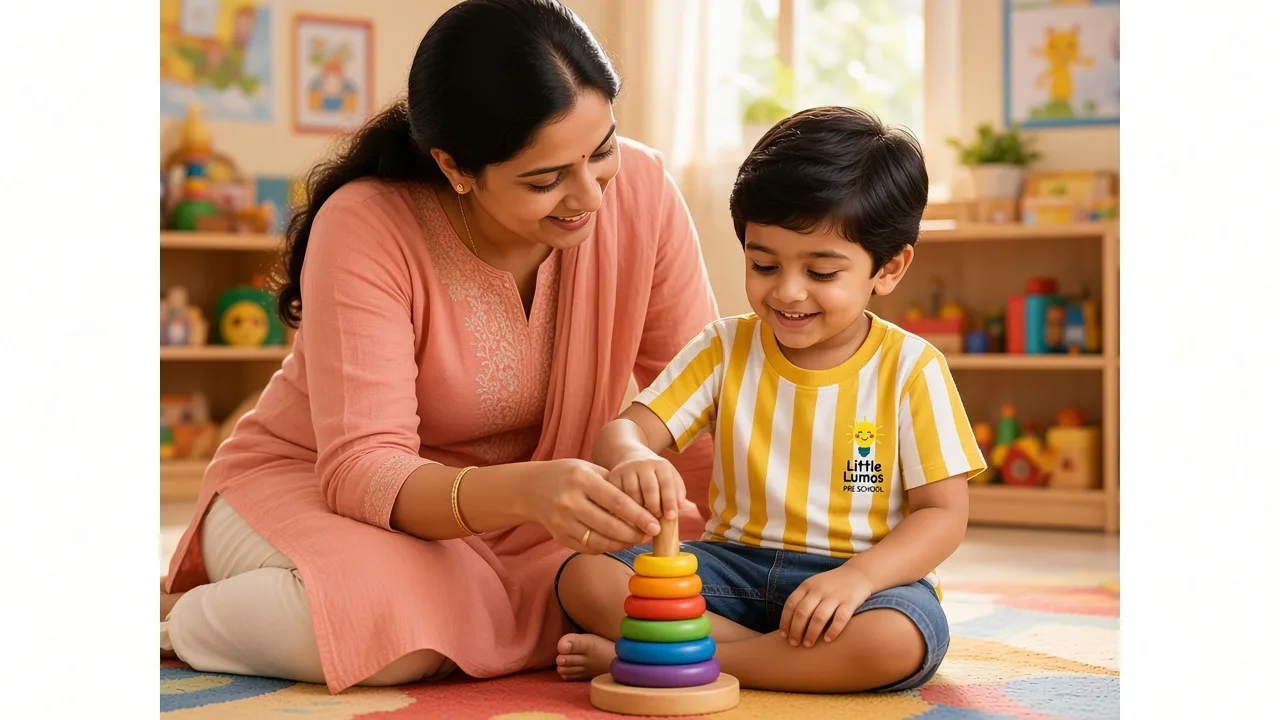
Start by noting what you notice — a simple diary of specific examples helps any professional understand your child quickly. Talk to your paediatrician, share your notes, and ask about a developmental screening; trust your instincts, because you know your child best. If needed, seek an evaluation from a developmental paediatrician, child psychologist or child development centre — only a qualified professional can diagnose autism. If support is recommended, early intervention such as speech therapy, occupational therapy and play-based support is gentle and can make a real difference, and you don't need to wait for a formal label to begin helpful support. Throughout, keep connecting through play — following your child's lead and getting down to their level helps every child.
A balanced view
Autism is a difference in how a child experiences the world, not a tragedy. Autistic children have real strengths — deep focus, honesty, remarkable memory, pattern-spotting, and passion for the things they love. A diagnosis, if it comes, is simply a key that unlocks understanding and the right support. Whatever your child's path, the most powerful thing you can offer is warm, patient connection and belief in who they are.
How we can help
Little Lumos — Kakinada's first Reggio Emilia inspired preschool, in Siddharth Nagar — offers a calm, screen-free environment with small groups, predictable routines and play-based learning, and we partner closely with families. We are not a substitute for professional assessment or therapy, but if you'd like to talk about your child and see our space, we'd love to welcome you. The best outcomes come when families, therapists and educators work together around the child.
Interactive tools
Signs, by area of development
An informational guide only, never a diagnostic tool, with clear steps for what to do if something concerns you.
What to be aware of
Early Signs, by Area of Development
Signs tend to show up across three areas. Explore each below. Remember: noticing one or two of these is common and rarely significant on its own, it's the overall pattern, over time, that a professional looks at.
Communication
- Little or no babbling, or few words by the expected age
- Doesn't respond to their name by around 12 months
- Rarely points or uses gestures to share interest
- Limited eye contact during interaction
- Loss of words or skills they previously had
- Repeats words or phrases (echolalia) more than using them to communicate
A calm plan
If You Have Concerns, What to Do Next
Note what you notice
Keep a simple diary of what you see and when. Concrete examples help any professional understand your child quickly.
Talk to your paediatrician
Share your notes and ask about a developmental screening. Trust your instincts, you know your child best.
Seek a specialist evaluation
A developmental paediatrician, child psychologist or child development centre can carry out a proper assessment. Only a qualified professional can diagnose autism.
Start support early
If recommended, early intervention, speech therapy, occupational therapy, play-based support, is gentle and can make a real difference. You don't need to wait for a formal label to begin helpful support.
Keep connecting through play
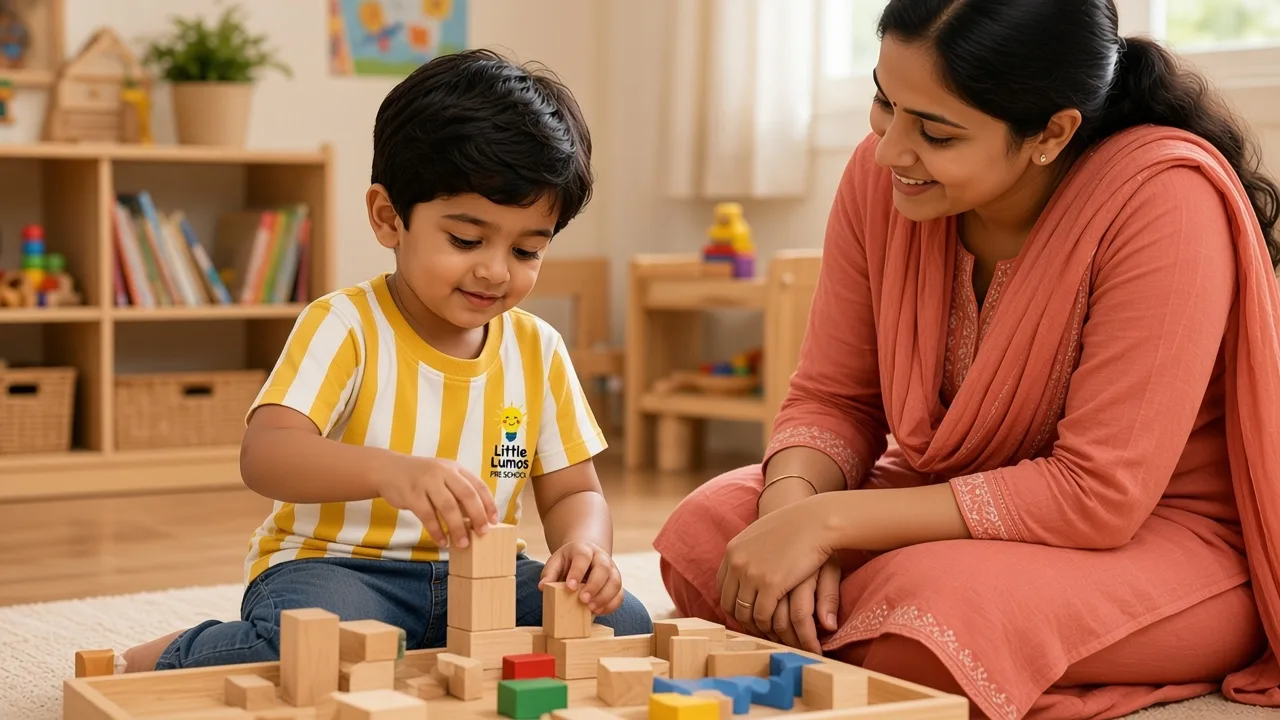
Follow your child's lead, get down to their level, and build warm, playful moments. Connection helps every child, whatever their path.
A balanced view
Your Child Is So Much More Than a Checklist
Autism is a difference in how a child experiences the world, not a tragedy, and autistic children have real strengths, from deep focus and honesty to remarkable memory, pattern-spotting and passion for the things they love. A diagnosis, if it comes, is simply a key that unlocks understanding and the right support. Whatever your child's path, the most powerful thing you can offer is warm, patient connection and belief in who they are.
A Warm, Gentle Place to Grow
Little Lumos offers a calm, screen-free environment with small groups and play-based learning, where we partner closely with families. We're not a substitute for professional assessment or therapy, but if you'd like to talk about your child and see our space, we'd love to welcome you in Siddharth Nagar, Kakinada.
Sources
- Signs and Symptoms of Autism Spectrum Disorder, Centers for Disease Control and Prevention
- Autism spectrum disorders: fact sheet, World Health Organization
At Little Lumos in Kakinada, this is part of everyday practice. Read more about how we support emotional development, or why families choose Little Lumos, or book a campus visit.
People Also Ask
Quick answers to the questions parents ask most.
Early signs can include not responding to their name by around 12 months, limited eye contact, little pointing or gesturing to share interest, delayed speech or loss of words, limited interest in other children, repetitive movements like hand-flapping, lining up toys, a strong need for sameness, and strong reactions to sounds or textures. Signs vary widely from child to child, and this is not a diagnostic checklist.