How to Teach English to Kids: Gently, at Home

Little Lumos Team
Reviewed by Dr. K. Lakshmi Lalithya, Founder & Principal
We share insights, stories, and practical tips for mindful parenting, straight from our vibrant learning community.
Speaking careful, limited English to your child may cost them more than rich, fluent Telugu ever would. What actually builds language, and the order that matters.

There is a particular thing that happens in Indian homes, usually with the best intentions in the world.
A parent who is warm, funny, quick and completely fluent in Telugu decides that their child needs English. So they switch. And the language they now speak to their child all day is careful, limited, slightly stiff, and roughly a tenth as rich as the one they put down.
The intention is excellent. The effect is not, and it is worth understanding why before doing anything else.
Your child needs rich language. English is a separate question.
In the early years, a child is not really learning a language. They are building the machinery that language runs on: the ability to follow a story, hold an idea while someone finishes a sentence, understand that words stand for things, notice how a question is shaped.
That machinery gets built by hearing a lot of language, used well, by someone who loves them. Once it exists, it serves every language the child ever learns. A child with a deep, sophisticated Telugu vocabulary at four does not have to build that machinery again for English. They just fit English into it, and they do it fast.
Which leads to the most useful advice in this entire article.
Speak to your child in the language you speak best.
If that is Telugu, speak Telugu, richly and at length and without apology. You are not putting their English at risk. You are laying the foundation it will stand on.
"But will two languages confuse him?"
No. This worry is extremely common and it has been studied extensively.
Bilingual children reach the same broad language milestones as everyone else. Their vocabulary is distributed across both languages, so if you count only one you will undercount them. A child with forty Telugu words and twenty-five English words has sixty-five words.
Mixing the two within a sentence is also completely normal, and is a sign of a working bilingual brain rather than a muddled one. Adults who speak two languages do it constantly. Nobody worries about them.
Growing up with two languages is an advantage that lasts a lifetime. It is worth protecting rather than apologising for.
So how does English actually get in?
Through the same routes as any language, and none of them are a class.
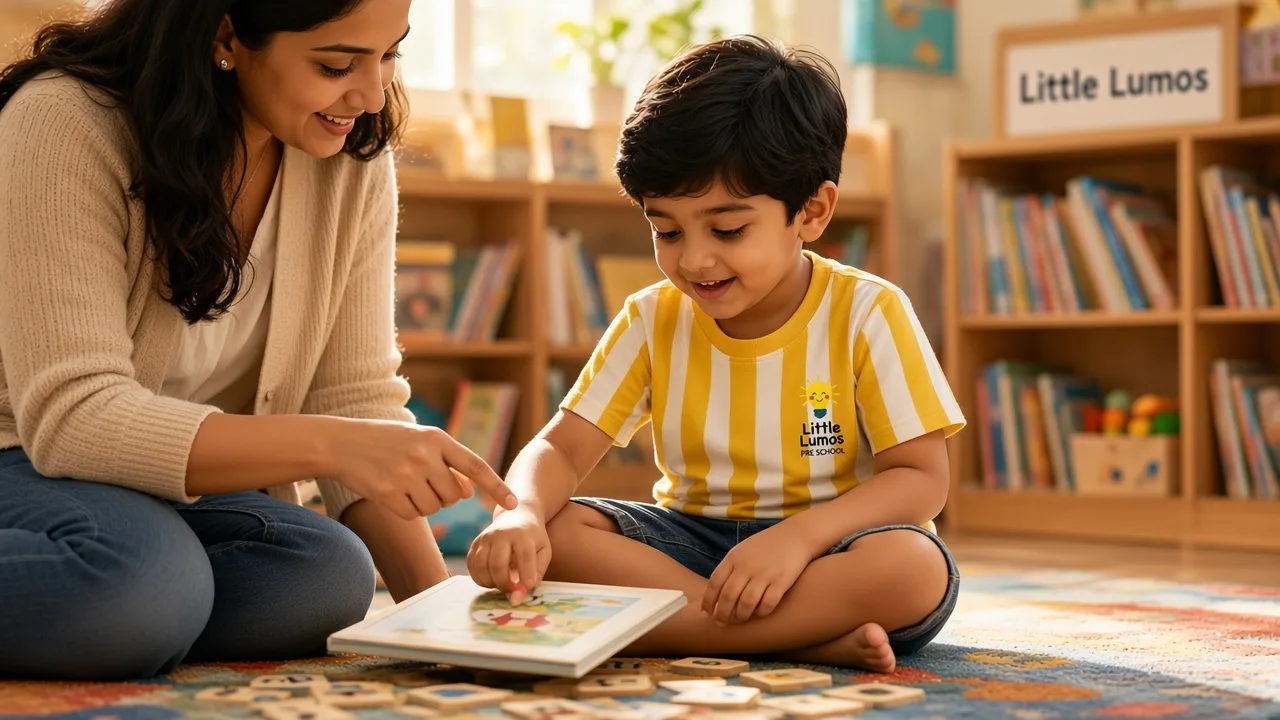
Conversation. Real back-and-forth, where somebody waits for an answer. This is the main one by a distance.
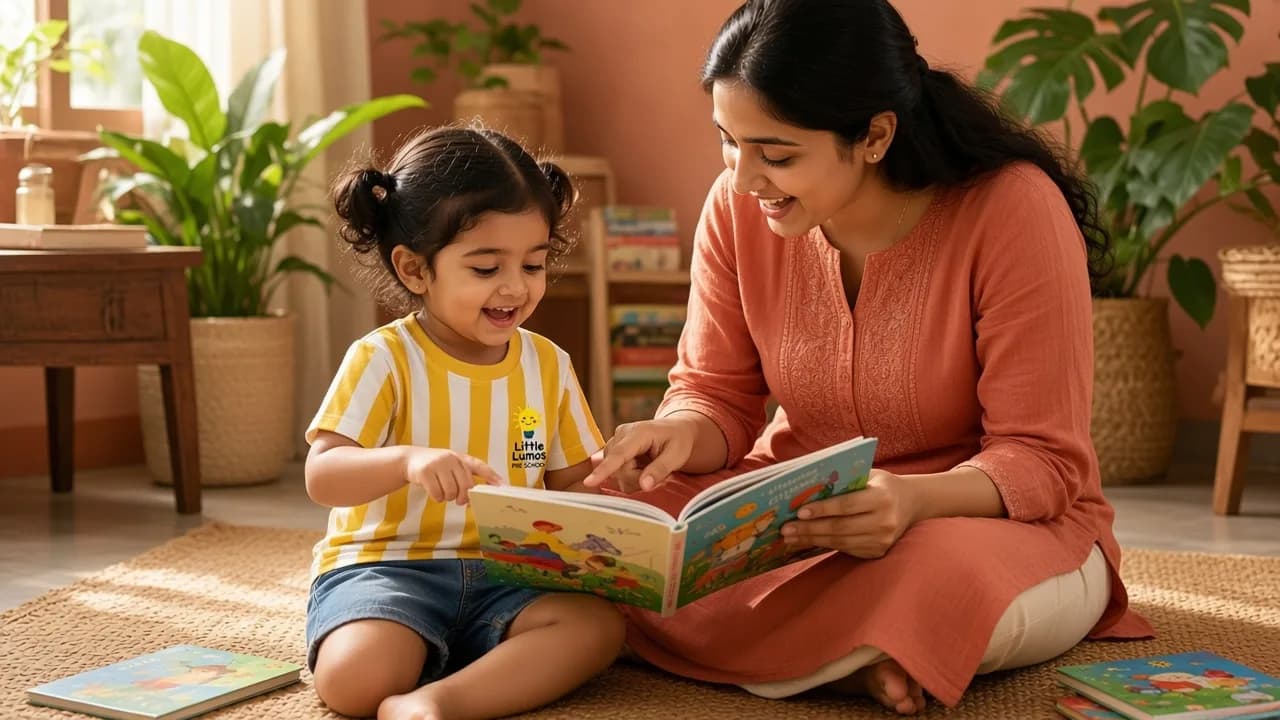
Stories. Picture books do something conversation cannot: they use words that do not come up in daily life. Nobody says "enormous" while serving rice. Books are where a child's vocabulary goes beyond the household.
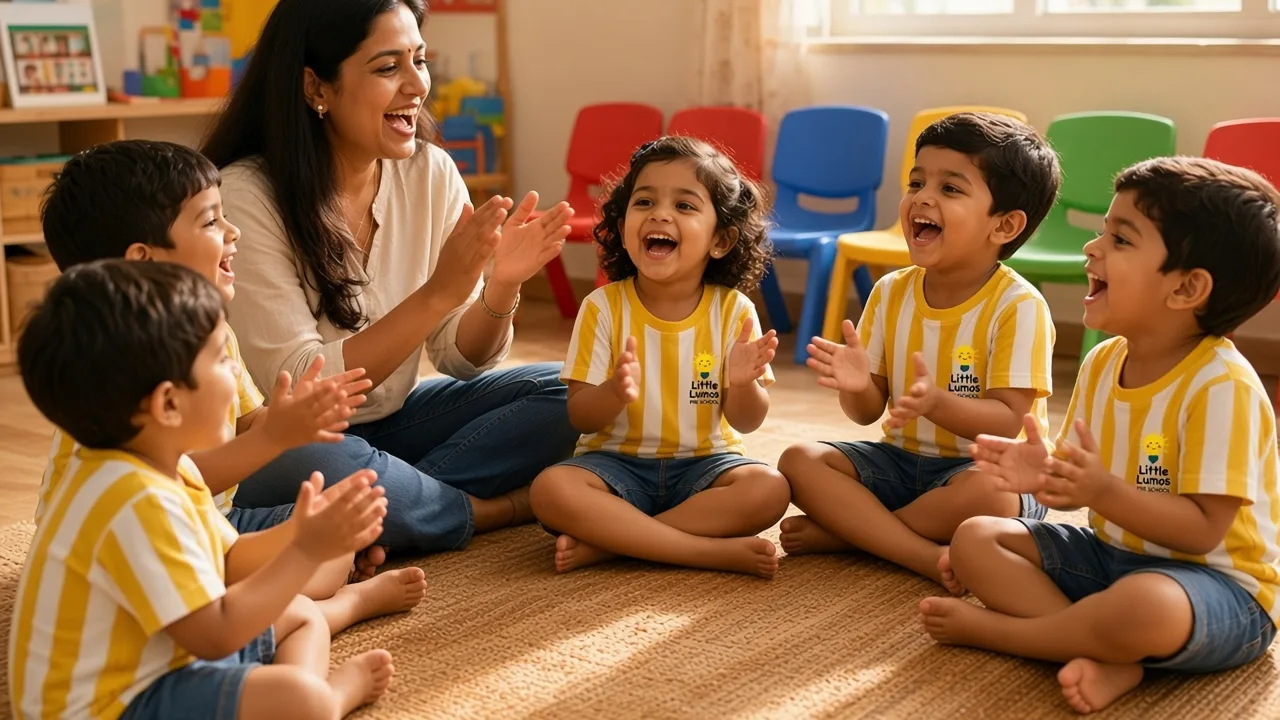
Songs and rhymes. Rhythm and repetition make words stick, which is why children learn songs far faster than they learn instructions.
Play. Pretend shop, pretend doctor, pretend bus conductor. Children reach for more ambitious language during pretend play than at any other time of day.
And later, school, which does a lot of the work once the foundation is there.
Note what is missing from that list. There is no app, no flashcard set, and no video. Passive screen content does not teach language to children of this age, because language is built in the gap where somebody waits for the child to respond, and a video never waits.
What to focus on, roughly by age
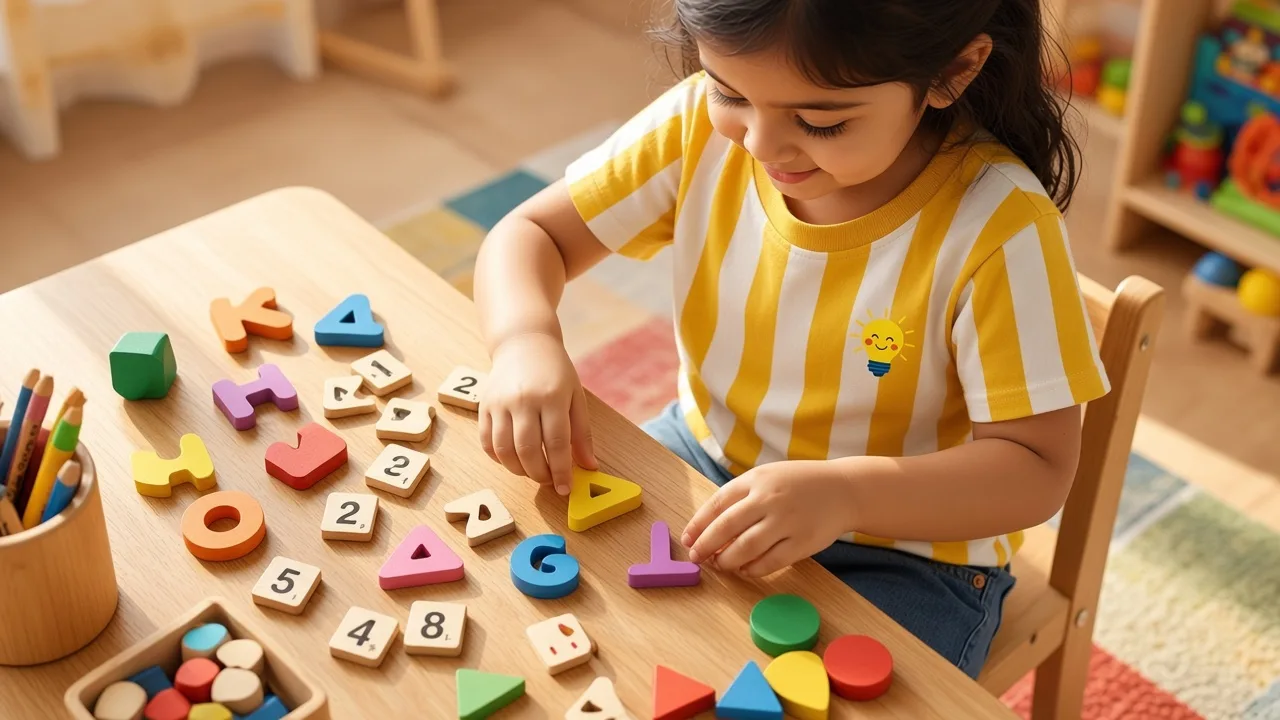
Two to three: listening. The job at this stage is exposure, not production. Name things as you touch them, sing, narrate what you are doing. Nobody should be asking a two-year-old to perform in English.
Three to four: talking. Short phrases appear. Grow them by adding one word to whatever your child offers. They say "big bus", you say "a very big bus". Ask open questions occasionally, and read the same favourite book until you can recite it in your sleep.
Four to six: sounds, and only then letters. This is where letter sounds can be introduced playfully, and where reading begins to grow out of everything that came before. Getting the order right matters enormously, and our guide to how children actually learn to read sets it out.
The order is listening, then talking, then reading. Every attempt to jump straight to the third makes English a chore instead of a language.
Two things worth letting go of
Recitation without meaning. A three-year-old can be taught to deliver "Twinkle Twinkle" flawlessly, with actions, while having no idea what a star is doing in the sky or what "diamond" means. It photographs beautifully. It is memory work, not language. If your child performs rhymes, spend a minute afterwards actually talking about what happens in it, and the rhyme starts doing something.
Accent anxiety. Plenty of parents worry that their own English will give their child the "wrong" accent. Let it go. Your child will hear dozens of accents across their life and will sound like whoever they spend time with at eight, twelve and twenty. What you give them now is vocabulary, confidence and the pleasure of talking. That is the part that lasts.
A small warning about correcting
When a four-year-old says "I goed to the park", the temptation is to correct them. Resist it, and simply say it back correctly instead: "You went to the park! What did you do there?"
That mistake is actually a good sign. The child has worked out the past-tense rule and is applying it consistently, including where English is irregular. They will sort it out through hearing it done properly, and they will do it faster if nobody is stopping them mid-sentence to issue corrections. A child who is corrected constantly does the sensible thing and speaks less.
Try this for a fortnight
Pick one daily routine, the drive to school or bath time, and make it a talking slot in whichever language you are most fluent in. Narrate, ask, wait, and add one word to everything your child says. Then read one English picture book at bedtime, the same one all week. That is the whole programme, and it outperforms anything you can buy.
At Little Lumos in Siddharth Nagar, children hear rich English through stories, conversation and song all day, while Telugu rhymes and tales sit right alongside them. We treat the mother tongue as an asset rather than an obstacle, because that is exactly what it is. Our collection of Telugu rhymes for children is a good place to start at home.
Interactive tools
What to do at your child's age
Pick an age band for the focus that suits it and a few activities to try, plus the bilingual questions parents ask most.
Interactive guide
What to Focus On, by Age
Language grows in a natural order, listening, then talking, then reading. Pick an age band to see the focus and simple, screen-free activities.
- Narrate your day in simple English: 'Let's wash your hands'
- Sing English rhymes: Twinkle Twinkle, Wheels on the Bus
- Name objects as you point: 'ball', 'cup', 'dog'
- Share picture books, pointing and naming as you go
For Telugu-speaking homes
The Bilingual Truth (Telugu + English)
Many Kakinada parents worry about raising a child in two languages. Here's the reassuring reality.
"Two languages will confuse my child."
The truth: They won't. Young children are wired to learn multiple languages at once. Growing up bilingual is a lifelong gift, not a burden, and it doesn't cause lasting confusion or delay.
"We should drop Telugu and speak only English."
The truth: Please don't. A strong mother tongue is the foundation on which English is built. Children who are secure in their home language learn English more easily, not less.
"English apps and videos will teach my child fastest."
The truth: Real, back-and-forth conversation teaches language far better than any screen. Talking, singing and reading with you is the gold standard.
Our approach at Little Lumos: cherish the mother tongue and build English side by side. Children enjoy Telugu rhymes and stories alongside rich English conversation, growing up confident in both.
Confident in Two Languages
At Little Lumos, children grow strong English through stories, songs and rich conversation, while treasuring their Telugu roots. Tour our campus in Siddharth Nagar, Kakinada, for children aged 2 to 6.
At Little Lumos in Kakinada, this is part of everyday practice. Read more about our hands-on early years curriculum, or preschool programs for ages 2 to 6, or book a campus visit.
People Also Ask
Quick answers to the questions parents ask most.
Through everyday talk, songs, stories and play, not drills. Narrate your day in simple English, sing English rhymes, name objects as you point to them, read picture books daily, and ask simple questions. Rich, back-and-forth conversation is the single most powerful way to build a child's English.