Teaching Numbers, Letters & Shapes at Home: the Playful Way

Little Lumos Team
Reviewed by Dr. K. Lakshmi Lalithya, Founder & Principal
We share insights, stories, and practical tips for mindful parenting, straight from our vibrant learning community.
Counting to fifty is memory. Understanding four is maths. The difference between them, where number already lives in your kitchen, and what to skip entirely before five.
- Counting to fifty is not the same as understanding four
- Where number actually lives in your house
- Letters: sounds first, and start with their own name
- Shapes and colours need almost no teaching at all
- What to skip entirely at this age
- About "big school" interviews
- The three rules that matter
- Interactive tools

Your neighbour's daughter, who is three and a half, can write A to Z. You have seen the book. The letters are a bit wobbly but they are unmistakably letters, and there are pages and pages of them.
You come home, look at your own three-year-old, and quietly order a tracing workbook.
Before it arrives, there is something worth knowing, because it changes what you do with it.
Counting to fifty is not the same as understanding four
Almost every parent uses recitation as the measure. "She can count to fifty." "He knows all the capital letters." These are real achievements of memory, and they are not what early maths and literacy are actually made of.
Try this at home. Put four biscuits on a plate. Ask your child to count them.
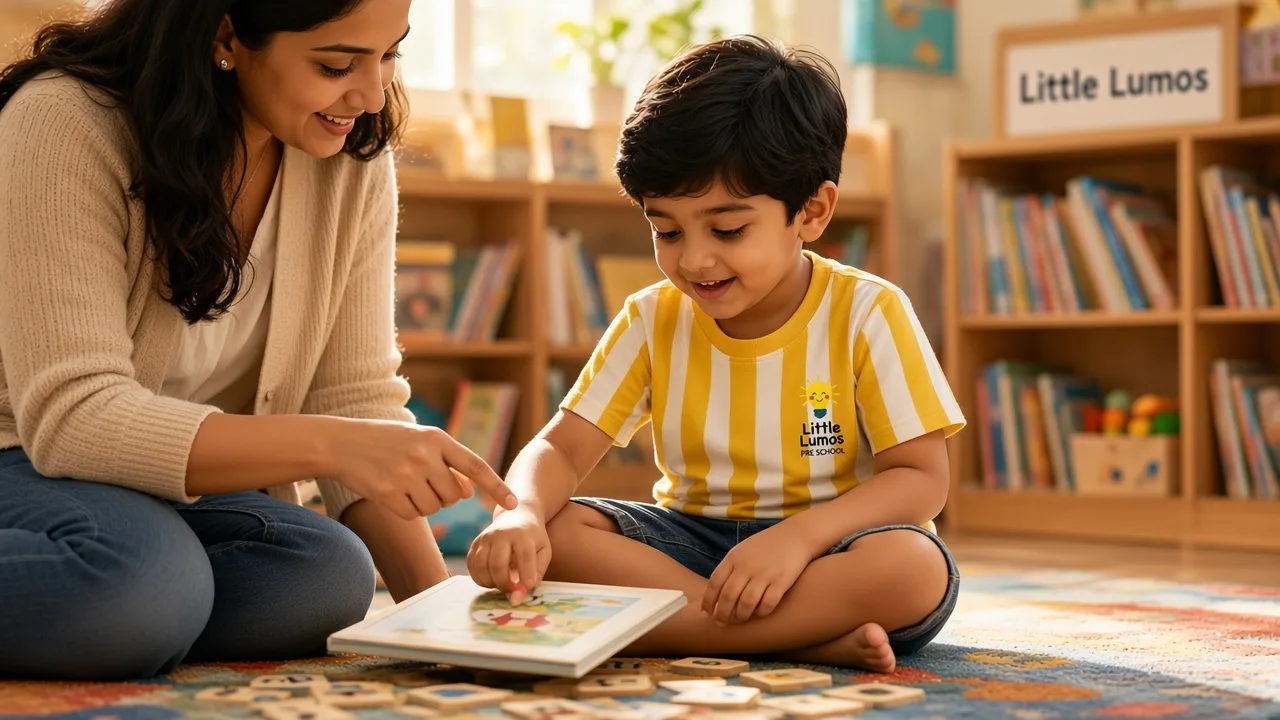
Watch what happens. Does each number land on exactly one biscuit, or do the words run ahead of the finger? That matching, one number to one object, is called one-to-one correspondence, and it is the genuine foundation of number.
Then, when they have finished counting, ask: "So how many biscuits are there?" A child who has only memorised the sequence will start counting again from one. A child who understands number will say "four" straight away, because they know the last number they said is the answer.
That second moment is the milestone. Not the reciting. And it is the thing to spend your energy on, because it is what everything later is built on.
Where number actually lives in your house
You do not need materials. You need to notice the maths already happening.
Laying the table is one-to-one correspondence in its purest form. One plate for each person. One spoon for each plate. Let your child do it and you have taught the concept without saying the word.
Stairs. Count them going up, every day. Physical, rhythmic, repeated.
Snacks. "You have three grapes. Here are two more. How many now?" This is addition, and it works because the answer is edible.
Cooking. Two spoons of rice. Four chapatis for four people, so how many do we need if Thatha is coming? This is real arithmetic with real stakes.
Sorting anything. Buttons, coins, dal, socks out of the washing. Sorting is the beginning of classification, which is the beginning of a lot of mathematical thinking.
Notice that all of this uses real objects. That is not incidental. Small children understand quantity through their hands long before they understand it as a symbol on a page, and the hands-on stage cannot be skipped, only delayed.
Letters: sounds first, and start with their own name
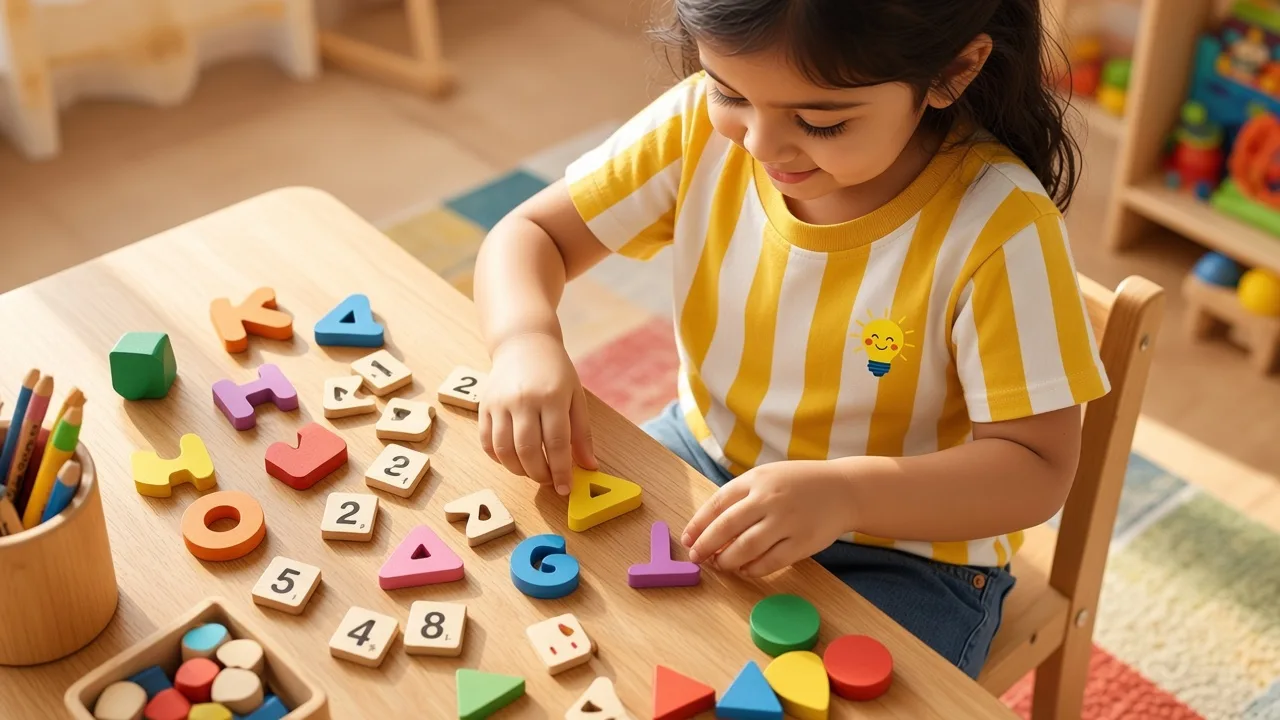
The most useful shift most parents can make is to teach that letters make sounds rather than that letters have names.
"M" says *mmm*. That is the piece of information that unlocks reading. Knowing it is called "em" is nice general knowledge and does almost nothing for a child trying to work out a word.
Start with the first letter of your child's name, because it is the most interesting letter in the alphabet to them, by a considerable margin. Then go looking for it. On the gate, on a packet of biscuits, on the bus, on a shop board. Letter hunting on the way to somewhere is worth more than twenty minutes at a table.
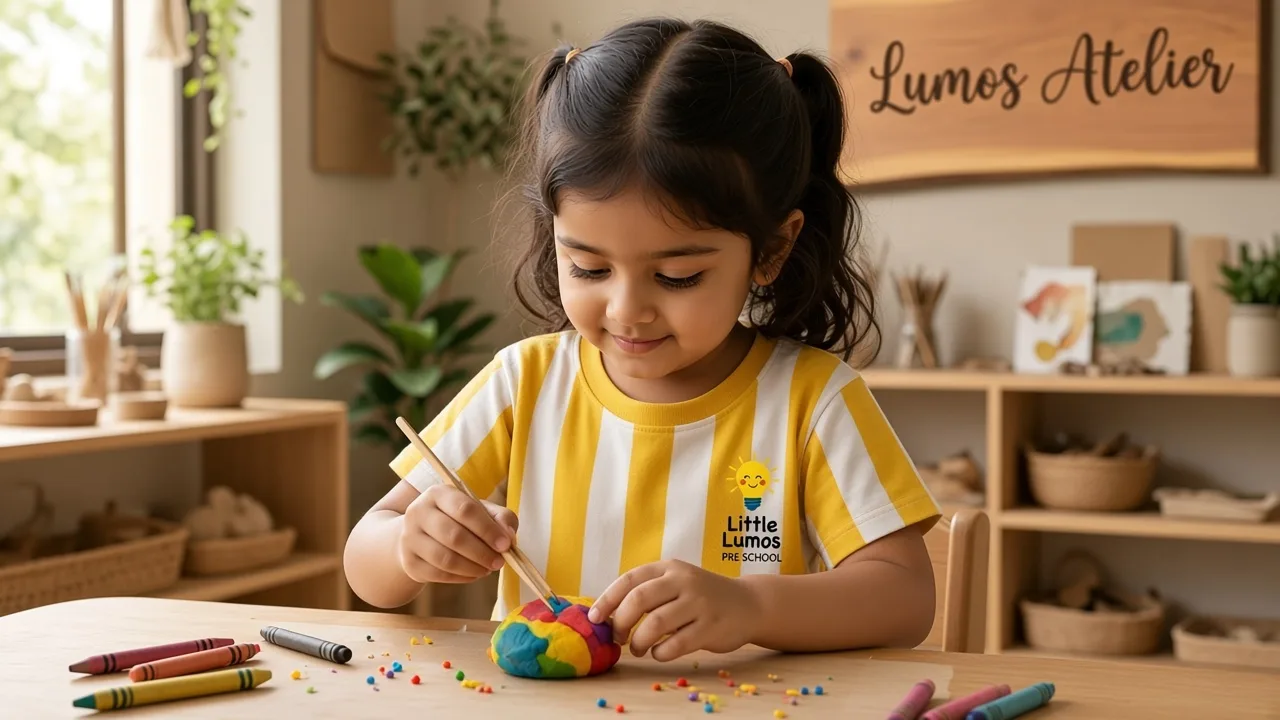
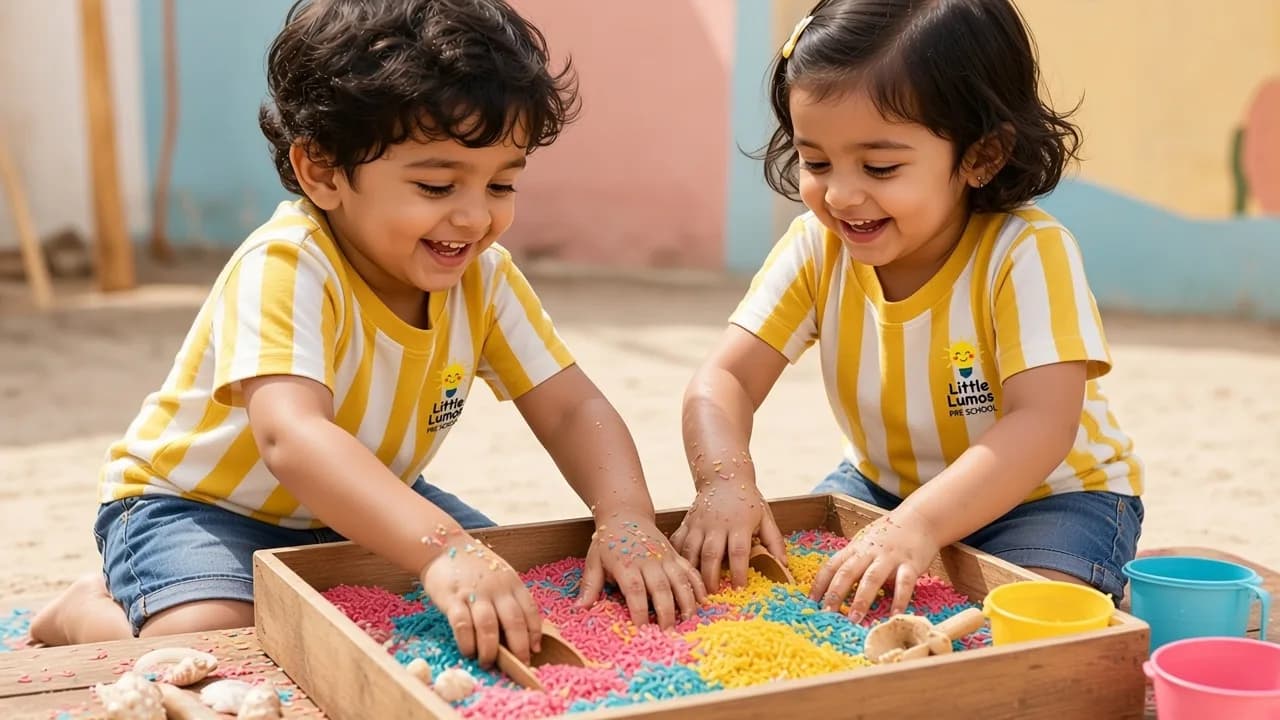
After that, shape letters out of things: playdough, a tray of rice or rava to draw in with a finger, chalk on the floor, twigs. All of this is building the hand and the visual memory at the same time, and none of it feels like work.
And read together every day. Every single day. Children who are read to get more vocabulary, more sentence structure and more of the rhythm of language than any teaching method can deliver, and it takes ten minutes.
Shapes and colours need almost no teaching at all
These two mostly arrive on their own between two and four, through nothing more than being named out loud as you go about your day.
"Here's your round plate." "The red cup or the blue one?" "That biscuit is a square." Then occasionally make a game of it: how many circles can we find in this room, everything we can spot that is yellow, sorting the laundry into colours.
That is genuinely the whole method. If your child is not naming shapes at three, they almost certainly will at four, and no worksheet will hurry it meaningfully.
What to skip entirely at this age
Tracing books and worksheets. Formal letter formation asks for hand strength and fine control that most children under five simply have not developed yet. Pushed early, it produces frustration, a poor pencil grip that is hard to undo later, and a child who has decided that letters are unpleasant. Fine motor skills and writing readiness explains what needs to come first.
A daily "study time" at three. Learning at this age happens in two-minute bursts across the whole day, not in a twenty-minute block at a table. The block mostly teaches a child to dislike the table.
Comparison. The child writing A to Z at three and the child scribbling happily at three are, at seven, usually indistinguishable. What does differ at seven is how they feel about learning, and that gets decided now.
About "big school" interviews
This drives a great deal of early drilling in Indian families, so it is worth saying what these assessments actually tend to look at.
Can the child separate from a parent without distress? Can they follow a simple two-part instruction? Will they speak to an unfamiliar adult? Can they hold a pencil and make a controlled mark? Do they seem curious and settled?
Almost none of that is the alphabet. A confident, verbal, calm four-year-old who scribbles makes a far better impression than an anxious one who has been drilled and freezes.
The three rules that matter
Play beats paper. Concepts learned through real objects stick; symbols memorised without understanding do not.
Follow what they love. A child obsessed with buses can be taught counting, size, colour, speed, letters and half of physics through buses, and will remember all of it.
Stop while it is still fun. Two joyful minutes of counting beats twenty forced ones, and the difference compounds over years.
The goal is not to teach your four-year-old the alphabet. It is to keep them the kind of person who wants to learn things at fourteen.
Try this this week
At one meal a day, hand your child the job of laying the table. Say nothing about maths. Just let them work out how many plates. That is one-to-one correspondence, cardinality and problem-solving in a job they will be proud of.
At Little Lumos in Siddharth Nagar, numbers and letters grow out of projects, stories and real materials rather than worksheets, because a child who has understood something will always outpace a child who has memorised it. Children leave us with strong language, real curiosity and hands that are ready, which is the combination that makes formal school work.
Interactive tools
Pick a skill to work on
Numbers, letters, or shapes and colours, each with everyday ways to teach it and a reminder of what to skip at this age.
Interactive guide
Choose a Skill to Explore
Numbers
Count everything, out loud
Count stairs as you climb, spoons as you lay the table, buttons as you dress. This is the single most powerful thing you can do.
One-to-one touching
Touch each object as you say its number. This links the word to the quantity and prevents 'sing-song' counting with no meaning.
Snack maths
"You have 3 grapes, I'll give you 2 more, how many now?" Food makes adding and taking away real and delicious.
Number songs & rhymes
Five Little Ducks, Ten in the Bed, songs make number order stick effortlessly.
Simple board games
Snakes and ladders and dice games build counting, order and turn-taking all at once.
Keep this in mind
The Three Golden Rules
Play beats worksheets
Young brains learn concepts through hands-on, real-world play, not through repetition on paper.
Follow their interest
Lean into whatever your child loves, trucks, animals, cooking, and weave numbers and letters into it.
Keep it short & joyful
Two happy minutes of counting beats twenty forced ones. Stop while it's still fun.
Learning That Feels Like Play
At Little Lumos, numbers, letters and ideas grow through stories, projects and hands-on play, never worksheets or screens. Tour our campus in Siddharth Nagar, Kakinada, and see joyful early learning in action for children aged 2 to 6.
At Little Lumos in Kakinada, this is part of everyday practice. Read more about our hands-on early years curriculum, or preschool programs for ages 2 to 6, or book a campus visit.
People Also Ask
Quick answers to the questions parents ask most.
You already are, through everyday talk. From around age 2, children naturally begin to absorb colours, shapes and counting through play and conversation. Letters and sounds usually follow between 3 and 5. There's no fixed start date; follow your child's interest and keep it playful rather than formal.