How to Improve Focus & Concentration in Young Children

Little Lumos Team
Reviewed by Dr. K. Lakshmi Lalithya, Founder & Principal
We share insights, stories, and practical tips for mindful parenting, straight from our vibrant learning community.
\"He will watch cartoons for an hour but cannot sit for ten minutes.\" Why those two things are not the same measurement, what is actually realistic at each age, and the one habit most households can change tomorrow.

"He'll sit and watch cartoons for a full hour. But ask him to sit for ten minutes of writing and he's up in two."
Almost every parent who worries about concentration says some version of this, usually with a note of suspicion in it, as though the child clearly has the ability and is simply declining to use it.
It's a fair observation. It's just measuring two completely different things.
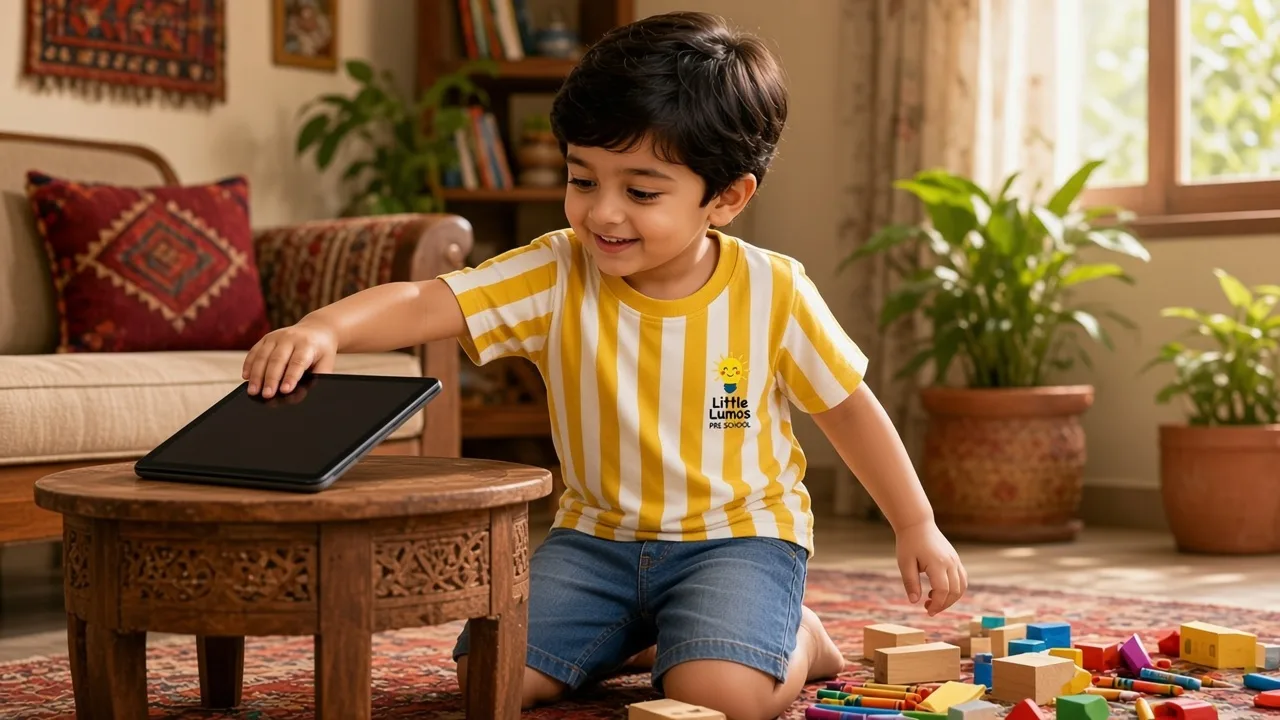
A screen supplies the attention. It changes shot every few seconds, it is loud and bright and moving, and it does all the work of holding your child there. Your child isn't sustaining attention; attention is being captured. A page that doesn't move asks for the opposite. Your child has to generate the focus and then hold on to it themselves. One of those is being carried. The other is walking.
So a four-year-old who watches for an hour and fidgets after two minutes at the table isn't being defiant, and isn't showing you their "real" attention span. They're being four.
What's actually realistic at this age
A rough guide used widely by early-years teachers is two to five minutes of focused attention per year of age. That puts a two-year-old at somewhere around four to ten minutes, a four-year-old at eight to twenty, a six-year-old a bit beyond that.
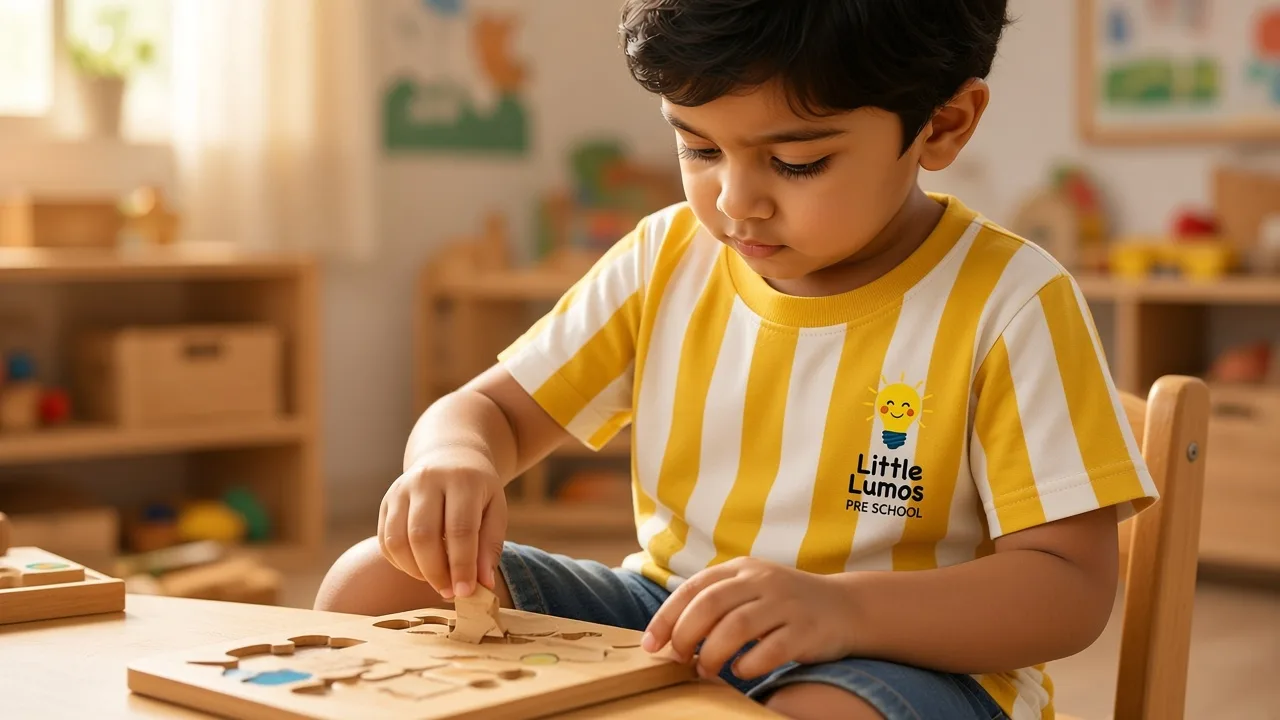
Treat those numbers loosely. They're a sanity check, not a measurement. And note the important condition attached to them: that's for a task the child chose. For something you chose, at a time you chose, cut the figure down. A three-year-old who stays with a puzzle for six minutes is doing well, even though six minutes feels like nothing to an adult who has just spent forty minutes persuading them to sit down.
Three boring things to check before you worry about focus
Most of what parents read as a concentration problem turns out to be something duller and easier to fix.
Sleep. An under-slept young child does not look sleepy. They look wired, clumsy, emotional and unable to settle to anything, which looks exactly like a focus problem and gets treated as one. If bedtime has been drifting later, fix that for two weeks before you conclude anything else.
Timing. Late morning before lunch, and that stretch between coming home and dinner, are the two worst windows in the day to ask a small child for concentration. It's not stubbornness; it's blood sugar and tiredness. Move the activity, not the child.
What happened in the previous half hour. Coming off a screen, or back from a loud function full of relatives, a child needs time to settle before they can attend to anything. Adults need this too. We just don't schedule ourselves back to back and then judge ourselves for it.
The thing most of us get wrong: we interrupt
Here is a scene from any home, anywhere.
Your child is on the floor, lining up bottle caps. It has been going on for about ten minutes and shows no sign of stopping. In that ten minutes, the adults nearby say, entirely kindly: *What are you making? Very nice! Do you want water? Come, show Nanamma what you did. Careful, it'll fall.*
Every one of those is well meant. Every one of them ends the stretch.
Concentration is, at its simplest, the ability to stay inside something. Children build it by being allowed to stay inside something. Each interruption teaches a small lesson, that being deeply absorbed is a state adults will end whenever they feel like it, and the lesson gets learned.
This is genuinely hard to follow, because an absorbed child often looks like a child doing nothing important. Lining up caps looks like nothing. It isn't. That child is holding a system in their head, testing it, adjusting it.
Watching a child concentrate is one of the few times you can actually see thinking happen.
What to do instead: when your child is deeply into something, do nothing at all. Don't help. Don't ask questions. Don't even praise. Praise ends the stretch as reliably as correction does, because it turns the child's attention outward towards you. Wait until they surface on their own. Then talk.
This is the single most useful change most families can make, and it costs nothing but restraint.
Too many toys on the shelf
A child standing in front of twenty available toys does not concentrate on twenty toys. They sample. Pick up, put down, pick up, put down, which parents then describe as a short attention span, when it is really a child responding sensibly to too much choice.
Put six or seven things out. Box the rest and keep the box somewhere else. Swap them over every few weeks. Two things happen: play gets longer and deeper almost immediately, and the toys that come back after a month are met like old friends. Tidying gets easier too, which is not a developmental benefit but is a real one.
Focus lives in the body before it lives in the head
When a child is restless, the instinct is to ask for more stillness. It usually works better to ask for less.
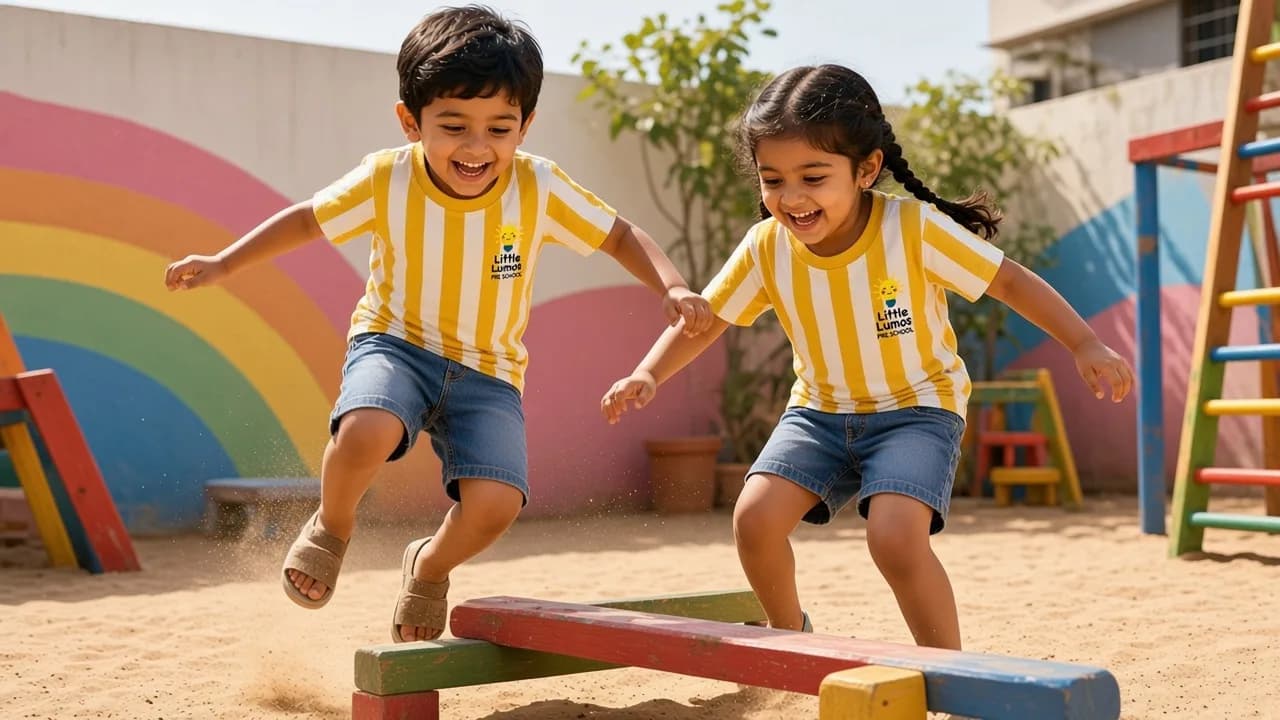
A child who has run properly, climbed something, carried something heavy and been outside in real daylight settles into quiet work far more easily than a child who has been indoors since morning. If there's something in the day that needs concentration, put the movement before it rather than offering it as a reward afterwards. Ten minutes in the corridor or on the terrace buys you more sitting than any amount of instruction does. Our guide to active play and gross motor skills has age-by-age ideas if you're short on space.
A word about writing practice
This one is worth saying plainly, because it causes a lot of unnecessary worry in Indian homes.
Somewhere around three or four, often after hearing what a neighbour's child is doing, or in anticipation of a "big school" interview, families start formal writing practice at the table. The child squirms, whines, slides off the chair, asks for water four times. The conclusion drawn is: concentration problem.
Consider what's actually being asked. The task is physically hard, because small hands don't yet have the strength or control for letter forms. It is repetitive. It has no meaning the child can see. And they didn't choose it. Resistance isn't a failure of attention. It's a reasonable response to all four of those at once.
The same child, that same afternoon, will thread beads for a quarter of an hour without being asked once. That threading is building the hand strength and the sustained attention that writing will eventually need. It simply doesn't look like schoolwork, so it doesn't get counted. Fine motor skills and writing readiness covers what actually has to come first.
Try this for a week
Pick one stretch of the day, after breakfast is good, and offer one activity, on a clear surface, with nothing else competing for the child's eye. Then sit nearby and say nothing at all for as long as they stay with it. Don't photograph it, don't narrate it, don't call anyone to look.
Most parents are surprised by how long their child goes. A fair number are surprised by how hard it is to stay quiet.
When it's worth asking someone
Short, shifting attention is normal, and almost all of what worries parents at this age is normal. It's reasonable to raise it with your paediatrician if your child can't settle even into the things they genuinely love, if the restlessness shows up across many different settings rather than only at the table at home, or if it's getting in the way of daily life and friendships. Ask your child's teacher what they see too. A picture from more than one setting is much more useful than a picture from one.
It's also worth knowing that attention difficulties are generally assessed cautiously in the preschool years, precisely because so much of what looks like a problem at three has resolved by five. Early questions are welcome. Early labels usually aren't necessary.
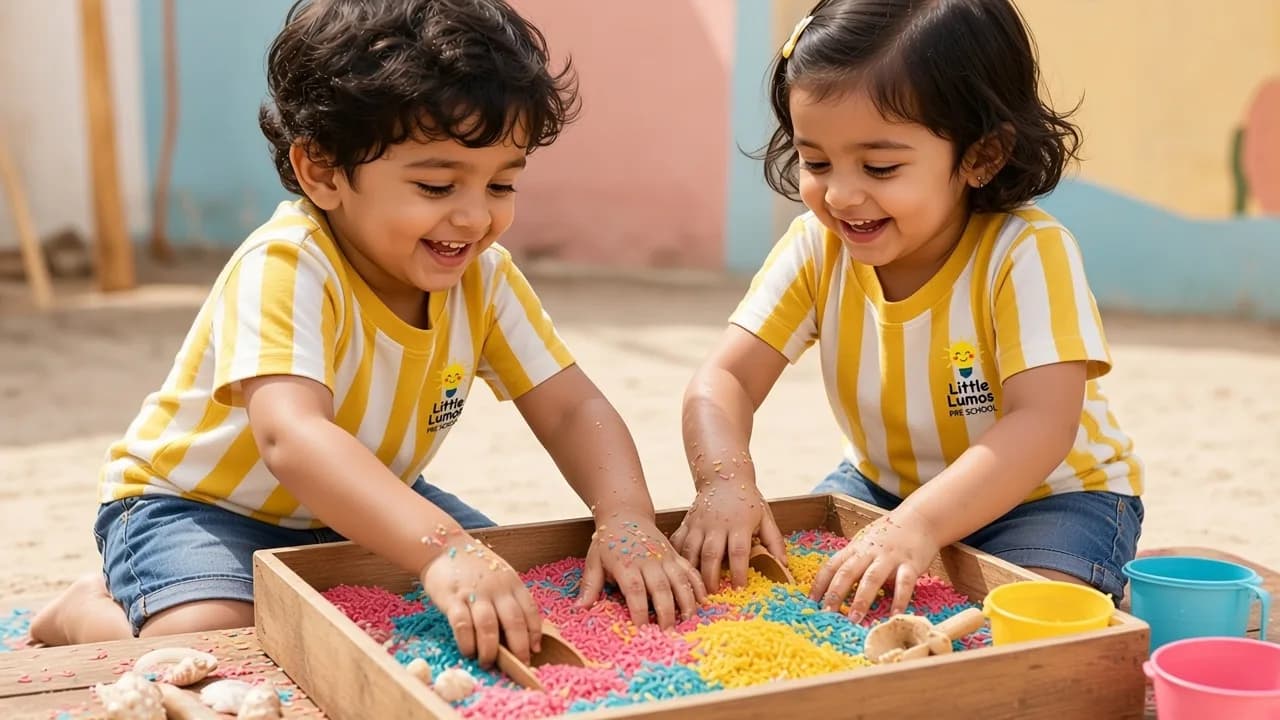
At Little Lumos in Siddharth Nagar, the day is built around long, uninterrupted stretches of hands-on work, and the campus is entirely screen-free. Not because screens are wicked, but because concentration is a muscle, and it only grows if a child is regularly allowed to use it.
Interactive tools
Check it against your own child
Tap your child's age for a realistic attention span, then see what genuinely builds focus and what quietly drains it.
Set expectations
How Long Can My Child Actually Focus?
Tap your child's age. Before worrying about focus, it helps to know what's realistic, most "concentration problems" are simply age-appropriate attention meeting a task that's too long.
Typical focused attention at age 3
about 6–9 minutes
Expect a few focused minutes on something they choose, then a change. That's healthy, not a problem.
Rule of thumb: roughly 2–5 minutes of focus per year of age, and much longer for something they love.
What helps, what hurts
Focus Boosters & Focus Drainers
Boosters
- Let deep play run, don't interrupt a child who's absorbed
- One toy or task at a time; tidy away the rest
- Plenty of active, big-body play every day
- A calm, clutter-free corner for focused activities
- Predictable routines so the brain isn't juggling surprises
- Follow their interest, focus follows fascination
- Enough sleep and regular, protein-rich meals
- Puzzles, threading, building, cooking, naturally absorbing tasks
Drainers
- Fast-paced screens that train the brain to expect constant novelty
- Too many toys out at once, overwhelming choice
- Over-scheduling with little free, unstructured play
- Constant interruptions and 'helping' during play
- Rushing from one activity to the next
- Not enough sleep, or hunger and low energy
- Expecting long stillness that isn't age-appropriate
Set the record straight
Myth vs Reality
"My child can't concentrate at all."
Reality: Watch them with a favourite toy or story, most 'focus problems' are really age-appropriate attention spans meeting a task that's too long or not interesting enough.
"Screens will help train focus."
Reality: Fast, rewarding screens tend to do the opposite, teaching the brain to expect constant stimulation. Real focus grows through slow, hands-on play.
"More structured 'study' will build attention."
Reality: For under-6s, uninterrupted free play builds concentration far better than formal drills. Play is serious focus training.
Where Focus Grows Naturally
At Little Lumos, uninterrupted, hands-on play is protected every day, the very thing that builds calm, deep concentration. Tour our screen-free campus in Siddharth Nagar, Kakinada, for children aged 2 to 6.
At Little Lumos in Kakinada, this is part of everyday practice. Read more about how we support emotional development, or why families choose Little Lumos, or book a campus visit.
People Also Ask
Quick answers to the questions parents ask most.
A common rule of thumb is roughly 2 to 5 minutes of focused attention per year of age, so about 4 to 12 minutes for a 2 to 4 year old on a self-chosen task, and a little longer by 5 or 6. Attention is much longer for things they love and shorter for things they don't, which is completely normal.