What Is the Reggio Emilia Approach? A Simple Guide for Kakinada Parents

Little Lumos Team
Reviewed by Dr. K. Lakshmi Lalithya, Founder & Principal
We share insights, stories, and practical tips for mindful parenting, straight from our vibrant learning community.
What is the Reggio Emilia approach and why does it work so well for young children? This plain-English guide explains the philosophy, its core principles, and how Little Lumos — Kakinada's first Reggio Emilia inspired preschool — brings it to life for ages 2 to 6.

If you have been comparing preschools in Kakinada, you have probably seen the phrase "Reggio Emilia" on more than one website. It sounds impressive, but what does it actually mean for your child? This simple guide explains the Reggio Emilia approach in plain English, why educators around the world respect it, and how we bring it to life every day at Little Lumos.
What Is the Reggio Emilia Approach?
The Reggio Emilia approach is an early childhood education philosophy that began in the town of Reggio Emilia in northern Italy after the Second World War. It was born from parents who wanted a better, more humane education for their children — one that treated young learners as capable, resourceful, and full of potential from birth.
At its heart sits one powerful idea: children are not empty vessels waiting to be filled with facts. They are active constructors of their own knowledge. The teacher is a guide and co-researcher, not a lecturer, and the carefully designed classroom environment is considered a "third teacher." If you want the full story, our complete guide to the Reggio Emilia approach walks through every principle in detail.
The Core Principles of Reggio Emilia
A few connected ideas make the approach what it is:
- The image of the child. Every child is seen as strong, curious, and competent right now, not just in the future.
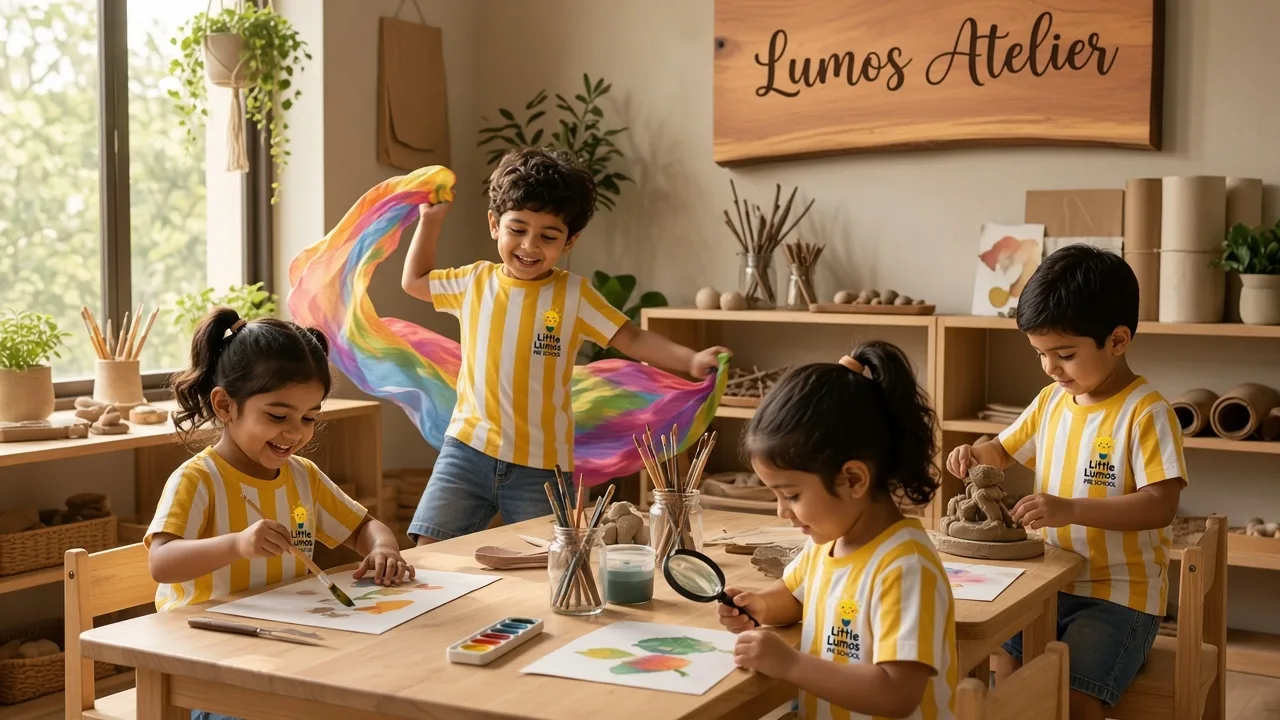
- The hundred languages of children. Children think and express themselves in countless ways — drawing, building, dancing, role-play, and words. Explore this in our piece on the hundred languages of children.
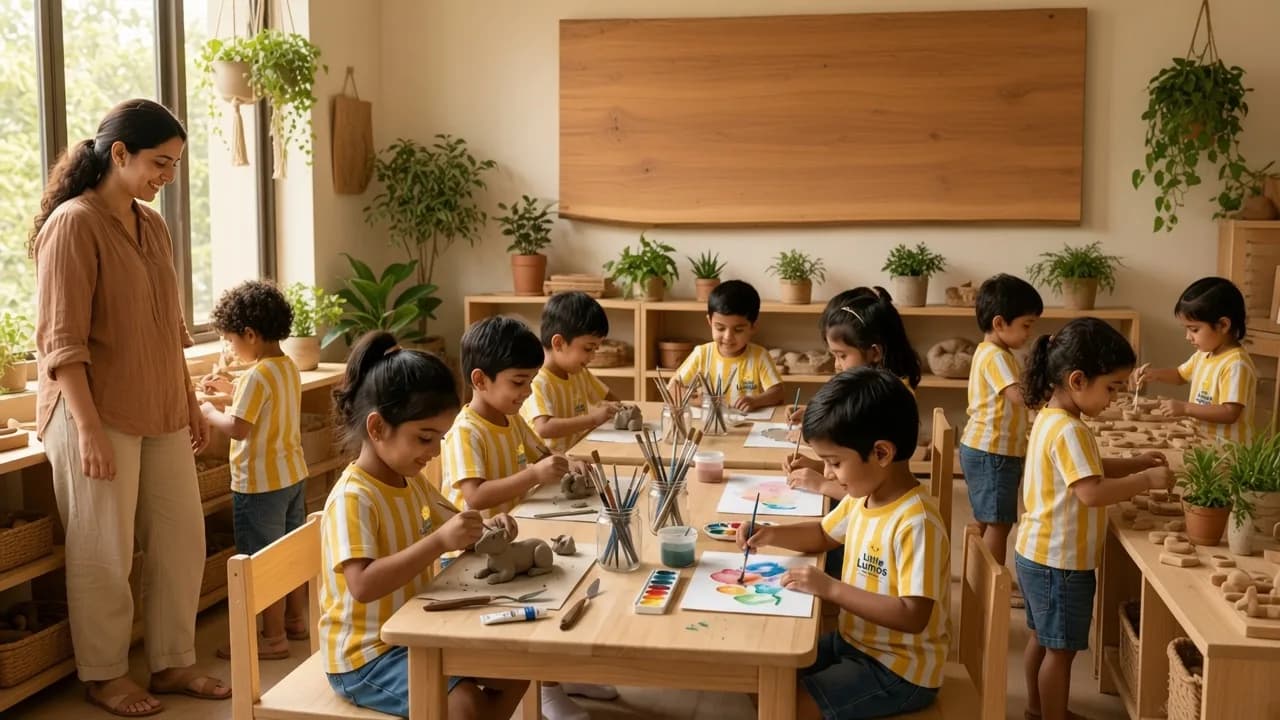
- The environment as the third teacher. Natural light, real materials, and calm, child-height spaces invite exploration.
- The teacher as researcher. Educators observe, ask open questions, and follow children's genuine interests.
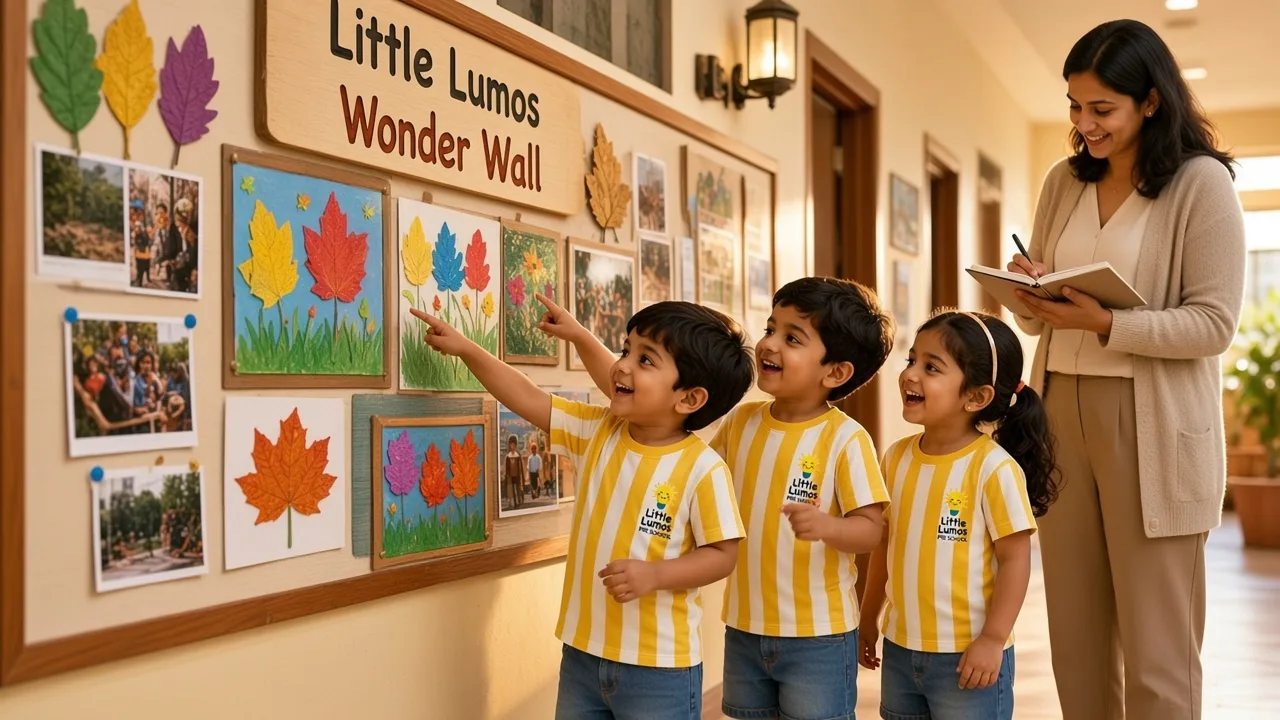
- Documentation. Children's words, art, and discoveries are recorded so learning becomes visible to children, parents, and teachers.
How Little Lumos Brings Reggio Emilia to Life in Kakinada
At Little Lumos, this philosophy is not a label on a brochure. It shapes every day through:
- Project-based learning driven by children's own questions and interests
- Documentation of each child's thinking, not just their finished work
- Art and the atelier as a primary language of expression
- Collaborative exploration over individual competition
- Deep respect for each child's unique pace
You can see how this shapes our daily teaching on our Reggio Emilia inspired curriculum page, or explore why families choose Little Lumos.
Why the Reggio Emilia Approach Works
Decades of observation and research into high-quality, play-based early education consistently link this kind of learning with stronger outcomes: deeper critical thinking, richer language, greater creativity, better collaboration, and notably stronger social and emotional skills. Children who are trusted to ask questions become better questioners. Children given real choices become confident decision-makers. They learn to ask questions, not just answer them.
The magic isn't in a curriculum book. It's in the way we listen to children — truly listen — and build learning from their curiosity.
At Little Lumos in Kakinada, this is part of everyday practice. Read more about Reggio Emilia preschool in Kakinada, or our curriculum in practice, or book a campus visit.
People Also Ask
Quick answers to the questions parents ask most.
It is a way of educating young children, born in Italy, that treats them as capable and curious from birth. Instead of teachers pouring in information, children explore the world through projects, art, and conversation, with adults gently guiding their inquiry.